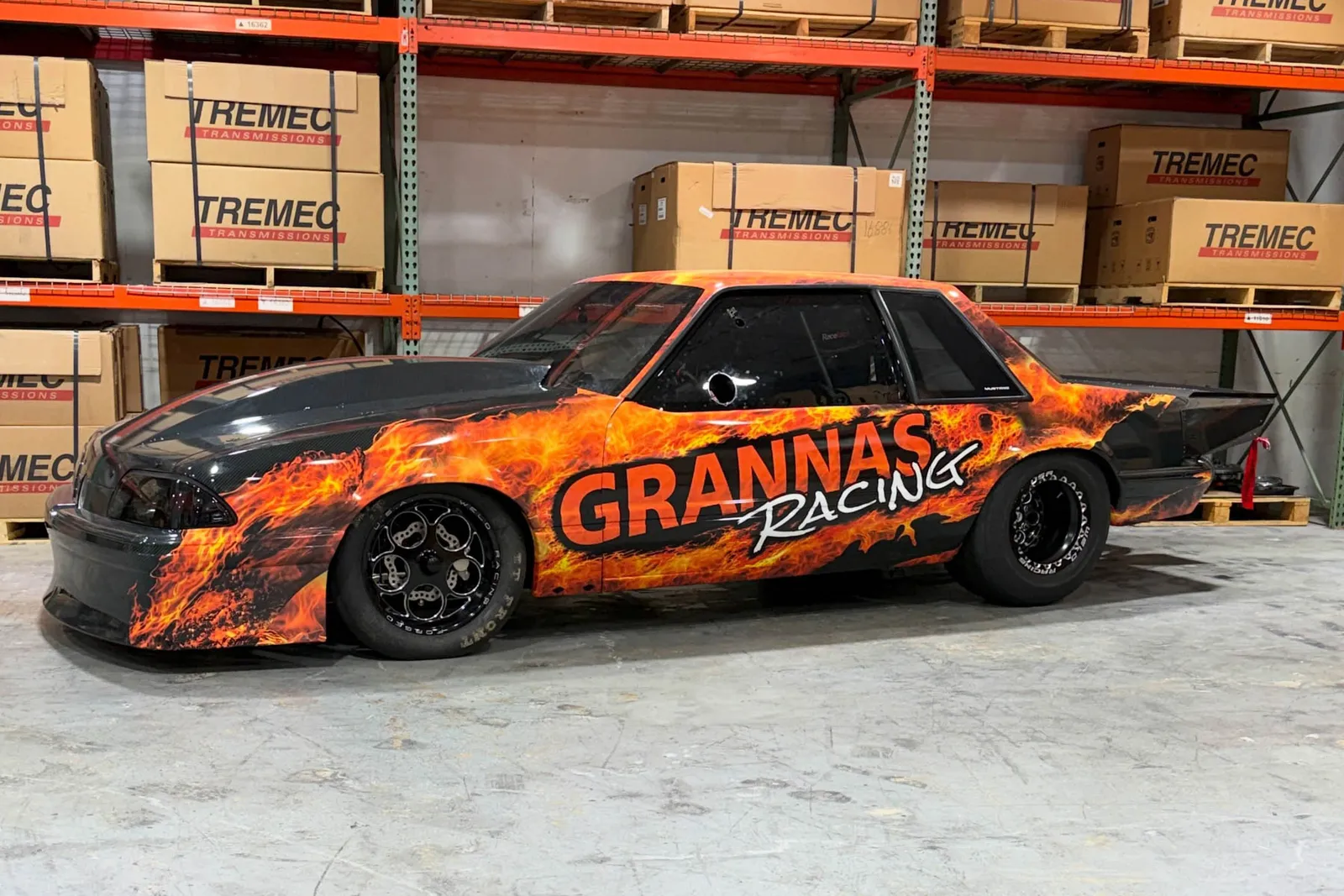
Joel Grannas Is Trading the Turbo on His Record 2JZ Mustang for Bottles of Compressed Air
Peeled reset the H-pattern record at 6.490 seconds in August. Now Grannas is switching it to compressed air supercharging to fix the one thing a turbo can't do with a stick shift: hold boost between gears.
In August, Joel Grannas's Fox body Mustang, Peeled, went 6.490 seconds at 222 mph on its first outing and took the H-pattern drag racing record. In October he told Dragzine he was pulling the turbo system off it. The replacement is not a bigger turbo, a supercharger or nitrous. It is four bottles of compressed air.
The switch to compressed air supercharging, or CAS, sounds strange until you look at the problem Grannas is trying to solve. It is not peak power. It is what happens to boost every time a driver with a stick shift lifts to change gears.
The record car
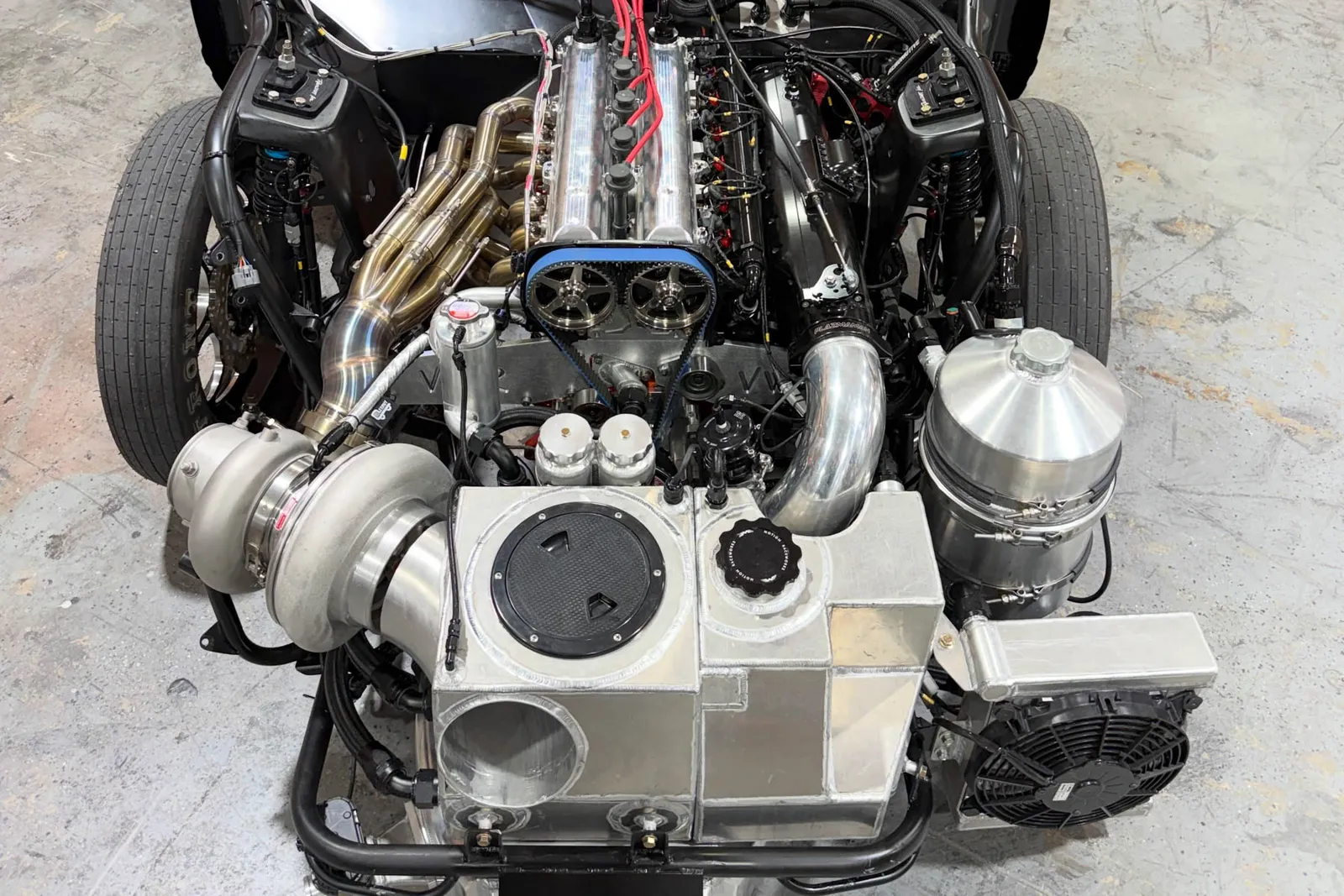
Grannas came to the Mustang from his Toyota Supra, Orange Man Bad, one of the most feared H-pattern cars in the world and a car that broke the six-second stick-shift barrier, according to Dragzine. When Peeled was ready, it got the same 2JZ inline-six. The difference was weight. Dragzine reports the Supra weighed 2,950 pounds and the Mustang 2,450, a 500-pound cut.
 View full photo
The Mustang was not an idle project. According to Dragzine, Grannas decided to get Peeled ready after a crash in the Supra at the World Cup Finals, and before FL2K the new car showed promise until its 2JZ suffered a catastrophic failure. The August record came after that rebuild, on the car's first outing, which makes tearing into it again now an even bigger commitment.
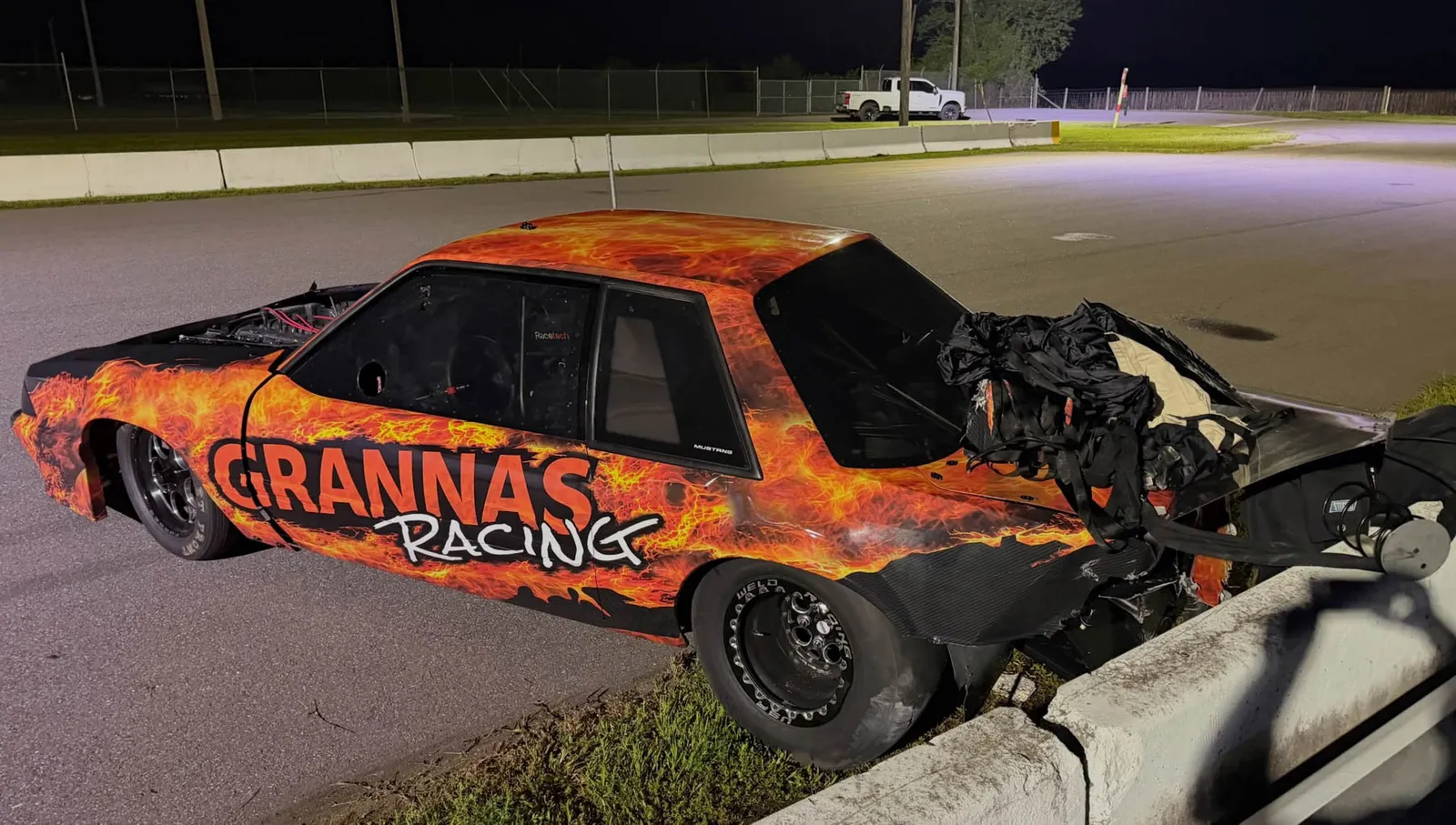
In testing at Bradenton Motorsports Park, Peeled ran a 1.083-second 60-foot, a 4.248 at 175 mph to the eighth mile and a 6.490 at 222 mph through the quarter. That edged Nick Cole-Mann's 6.495 at 219.51 mph. It came with a cost. "Got the record on the first outing, which is amazing, but the chutes didn't come out," Grannas said on social media, as Dragzine reported. He spun at the end of the shutdown and hit the wall.
 View full photo
Why a turbo fights a stick shift
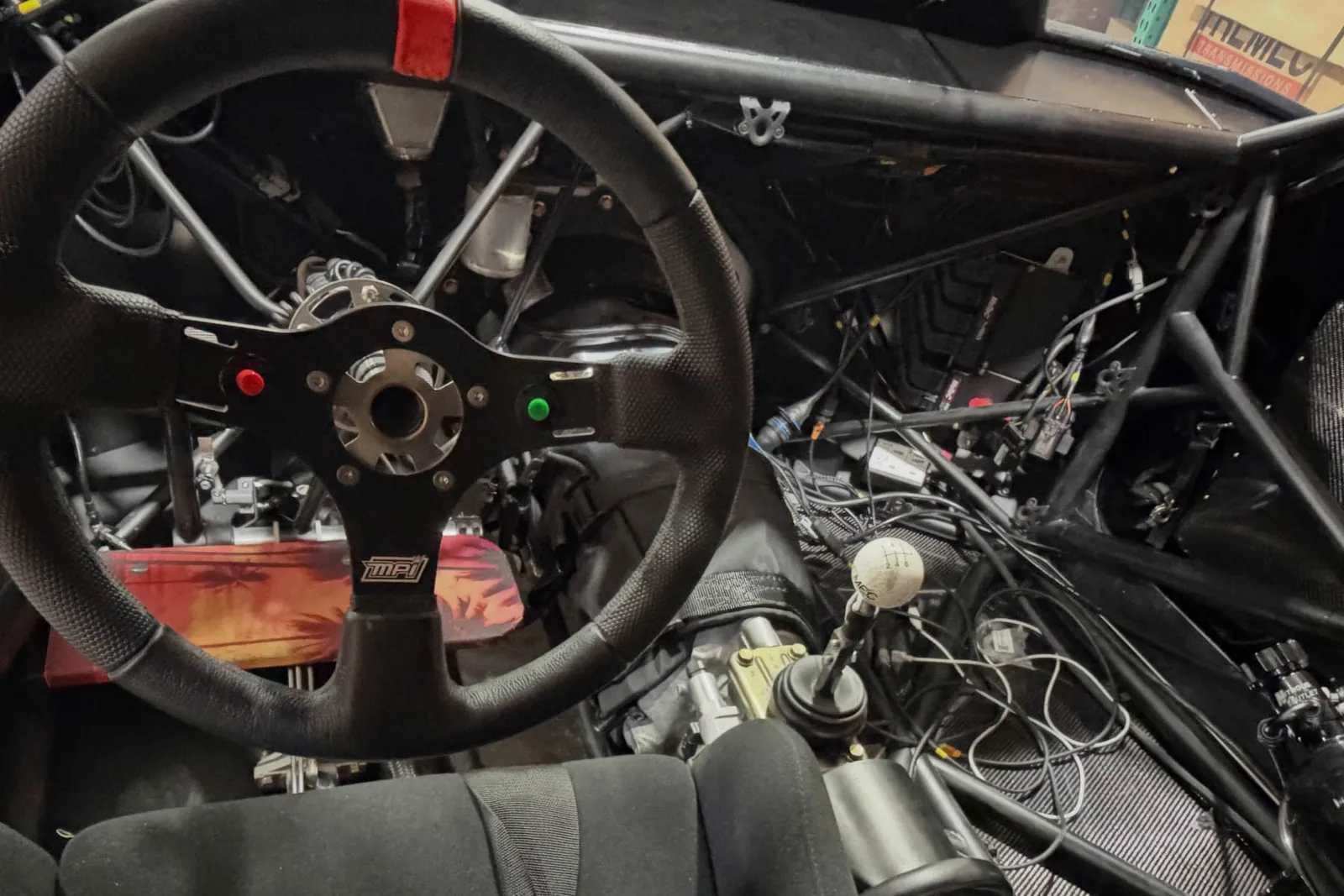
A turbo makes boost from exhaust energy, and that energy disappears every time the throttle closes. In an automatic or a clutchless race transmission, the gap is tiny. In an H-pattern, the driver lifts, clutches and moves the lever for every gear, and boost falls each time. Grannas told Dragzine that is the car's one real problem on a turbo setup.
 View full photo
"The one thing we have a problem with this car on a turbo setup is boost," he said. He also told Dragzine he has to leave the line at around 6,000 rpm to get the large turbo spooled, which puts a lot of load on the clutch and drivetrain at the hit.
How compressed air supercharging works
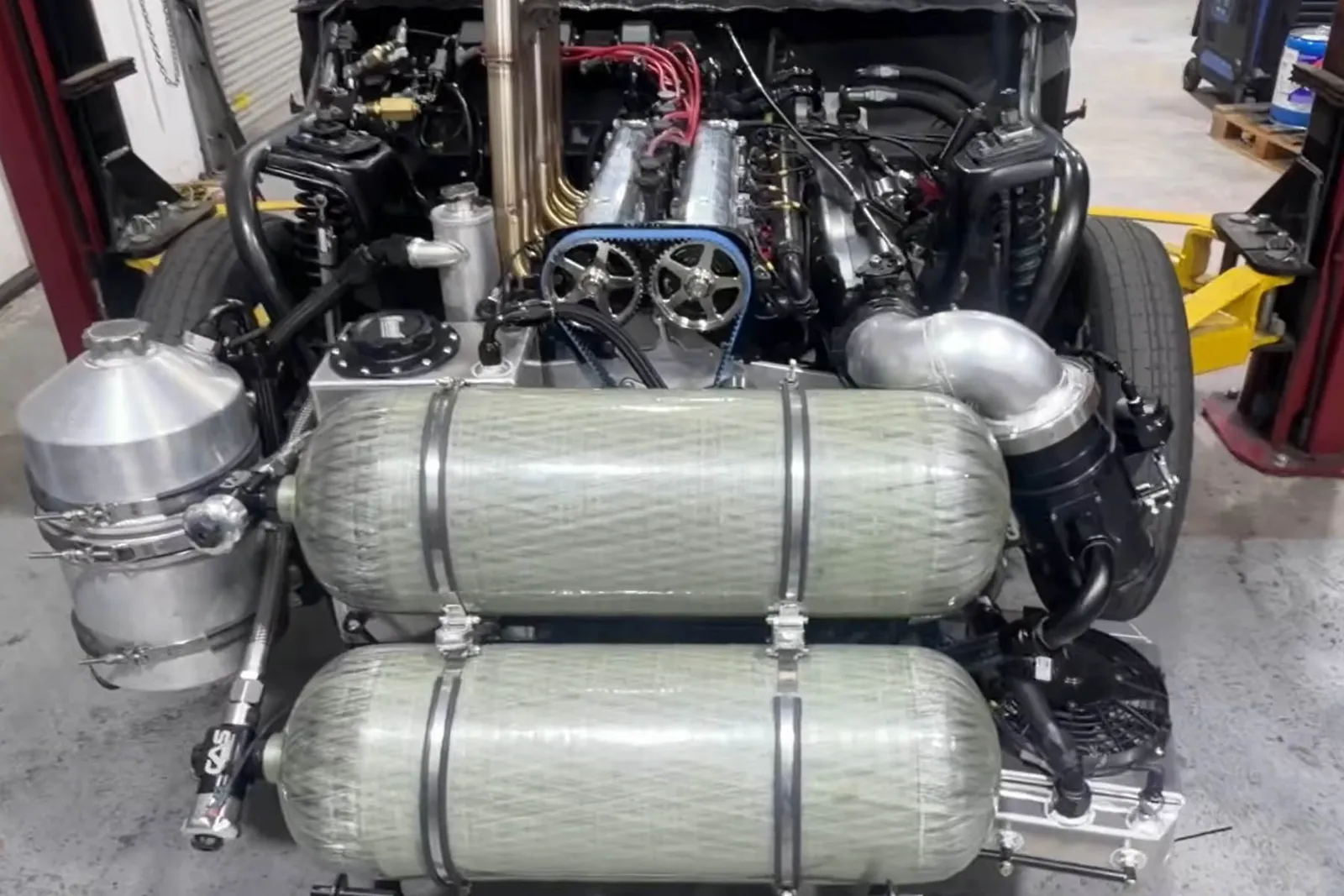
CAS skips the turbo's dependence on exhaust flow entirely. The manufacturer, Compressed Air Supercharging, describes its system as components that store, meter and control the discharge of high-pressure compressed air, managed by a boost control unit that lets the user dial in boost, timing and duration. The air is compressed ahead of time and stored, then released into the engine on demand.
Grannas explained the appeal in simple terms. "With a compressed air supercharger, your turbo is in a bottle," he told Dragzine. Because the stored air is cold and dense rather than heated by compression in the moment, and because it does not need exhaust flow to build, he says it is there every time he presses the throttle. "Open the bottles. Bam. You have 30 pounds of boost whenever you want it."
 View full photo
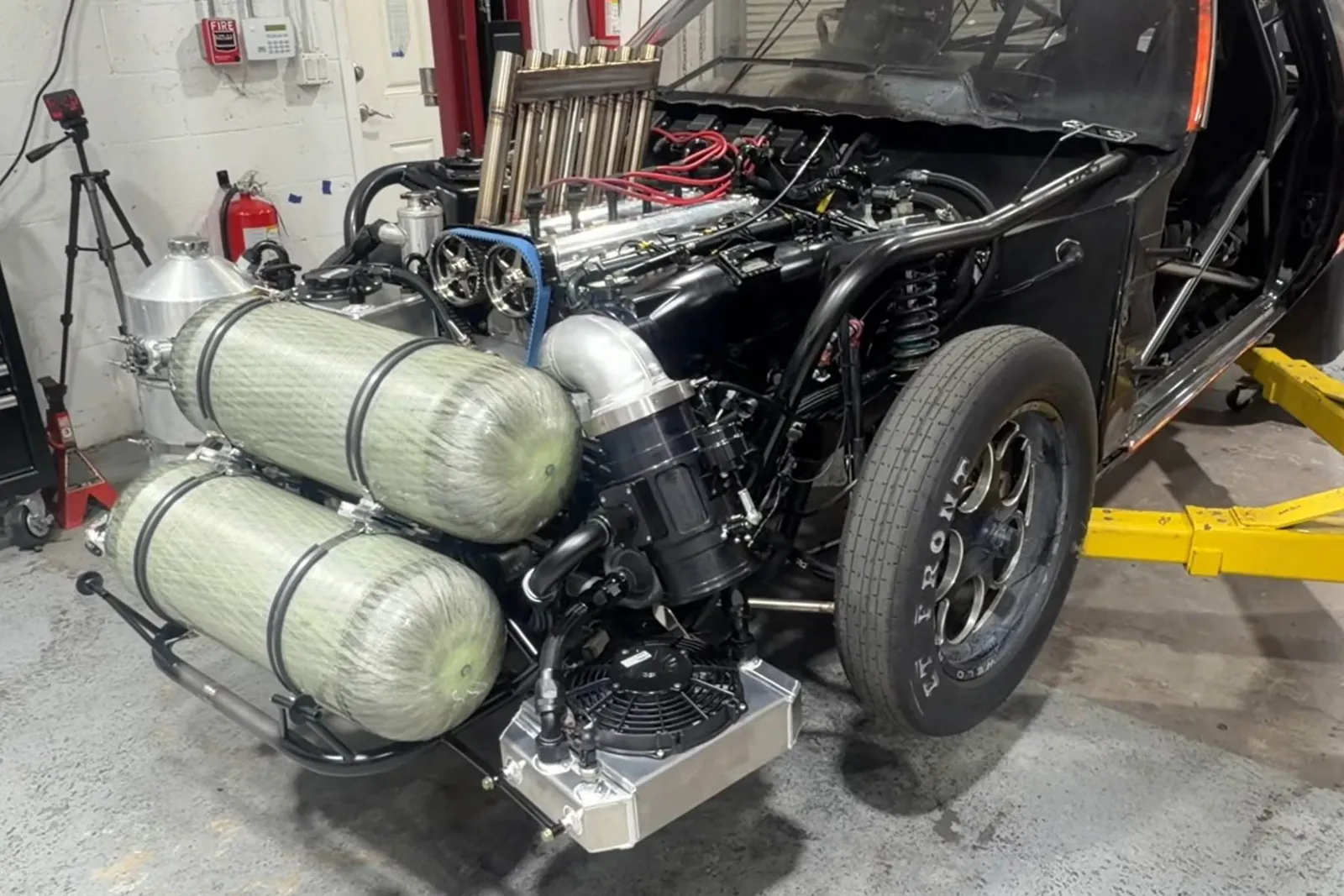
His system uses four bottles. The target, per Dragzine, is 2,800 horsepower from what Grannas called a little tiny engine. That figure is a goal, not a dyno result.
The hard part: packaging
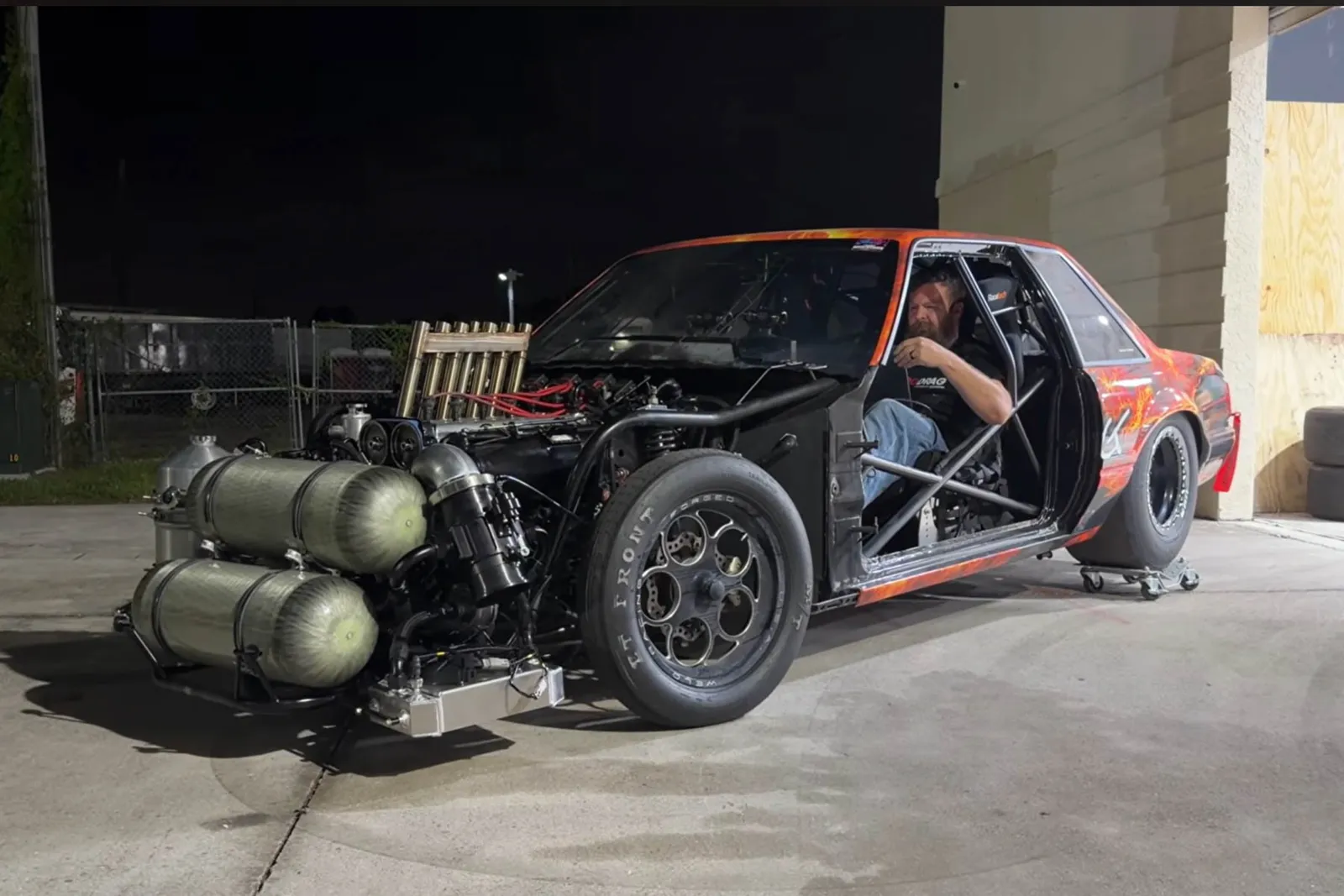
The switch is not free. Grannas will move the bottles inside the car to meet safety requirements, which will change the Mustang's weight distribution significantly. He also needs several high-pressure hoses made. Dragzine reports the work puts his trip to the World Cup Finals at risk.
 View full photo
That is a real trade for a car that just set a record. Moving four large bottles of air changes where the weight sits, and a 2,450-pound drag car with an H-pattern is extremely sensitive to how weight transfers at the launch. Getting the chassis to work with the new layout will take test passes.
 View full photo
Why this matters beyond one car
CAS is still unusual in drag racing, and its maker pitches it for everything from drag cars to boats to pulling sleds. A stick-shift drag car may be the clearest case for it. If Grannas can get boost that does not fall away between gears, the H-pattern record he just set could become the starting point rather than the high-water mark. And it would be a 2JZ, already the favorite engine of the import drag world, doing it on air out of a bottle.
Sources
This story is compiled from the published sources listed below.
- Joel Grannas Resets H-Pattern Record With New 2JZ-Powered Mustang Peeled, Dragzine
- Boost In A Bottle: Why Joel Grannas Switched His 2JZ Mustang To CAS, Dragzine
- Compressed Air Supercharging, Compressed Air Supercharging

Written by
Devin B.
Founder
Devin founded TORQFOLIO to cover the whole aftermarket scene, from hot rods and LS swaps to donks, drift and Baja. Based in Las Vegas and usually at a show or meet with a camera.
More from Devin B.TORQFOLIO Weekly
The best of the week in cars, builds & culture. Every Sunday.
Keep Reading
Saving the Bottom End: Billet Caps for Gen III Hemis and Oversized Studs for Stripped LS Blocks
Devin B.,
Toyota Pulled the Turbo Off Its New 2.0-Liter Four and Raced It in a GR86. Here's What Changed
Devin B.,
No Boost, No Nitrous, New Records: Pro Stock's 6.434 and a Hemi Cuda's 8.128
Devin B.,

Free Engines, a Box on the Roof and a Tire Chart: The Rules That Built a 2026 Formula DRIFT PRO Car
Devin B.,
Conversation 0 comments
No comments yet. Start the conversation.