Toyota Pulled the Turbo Off Its New 2.0-Liter Four and Raced It in a GR86. Here's What Changed
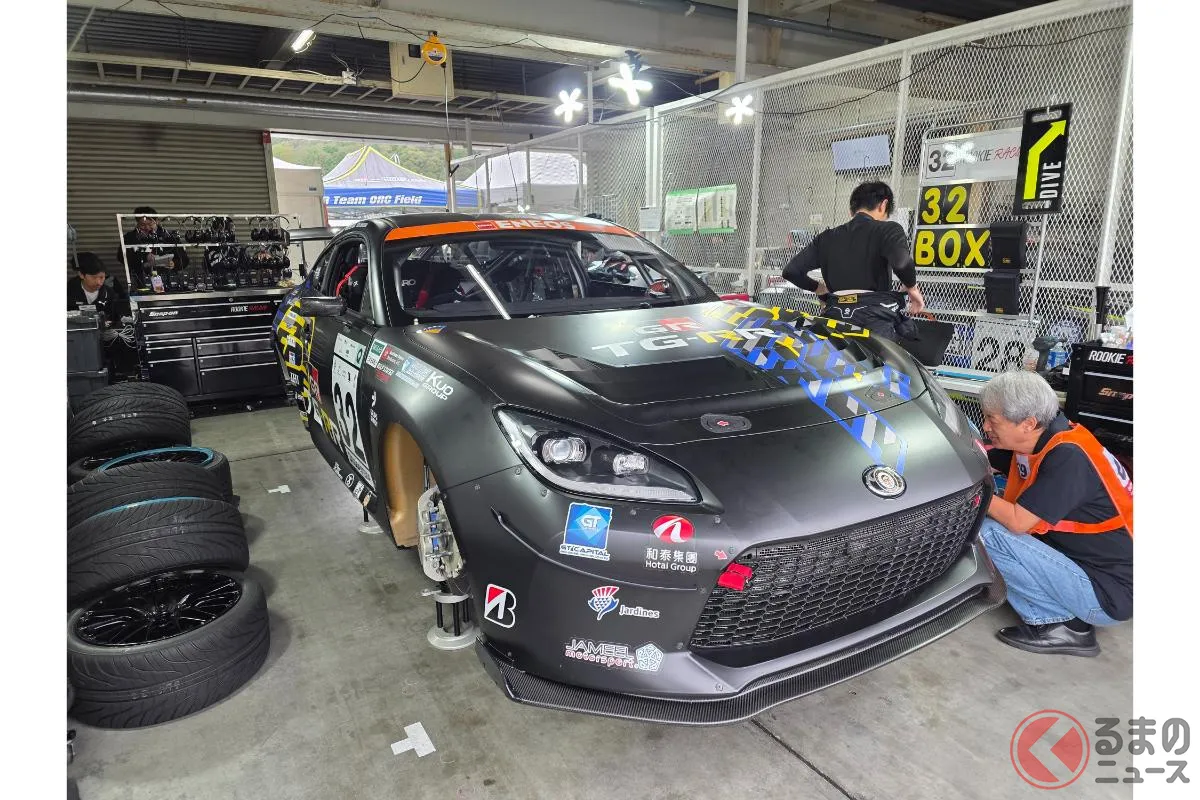
The G20E was shown as a 400-PS turbo engine. At Super Taikyu's Okayama round, Toyota ran it naturally aspirated, mounted lengthwise and pushed back toward the firewall in the GR86 Future FR concept.
Toyota's new 2.0-liter four was supposed to be the turbo engine with 400 hp in its future. At Okayama International Circuit on October 24 and 25, Toyota Gazoo Racing showed up with it in a GR86-shaped race car, mounted lengthwise, pushed back toward the firewall and running without a turbo at all. For anyone who has ever argued about what should power the next GR86, this is the most interesting engine news of the fall.
The car is the GR86 Future FR concept, the development racer Toyota has been running in Japan's Super Taikyu endurance series as a rolling test bed for its next rear-drive lightweight sports car. Round 6 at Okayama was the first time it raced with the new powertrain, which Motor1 identifies as the G20E, part of Toyota's new family of smaller, lighter four-cylinders.
What the G20E is
Toyota has been talking about this engine family since 2024. The 2.0-liter turbo version appeared in a mid-engine test mule based on the GR Yaris, the GR Yaris M Concept, at the 2025 Tokyo Auto Salon, and Toyota says it can be mounted either transversely or longitudinally. In January 2025, Motor1 reported that Toyota chief technology officer Hiroki Nakajima was asked at that show whether it was a 400-PS engine, and that Car Watch reported a 400 PS target, with a lesser 300 PS version planned and race versions expected to exceed 600 hp.
Toyota has been developing this engine family in public for a while. Motor1 notes that Toyota previously installed a development four-cylinder in a Lexus IS at Fuji Speedway, and that the G20E has been mounted behind the driver in the GR Yaris M Concept and a subsequent coupe. Super Taikyu has become a place where Toyota tests hardware in front of fans, and the GR86 Future FR concept is the latest example: a development car racing in public while engineers try different suspension geometries.
That is the turbo story. What Toyota brought to Okayama is something else: the same 2.0-liter, naturally aspirated.
What changed in the race car
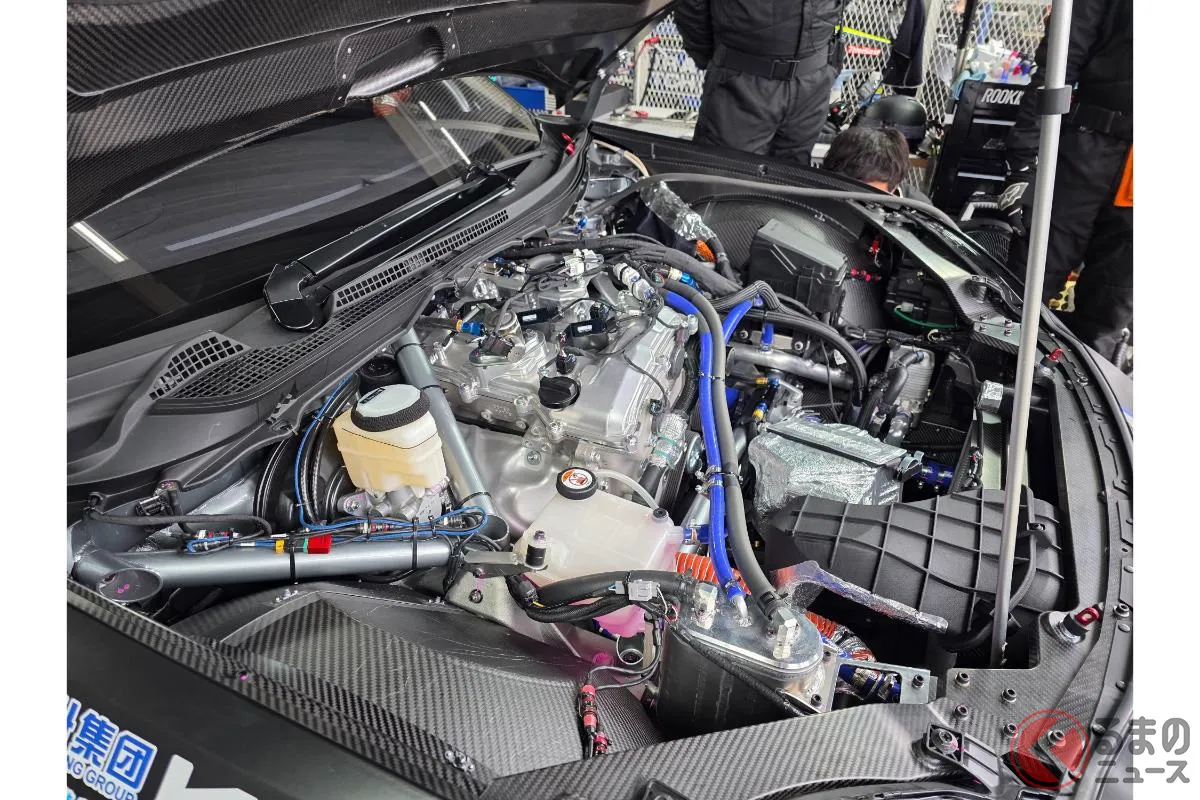
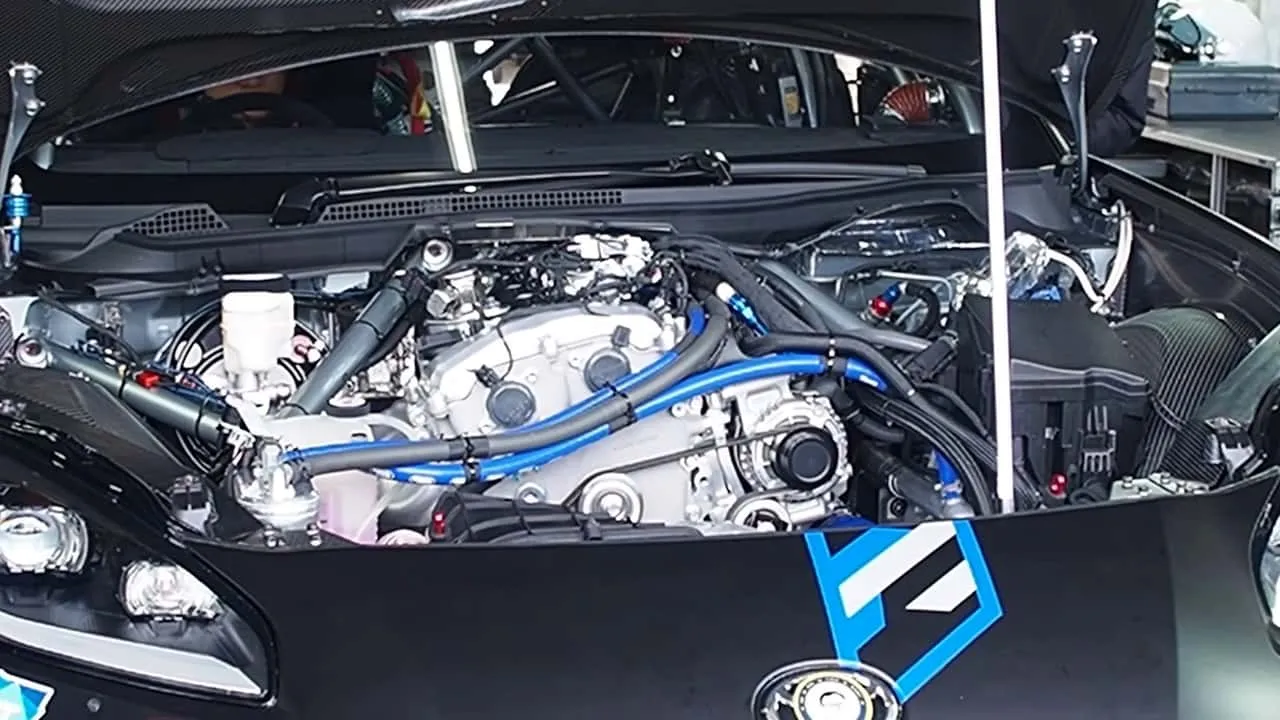
The previous version of the car used the turbocharged 1.6-liter three-cylinder from the GR Yaris and GR Corolla, which Motor1 says made around 300 hp and had also been destroked to 1.4 liters to test synthetic fuels. The turbo is gone now. Motor1 estimates the naturally aspirated 2.0 makes around 220 hp in this car. Kuruma News, which reported from the Okayama paddock, says team comments put it around 200 PS, and that its own writer's estimate of at least 220 PS is speculation.
 View full photo
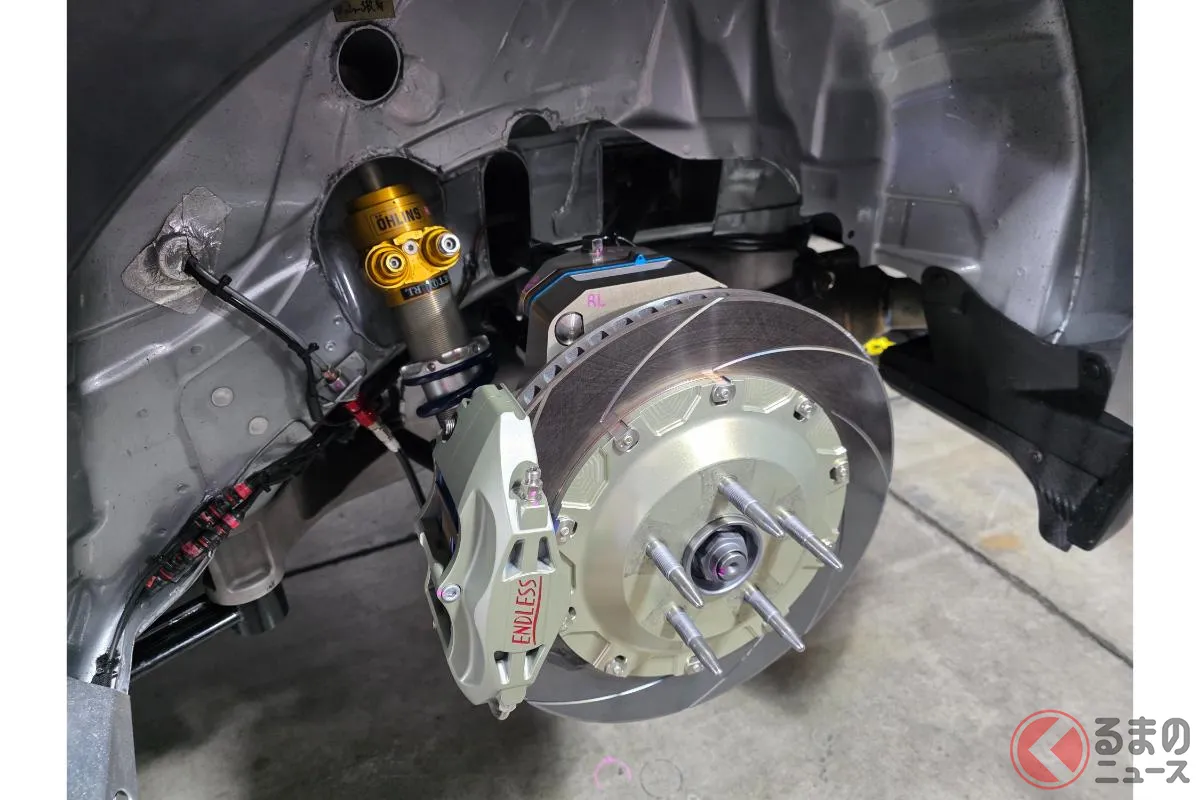
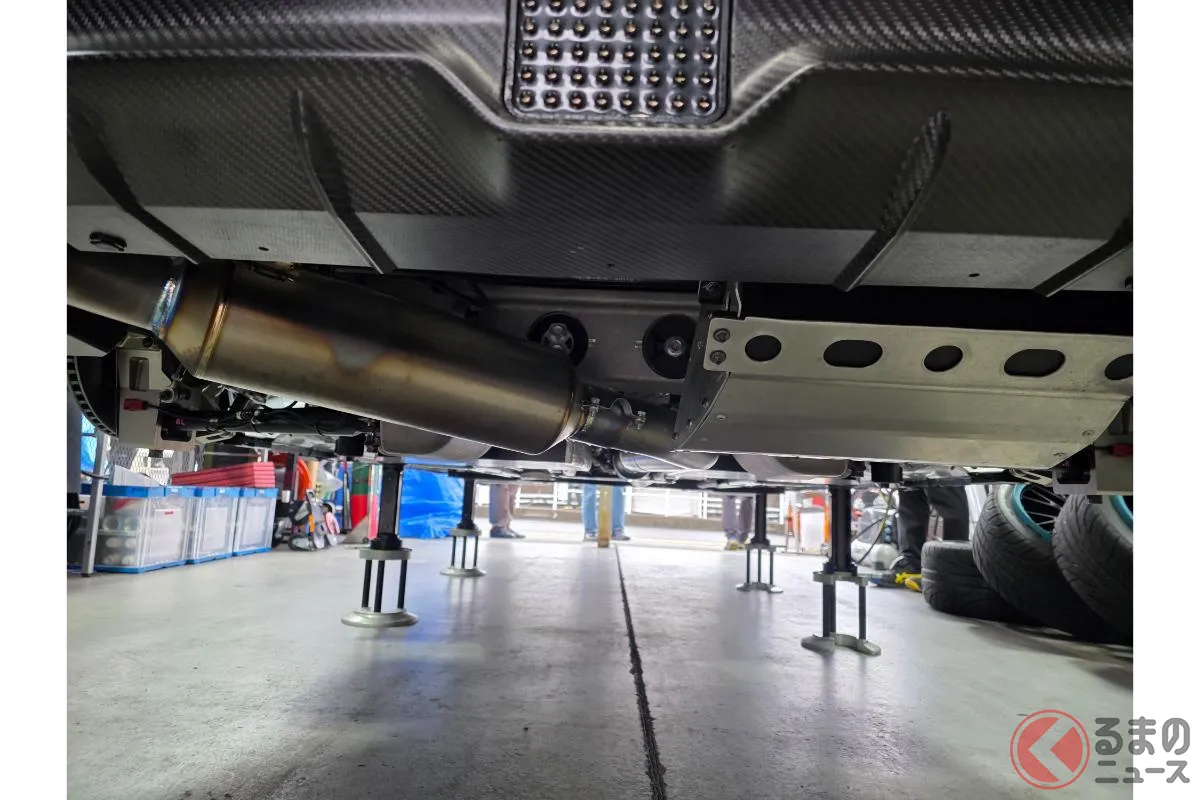
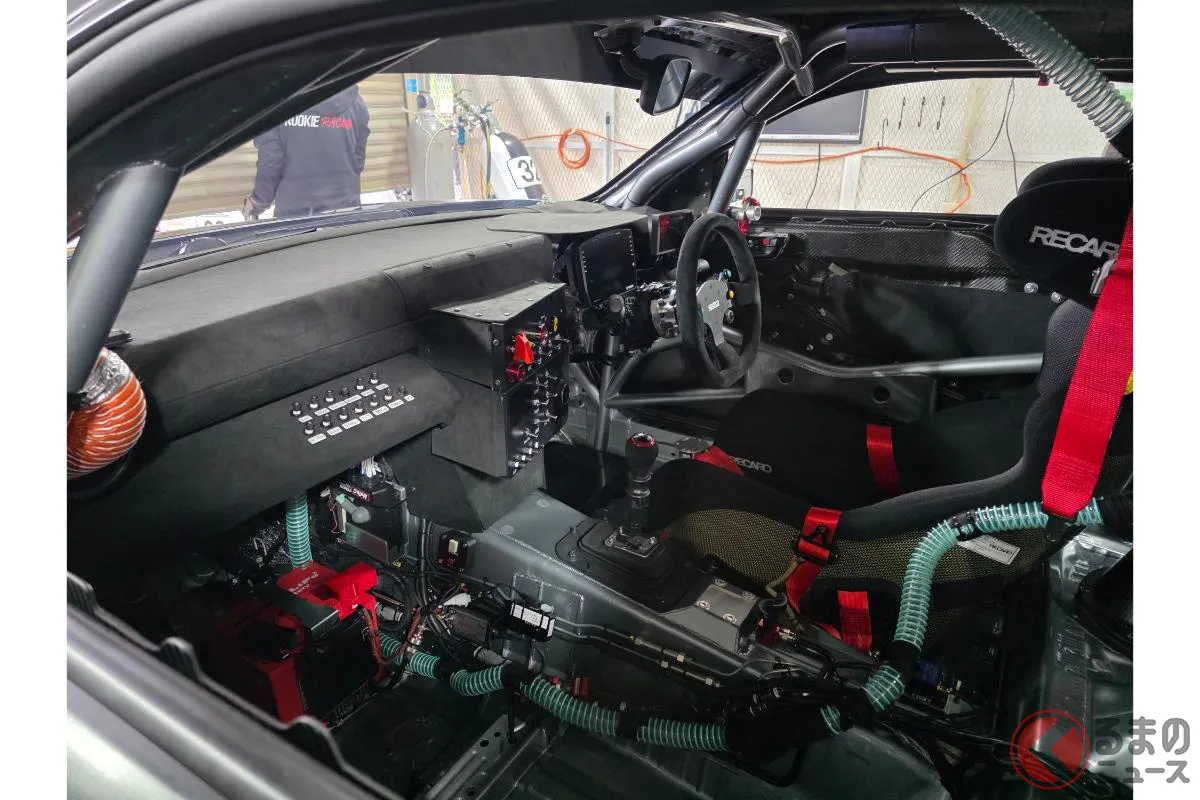
The more important changes are where the engine sits and what surrounds it. According to Kuruma News, the engine is mounted longitudinally and sits further back toward the bulkhead than the old turbo three did, in what the outlet calls an extreme front-midship position. A flat oil pan lets it sit lower without a dry sump. A carbon underfloor cover makes the floor fully flat. The front suspension switched from struts to a new double wishbone setup, and the rear, already double wishbone, has fully redesigned geometry and structure. Kuruma News describes the result as a completely new skeleton and packaging rather than an evolution of the production body.
 View full photo
Why lose the turbo?
Motor1's read is straightforward: pulling the turbocharger and its plumbing lightens the front of the car and removes turbo lag. Gazoo Racing driver Kazuya Oshima told Car Watch that the engine revs higher than the development team expected, Motor1 reported. For a car whose whole reason to exist is balance and response, those are the right trade-offs. Kuruma News compares the output to the 3S-GE in the old Altezza, a 210 PS naturally aspirated four that revved to 7,600 rpm.
 View full photo
The packaging gains may matter even more than the power. A compact four that can sit low and far back, with the turbo hardware deleted, puts more of the car's mass between the axles. Drivers told Kuruma News the car was very easy to drive. Toyota chairman Akio Toyoda, in his racing persona Morizo, joked that the car was "Oshima's free research project," according to the outlet's translation.
 View full photo
Because we can see the summit, we want to get this to customers at any cost.
Fujiwara, the lead development engineer at the event, framed the project around a single question, according to Kuruma News: what kind of lightweight sports car Toyota really wants to build. The car's internal nickname, per Japanese reports cited by Motor1, is Levin, after the old sporty Corolla.
What it does not tell us yet
None of this is a production announcement. The current GR86 uses a Subaru-sourced 2.4-liter flat-four, and Motor1 notes that Toyota has not confirmed whether the next generation will switch to an in-house four-cylinder. Kuruma News also says there is no confirmation that this hardware will reach the road car, and Motor1 expects a production model to be a few years away.
 View full photo
Still, the direction is hard to miss. Toyota spent 2025 showing the G20E as a 400 PS turbo engine for a mid-engine GR. In October 2026 it showed the same block as a high-revving naturally aspirated engine in a front-engine, rear-drive car built around light weight and low mass. For the tuner market, that is a tantalizing combination: a new Toyota four that is built for boost, raced without it, and packaged for a longitudinal rear-drive chassis.
Sources
This story is compiled from the published sources listed below.

Written by
Devin B.
Founder
Devin founded TORQFOLIO to cover the whole aftermarket scene, from hot rods and LS swaps to donks, drift and Baja. Based in Las Vegas and usually at a show or meet with a camera.
More from Devin B.TORQFOLIO Weekly
The best of the week in cars, builds & culture. Every Sunday.
Keep Reading
From $1,100 Craigslist Heap to Pikes Peak: Shawn Bassett's All-Carbon, Turbo LS 240Z
Devin B.,
Honda's SEMA Booth Ran From a Broken 1969 Baja N600 to a 1,300-HP Hybrid Trophy Truck
Devin B.,
A Wrecked Murcielago, a Type R Prelude and a '55 Saved From the Eaton Fire: SEMA 2026's Day-One Reveals
Devin B.,
Toyo Treadpass 2026: A CLK GTR McLaren, a Type R Powered Murcielago and Eccentric's Widebody FD
Devin B.,
Conversation 0 comments
No comments yet. Start the conversation.