No Boost, No Nitrous, New Records: Pro Stock's 6.434 and a Hemi Cuda's 8.128
Dallas Glenn led the quickest Pro Stock field ever at Texas, then Jason Line ran the quickest Super Stock A/Hemi pass in history at Rockingham. Here is why naturally aspirated drag racing is having a moment, and what changes next year.
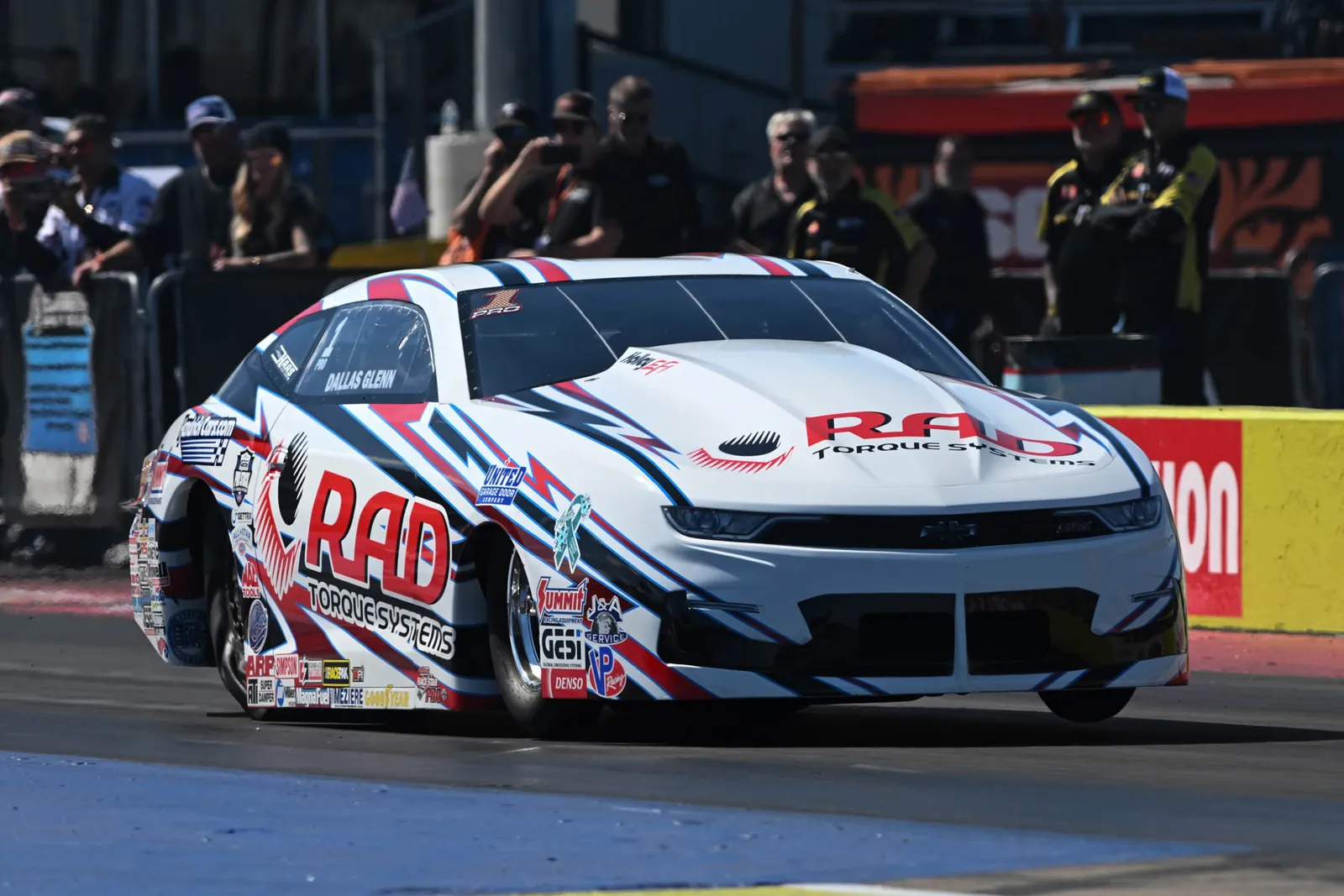
Pro Stock bans boost, nitrous and exotic fuel. Super Stock A/Hemi runs 1968 Barracudas and Darts with 426 Hemis. Both just had their quickest weeks ever. At the Texas NHRA FallNationals, Dallas Glenn ran 6.434 seconds at 213.50 mph to reset the Pro Stock elapsed-time record and lead the quickest 16-car field the class has ever seen. Eight days later at Rockingham Dragway, Jason Line drove a 1968 Barracuda with a 426 Hemi to an 8.128 at 165.93 mph, the quickest pass in Super Stock A/Hemi history.
Different cars, different budgets, same lesson: when the air is right and the engine builders are this good, all-motor drag racing still finds time.
Texas: every car in the 6.40s
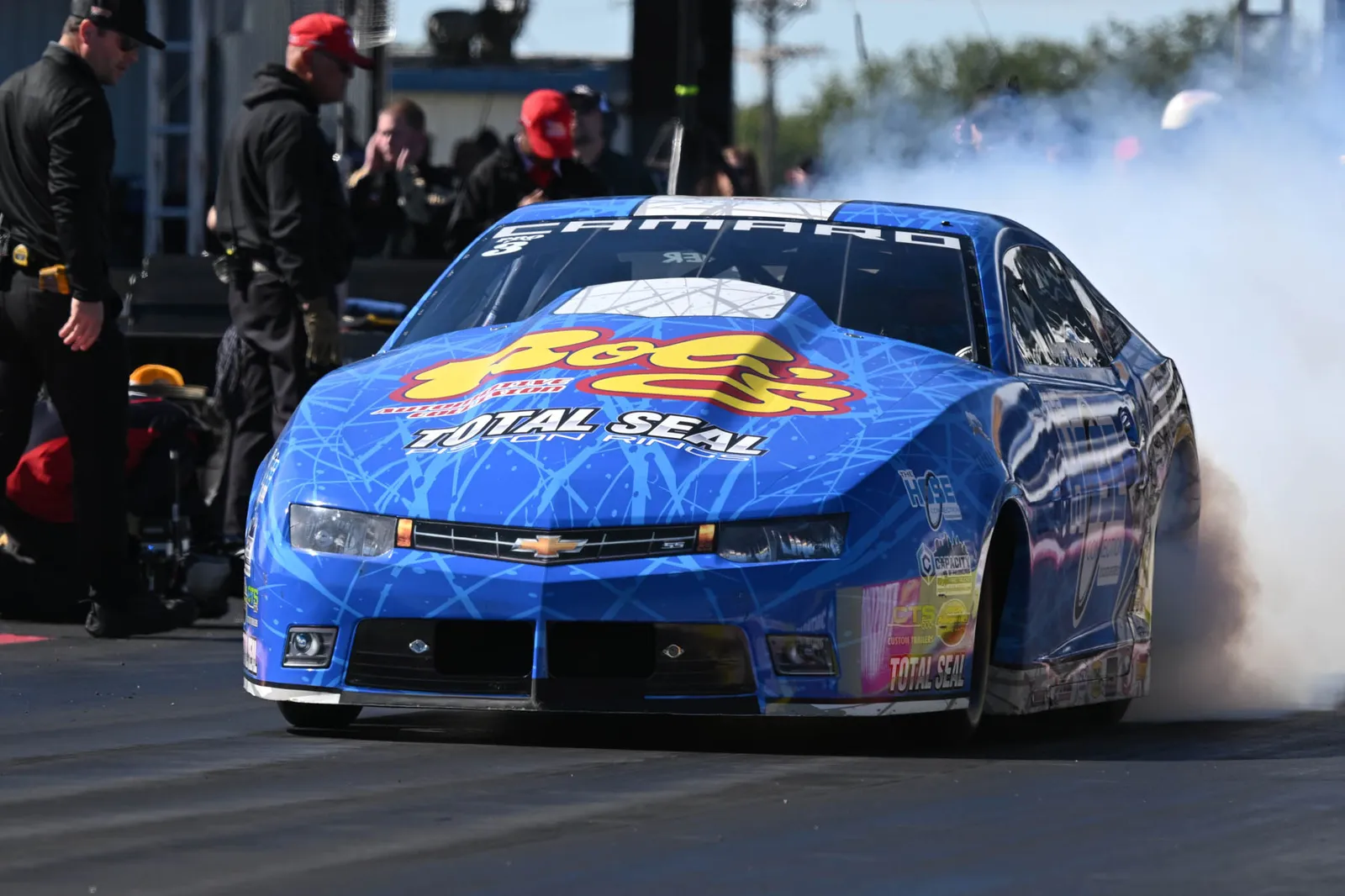
Dragzine reported that Pro Stock lost Friday's sessions to conditions that were unsafe for the class and got three qualifying runs on Saturday instead, in what the outlet described as perfect air on the Texas Motorplex surface. The teams used all of it. Glenn's 6.434 took the record, and every car in the field ran in the 6.40s. Stephen Bell anchored the field at 6.495, so the spread from first to 16th was just 0.061 second.
 View full photo
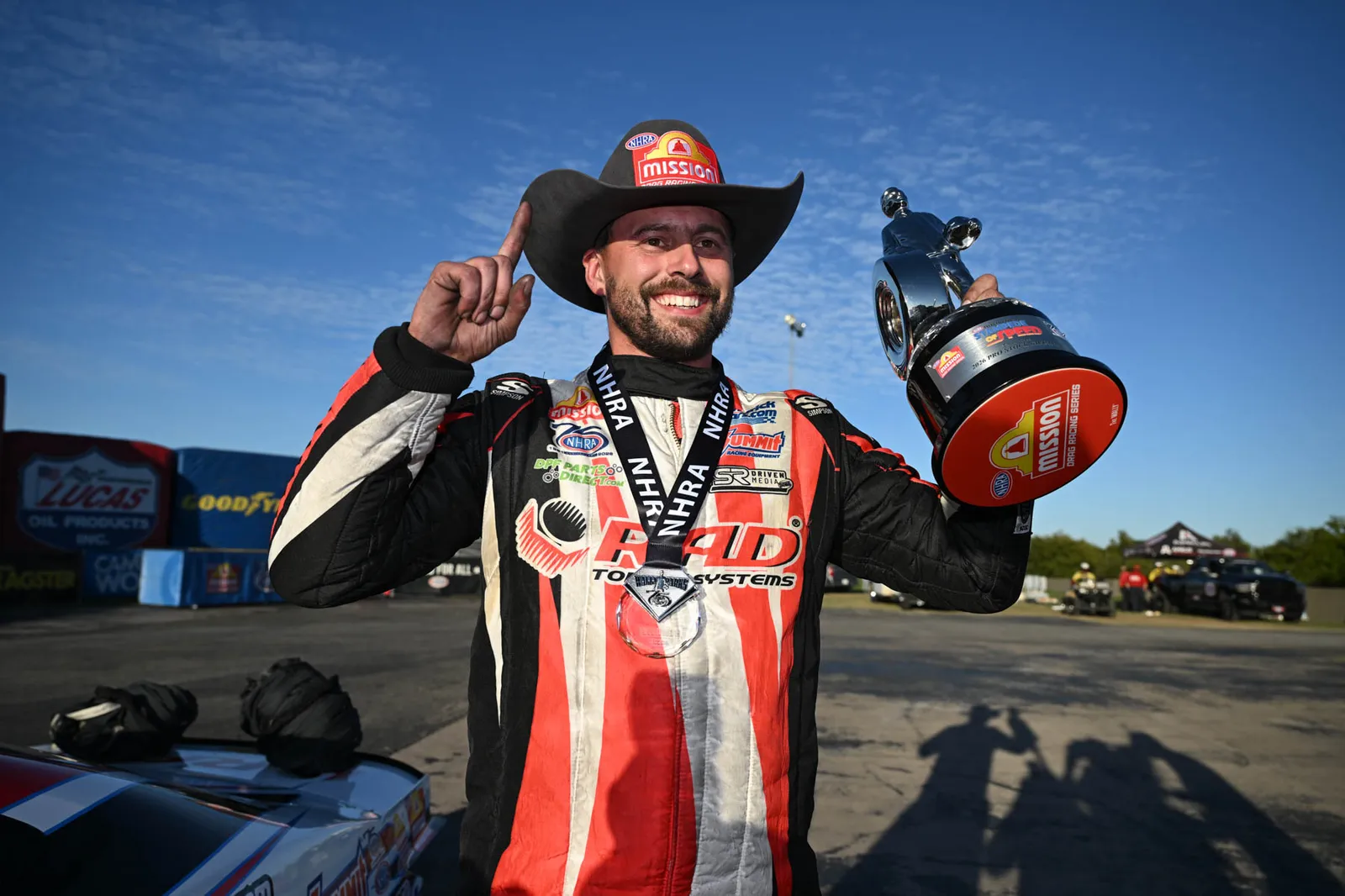
Glenn described the record run to Dragzine. "When it left, it felt really good and I was telling myself, don't mess this up because you're on a run," he said. Nobody came over at the top end, so he had to ask. "Then Rick Dodge was like, 'Yep, you got it.'"
Glenn went on to win the race on Sunday, beating Matt Hartford in the final with a 6.478 at 212.30 mph in his RAD Torque Systems Camaro, his fifth win of the year, and moved back into the points lead with two races left.
 View full photo
What a Pro Stock engine is
Competition Plus's guide to the class lays out the rules. Pro Stock runs single-camshaft, naturally aspirated V8s of no more than 500 cubic inches on racing gasoline, with no superchargers, turbochargers or nitrous. Since 2016 they have used throttle-body electronic fuel injection with an NHRA-specified ECU and a hard 10,500 rpm rev limit. Output is generally put at 1,300 to 1,500-plus horsepower, roughly 2.5 hp per cubic inch, and minimum weight is 2,350 pounds with the driver.
The end of the flat-hood era
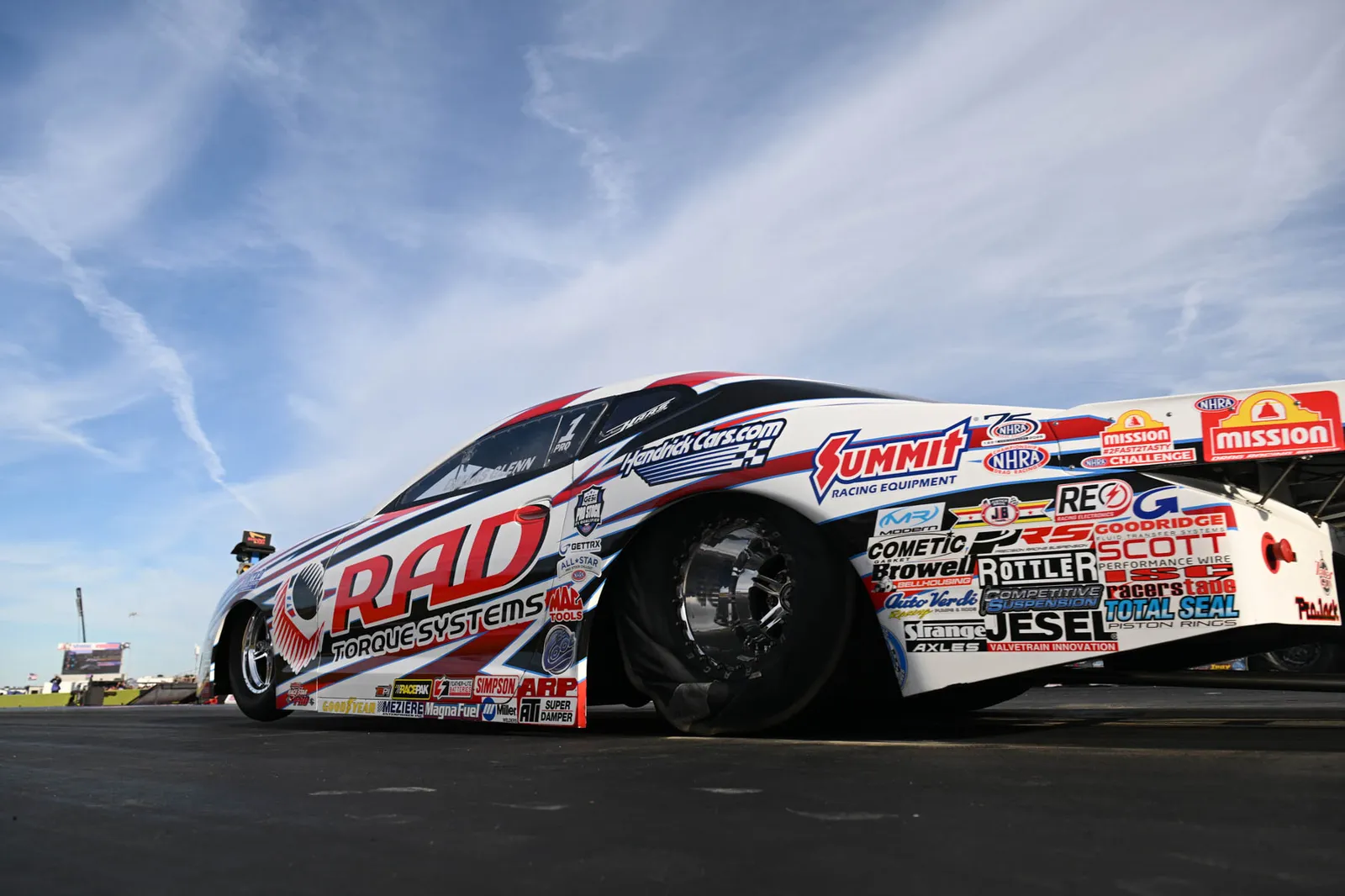
Dragzine called Texas one of the final races of the flat-hood era, and it is. In April, NHRA announced that hood scoops return to Pro Stock in 2027, replacing the single forward-facing throttle body with two top-mounted, four-barrel-style throttle bodies. EFI stays. The change reverses part of the 2016 switch that took away carburetors and scoops, a look Pro Stock had carried for 46 years, according to Competition Plus.
 View full photo
NHRA director of engineering Clinton Snead explained the reasoning. "The general feeling among competitors and stakeholders is the current low/front air-entry setup makes the engines more difficult to tune and creates more variation from car to car than it should," he said in NHRA's announcement, carried by Drag Illustrated. He added that the scoop and dual throttle bodies should help all teams, especially smaller and lower-budget ones.
Competition Plus reported the details: scoops will be required but subject to limited measurement guidelines, the throttle bodies will be governed by dimensional rules so teams can build their own or buy from suppliers, and rules on manifolds and air inlets will loosen. Drag Illustrated noted NHRA made the change with an eye on quicker elapsed times. That raises the obvious question about a record set in the class's last flat-hood season. Engine builders will spend the winter answering it.
Rockingham: a 16-year-old benchmark falls, then falls again
Super Stock A/Hemi is the factory hot rod's factory hot rod: 1968 Plymouth Barracudas and Dodge Darts with 426 Hemis, the cars Chrysler built to go drag racing. The Southern Hemi Throwdown at Rockingham, backed by competitor Anthony Rhodes, paid $15,000 to win and drew 12 of the class's top cars, Dragzine reported.
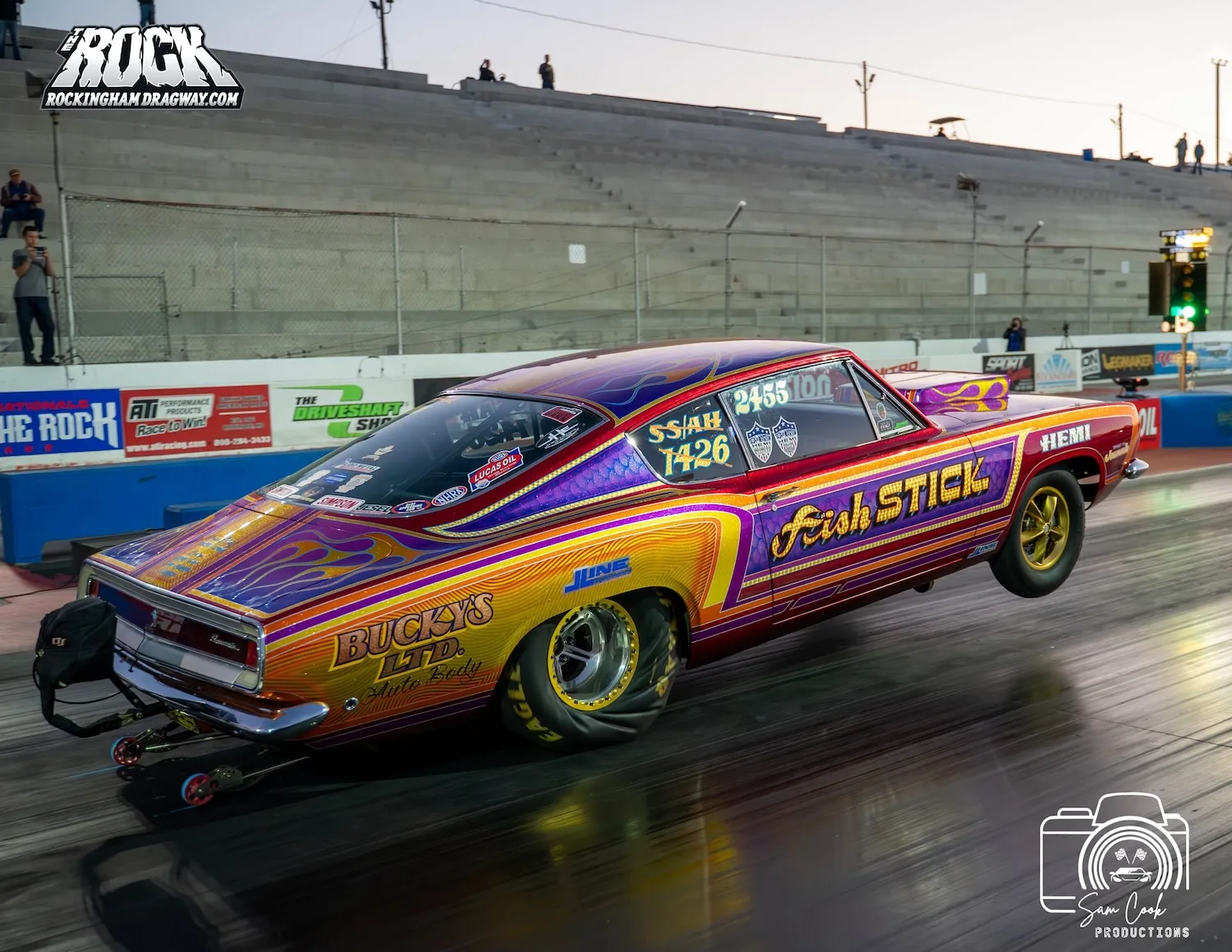
The class record had a long history. Charlie Westcott ran 8.221 in November 2010 at South Georgia Motorsports Park, Gary Wolkwitz came close with an 8.229, and Bucky Hess finally lowered it to 8.200 at Maple Grove in fall 2024. In Friday's cool air at Rockingham, Westcott ran 8.194 at 163.40 mph, the first SS/AH pass in the 8.1s. Jimmy Daniels took it away that evening with an 8.187, and Line topped qualifying with an 8.170 at 164.71 mph to reset both ends of the record.
 View full photo
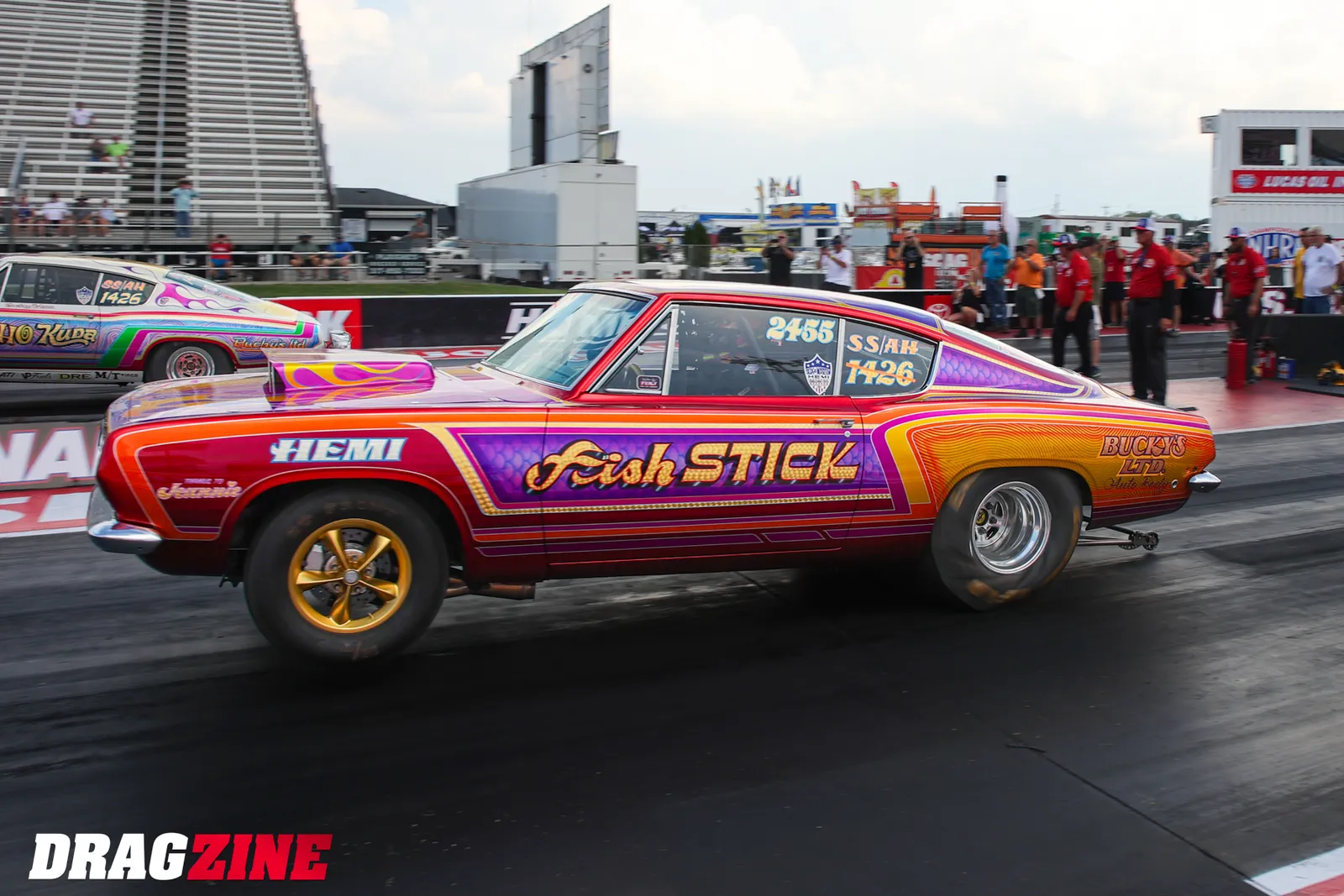
Line, a three-time NHRA Pro Stock world champion, was driving Fish Stick, a Barracuda owned by Hess, with a 426 Hemi Line built and tuned himself. He never ran slower than 8.187 in eliminations, set a new record of 8.157 at 165.26 mph on a semifinal solo, and after the final was pushed to Sunday by falling temperatures and track conditions, he beat Westcott with a .003 reaction time and an 8.128 at 165.93 mph. Line collected $15,000 for the win and $2,500 for low elapsed time.
 View full photo
Why all-motor numbers are falling now
Weather is the common thread. Both events had the dense, cool air that naturally aspirated engines love, and both reports point to it. Dragzine said Pro Stock had ideal conditions for making big naturally aspirated horsepower in Texas. At Rockingham, corrected altitude was nearing sea level by Friday evening, and Dragzine described the conditions for the Sunday final as mineshaft air.
The rest is the people. Pro Stock's builders have now had a decade to learn throttle-body EFI on a spec ECU, and the field is so close that a 0.061-second spread covers all 16 cars. In SS/AH, the architecture is fixed by the factory parts of 1968, so every hundredth comes from the builder. Line is the clearest example of both worlds meeting: a Pro Stock champion who built his own Hemi for a car whose design is nearly 60 years old, and ran it quicker than anyone ever has.
Next year Pro Stock gets its scoops back and a new set of airflow rules to learn. If Texas was the high point of the flat-hood era, it set a high bar for the next one.
Sources
This story is compiled from the published sources listed below.
- A 6.434 And The Quickest Field Ever: Pro Stock Makes History In Texas, Dragzine
- NHRA Texas FallNationals Delivers Records, Upsets, And Championship Drama, Dragzine
- Jason Line Shatters SS/AH Records In Dominant Hemi Throwdown Victory, Dragzine
- Hood Scoops Set to Return to NHRA Pro Stock Category in 2027, Drag Illustrated
- Hood Scoops Return Signals Pro Stock's Full-Circle Moment, Competition Plus
- Pro Stock: The Complete Guide to Drag Racing's Factory Hot Rod Class, Competition Plus

Written by
Devin B.
Founder
Devin founded TORQFOLIO to cover the whole aftermarket scene, from hot rods and LS swaps to donks, drift and Baja. Based in Las Vegas and usually at a show or meet with a camera.
More from Devin B.TORQFOLIO Weekly
The best of the week in cars, builds & culture. Every Sunday.
Keep Reading
VMP's Leviathan Intake Helps a ProCharged Godzilla Make 1,771 HP on Pump E85
Devin B.,
An F-150 Wins the Drag Race and Students Steal the Show at Holley Ford Fest
Devin B.,
Seven Cams, One Blown LT4, One Day: What Flag and Griffin's Shootout Showed
Devin B.,
Ten-Second Slips at Sonoma: What the Testers Found in the 795-HP Mustang Dark Horse SC
Devin B.,
Conversation 0 comments
No comments yet. Start the conversation.