Saving the Bottom End: Billet Caps for Gen III Hemis and Oversized Studs for Stripped LS Blocks
Livernois's 1044 steel main caps fix the Hemi's two-bolt weakness, and ARP's Block Saver kits rescue LS blocks with pulled threads. Here's how each one works.
Two of the most common platforms in American performance share a bottom-end weak spot, just in different ways. The Gen III Hemi's main caps are held by only two vertical bolts. The LS block, after years of rebuilds and boost, often has threads that are simply worn out. Both problems send otherwise good blocks to the scrap pile. Two recent products aim to keep them out of it.
EngineLabs detailed Livernois Motorsports' billet main caps for the Hemi, and LSX Magazine covered ARP's new Block Saver stud kits for LS engines. Neither is glamorous. Both are the kind of parts that decide whether a big-power engine lives.
The Hemi's two-bolt problem
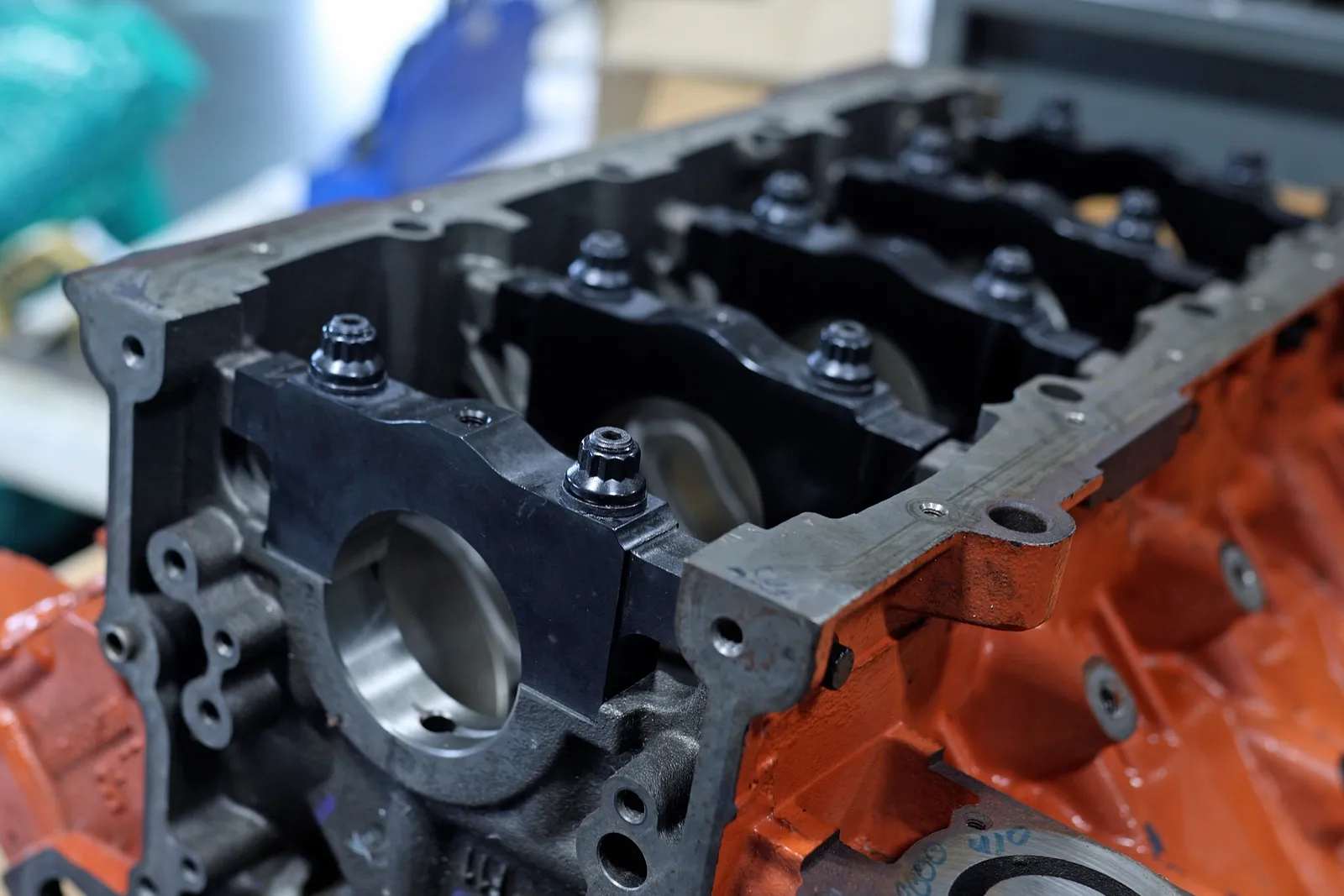
Unlike many modern designs, the Gen III Hemi block does not use four vertical main fasteners. EngineLabs explains it uses two per cap, along with two cross bolts in the block skirt. Even the robust BGE, or Big Gas Engine, block uses that arrangement, and that leaves room for improvement when boost and cylinder pressure climb.
 View full photo
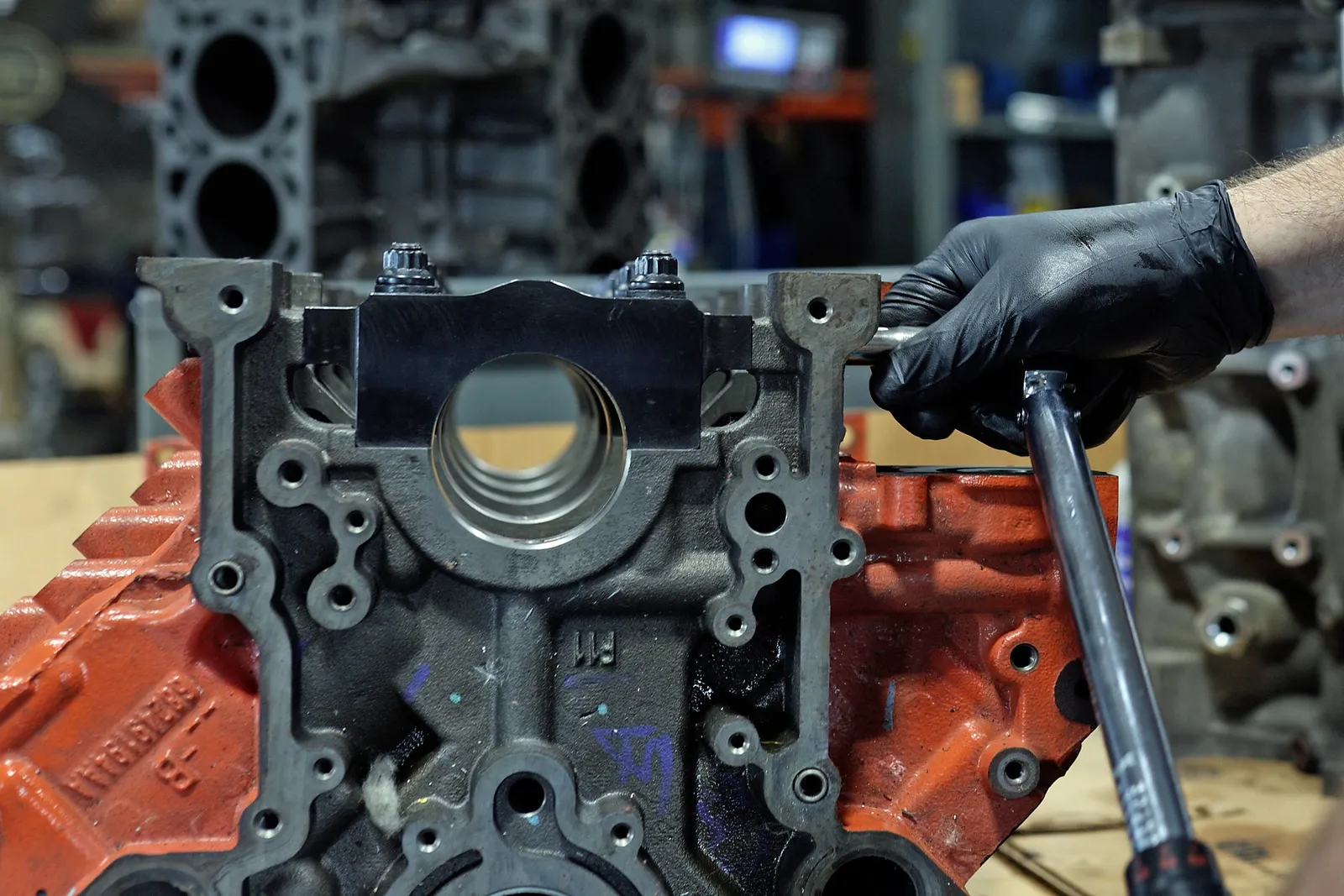
Livernois's fix starts with material. Its caps are machined from solid 1044 steel plate, a medium-carbon steel used in heavy-duty mechanical parts, which EngineLabs says is significantly stronger than the OEM powdered-metal caps. Livernois also slightly reshaped the caps to better resist extreme loads, while keeping clearance for the oil pan and for OEM and aftermarket windage trays.
The kit includes billet replacements for all five main caps and fits the full lineup of OEM Gen III Hemi blocks: 5.7, 6.1, 6.2 and 6.4 liters.
ARP hardware holds it together
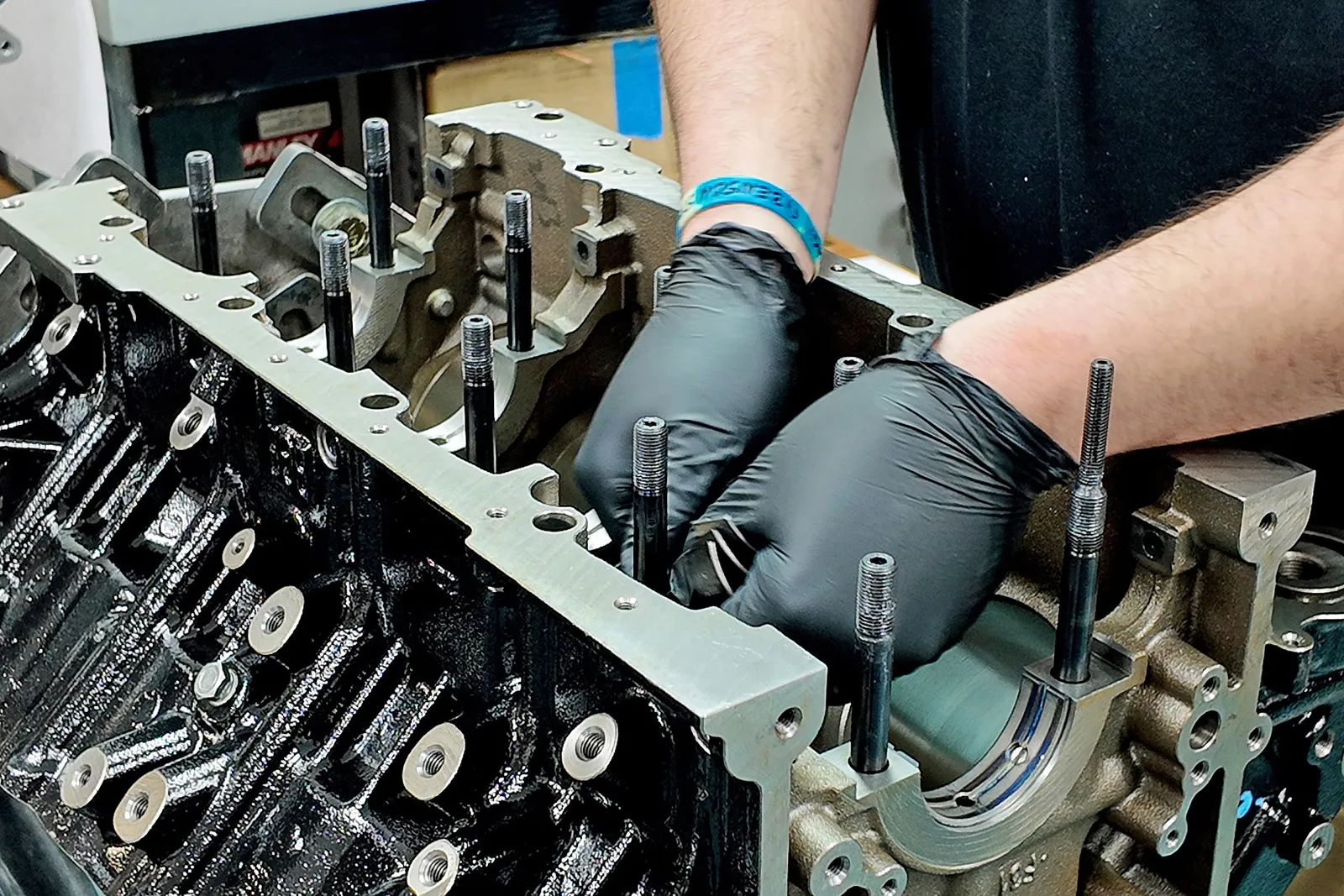
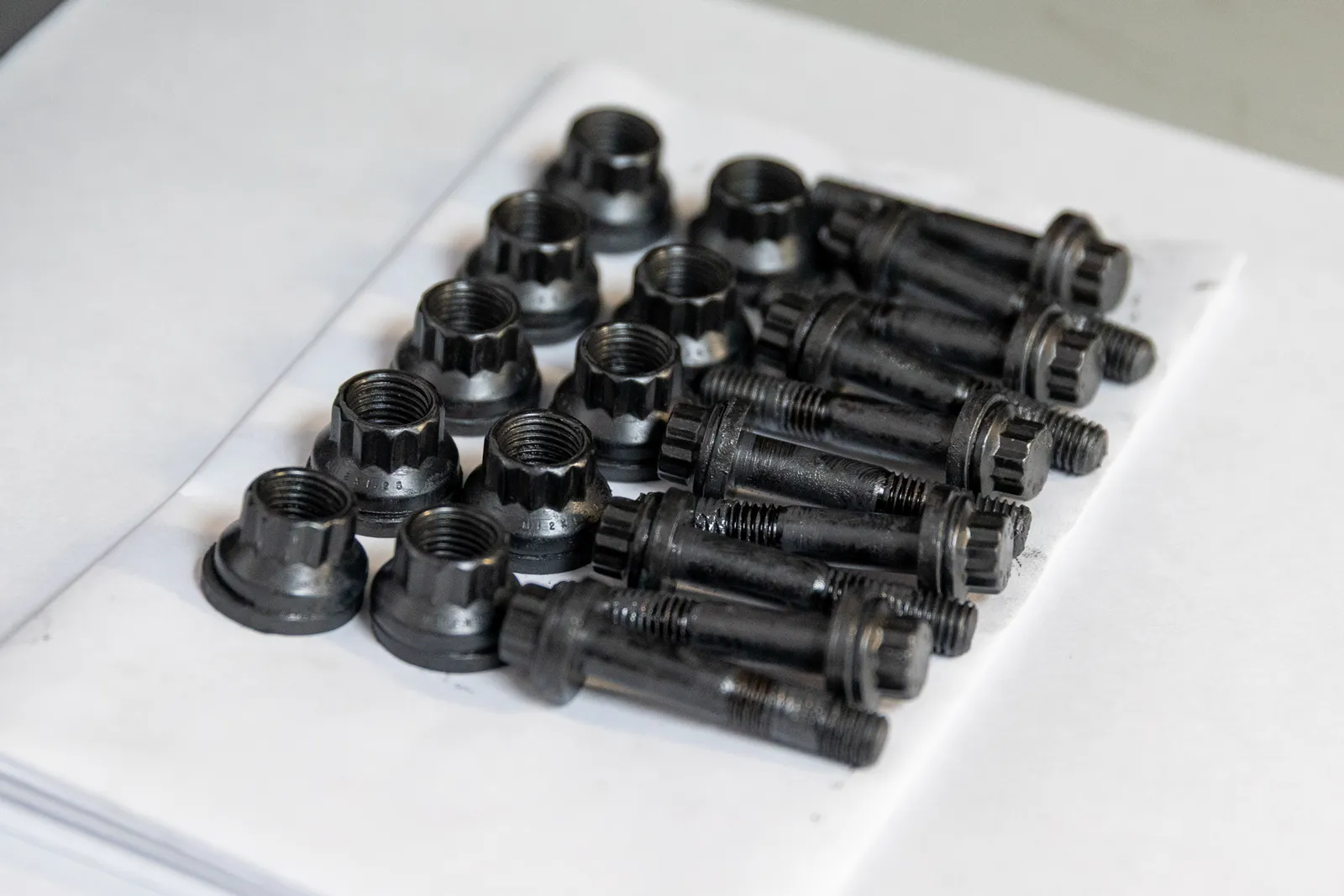
Caps are only as good as what clamps them. Livernois pairs its caps with ARP's 8740 chromoly main stud kit, using 12 mm main studs and 8 mm 8740 side bolts. EngineLabs lists a 190,000 psi tensile strength for both, well above the OEM bolts, with a 100 lb-ft torque spec on the studs. Because the Hemi has only two vertical fasteners per cap, the stronger side bolts carry extra importance.
 View full photo
Clamp load is the reason studs matter as much as the caps. A main cap that moves under load wears its bearing and can walk the crank out of alignment, and the two-vertical-bolt Hemi design gives that movement fewer fasteners to fight. Pairing a stiffer cap with fasteners rated well above stock attacks the problem from both sides.
 View full photo
The LS problem: pulled threads
The LS is famously tough, but its blocks have been rebuilt, boosted and swapped for more than two decades now. LSX Magazine describes the familiar teardown surprise: head bolt holes or main cap threads too damaged to trust, and a block headed for the scrap pile.
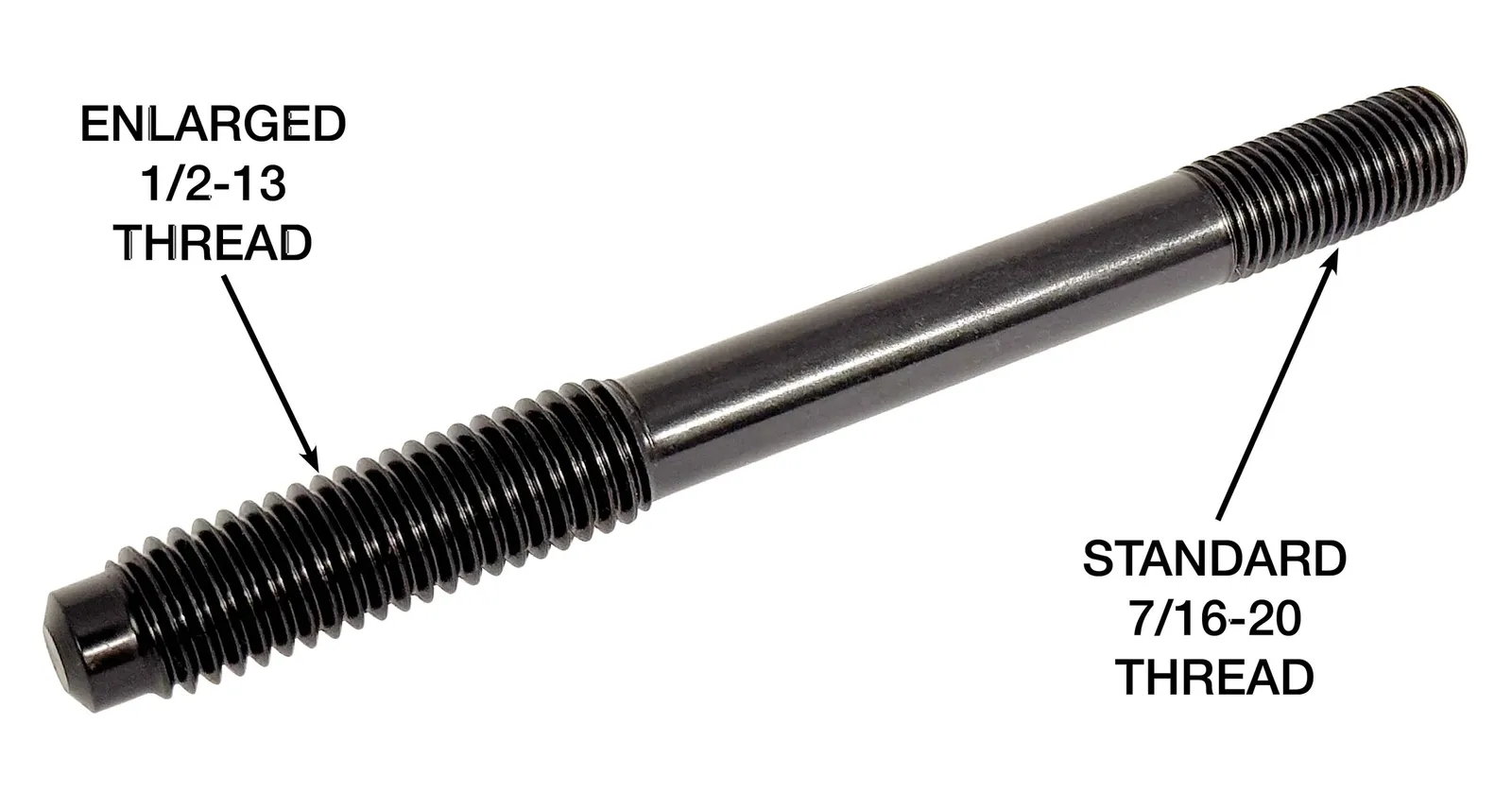
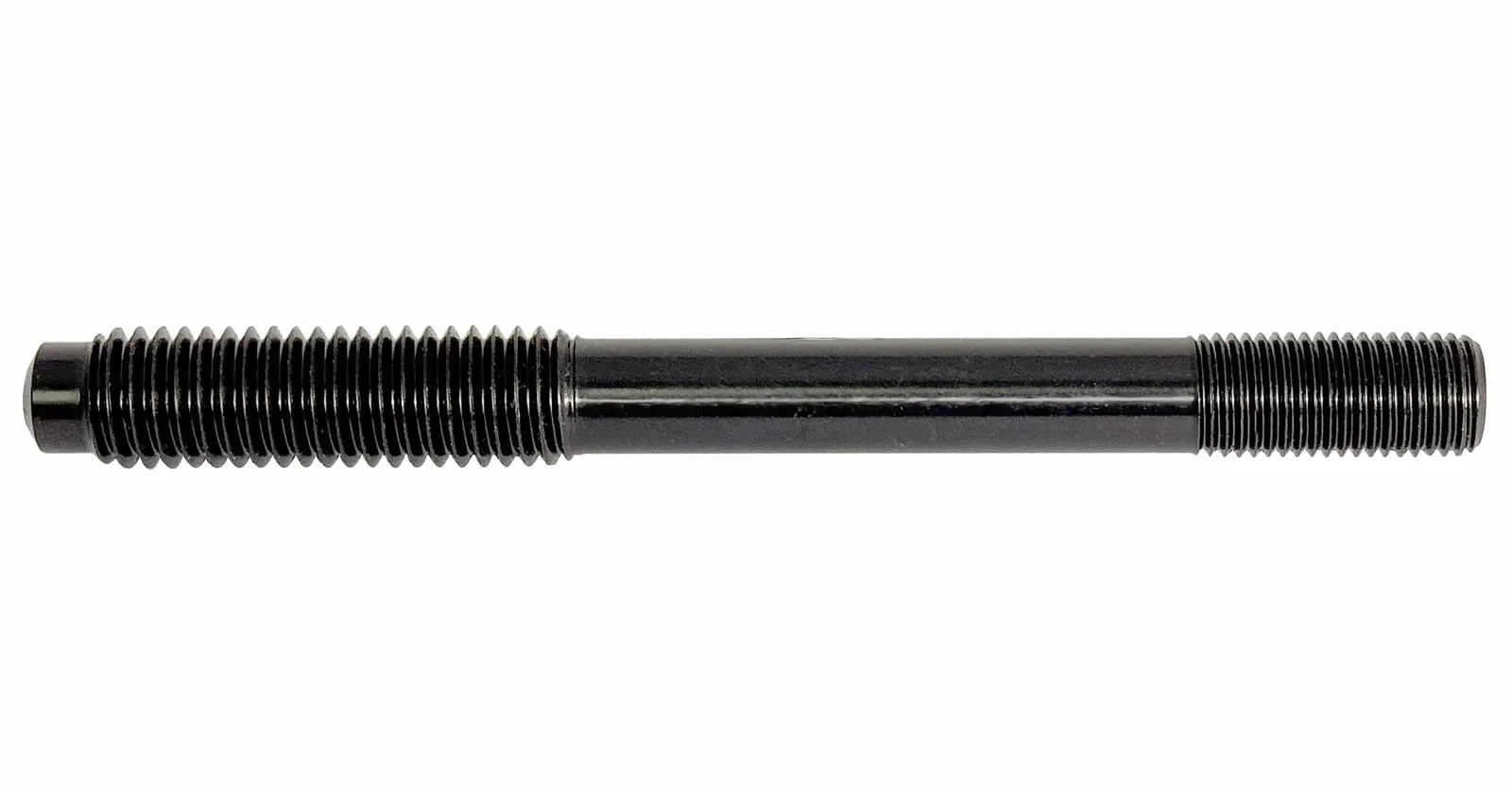
ARP's Block Saver kits for Gen III and Gen IV LS engines solve that with a stepped stud. The block end has an oversized 1/2-13 thread, so the damaged hole can be machined and tapped larger into fresh material. The top keeps the standard 7/16-20 thread, so the nut side stays the same as any LS head stud setup.
 View full photo
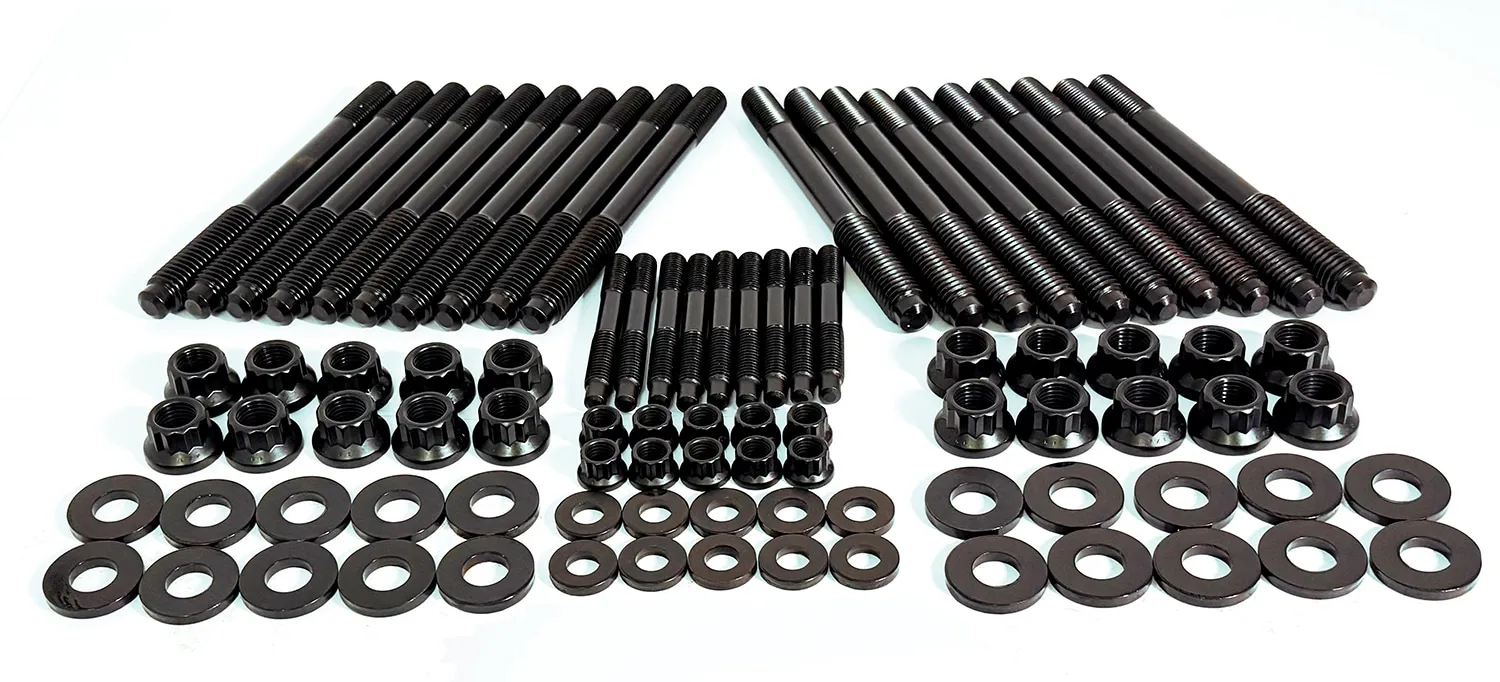
ARP offers the head stud kit in two materials. One uses its proprietary ARP2000 alloy, nominally rated at 220,000 psi tensile strength. A new kit, part number 434-4348, uses Custom Age 625+ studs rated at 260,000 to 280,000 psi, aimed at high-horsepower and boosted engines where clamping force is critical. ARP also offers a main stud repair kit for aluminum RHS blocks, part number 234-5803, in ARP2000.
 View full photo
How ARP makes them
Like ARP's other studs, these are centerless ground for concentricity, and the threads are rolled after heat treatment rather than cut. ARP says that process can provide up to 20 times the fatigue life of ordinary studs, LSX Magazine reports. The company lists more than 5,500 applications in its catalog.
 View full photo
ARP's latest catalog lists the repair kits alongside the rest of its range, and LSX Magazine notes the company's technical department can help with fitment questions, which is worth using before a block goes to the machine shop for oversized tapping.
Not a substitute for machine work
Both fixes depend on a machinist. LSX Magazine is clear that a damaged LS block still has to be inspected and properly machined before oversized studs go in, and billet main caps on any block mean line-boring and careful fitting. These are not bolt-on parts in the driveway sense.
What they do is change the math on a block. A Hemi that would have been a weak link at high boost can carry steel caps and better studs. An LS block with pulled threads, maybe the last of a casting someone wanted to keep, gets another life. In a hobby built on finding, fixing and reusing hard parts, that is worth a lot.
Sources
This story is compiled from the published sources listed below.

Written by
Devin B.
Founder
Devin founded TORQFOLIO to cover the whole aftermarket scene, from hot rods and LS swaps to donks, drift and Baja. Based in Las Vegas and usually at a show or meet with a camera.
More from Devin B.TORQFOLIO Weekly
The best of the week in cars, builds & culture. Every Sunday.
Keep Reading
No Boost, No Nitrous, New Records: Pro Stock's 6.434 and a Hemi Cuda's 8.128
Devin B.,
Hub Dyno or Rollers? Big 3 Racing Put One Hellcat on Both and Found 5 HP
Devin B.,
The 350 and 400 Are Back: GM's Gen 6 Small-Block Truck V8s, Explained
Devin B.,
The Junkyard LS Swap Guide: Which GM V8s to Pull, How to ID Them, What Else You Need
Devin B.,
Conversation 0 comments
No comments yet. Start the conversation.