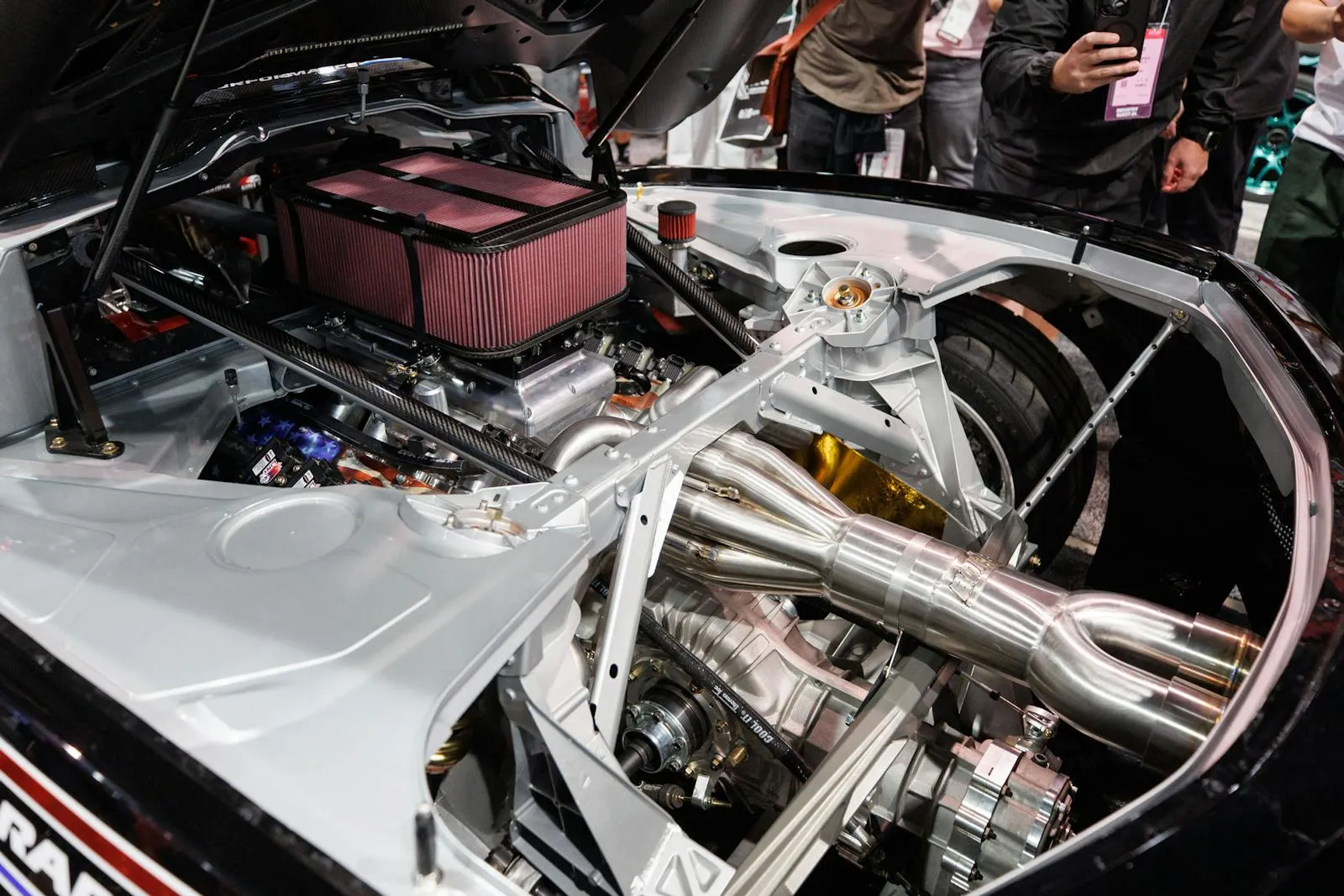
9,000 RPM and No Boost: Inside Matt Field's 1,000-HP, 468-Cubic-Inch LS for His C8 Corvette Drift Car
Gromm Racing Engines built Field a 16.5:1 naturally aspirated LS with a Callies stroker crank, 3D-scanned pistons and a true dry sump. Fixing crankcase pressure alone was worth more than 100 hp.
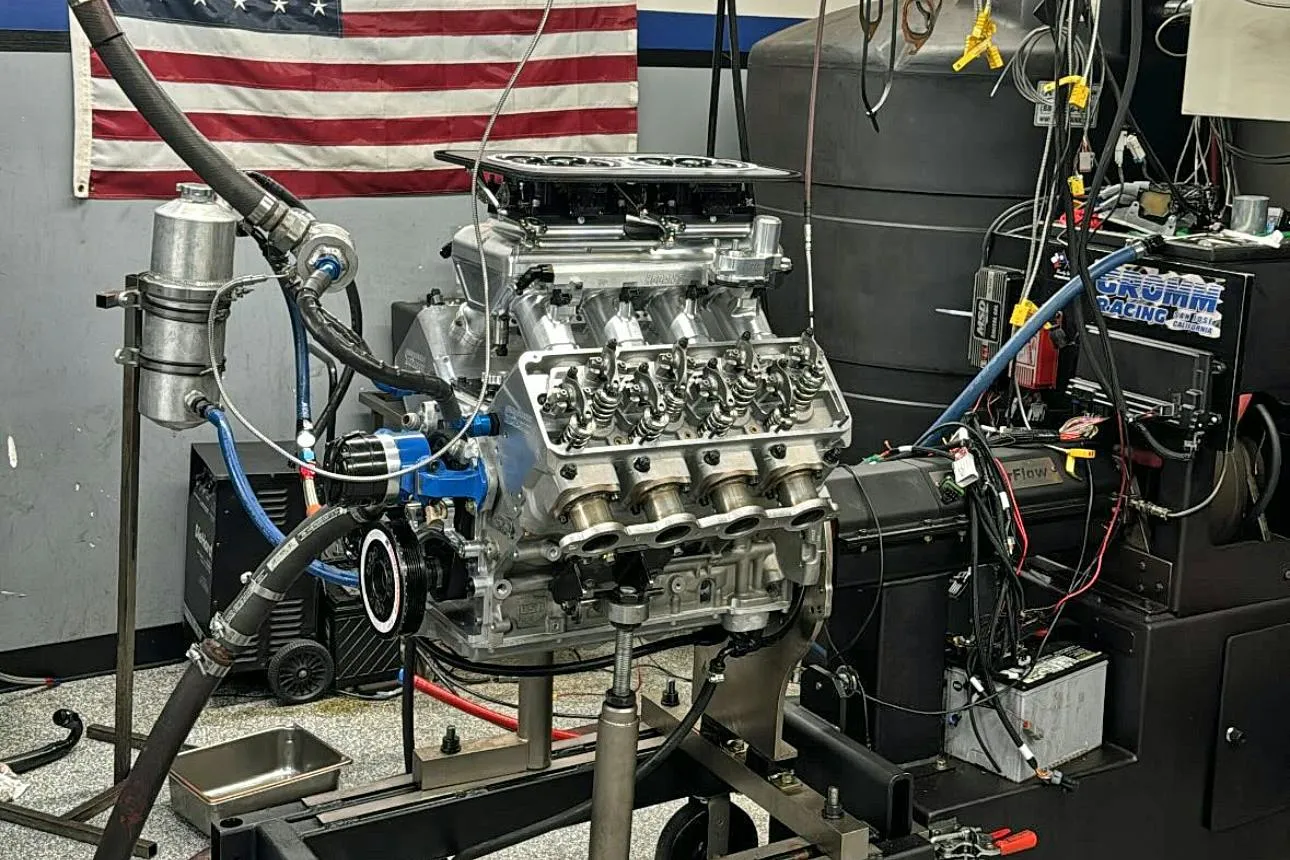
Most drift builds chase power with boost because boost is cheap horsepower. Matt Field went the other way. The engine in his mid-engine C8 Corvette drift car is a 468-cubic-inch LS with no turbo, no supercharger, 16.5:1 compression and more than 1,000 hp at up to 9,000 rpm. "I never knew how intoxicating RPM was," Field told EngineLabs, which published the full breakdown of the build on August 25.
The car started as a flood-damaged, salvage-title C8, according to EngineLabs, and debuted at the 2024 SEMA Show. Field, who runs Drift Cave Motorsports, replaced the factory 6.2-liter LT2 with an LS. His reasoning was personal more than technical: he told EngineLabs he is "not an LT guy," has years of LS experience, and had long wanted a naturally aspirated, high-strung LS. The engine engineering, machining and dyno work came from Semir Metovic at Gromm Racing Engines.
 View full photo
The bottom end: tall deck, long stroke
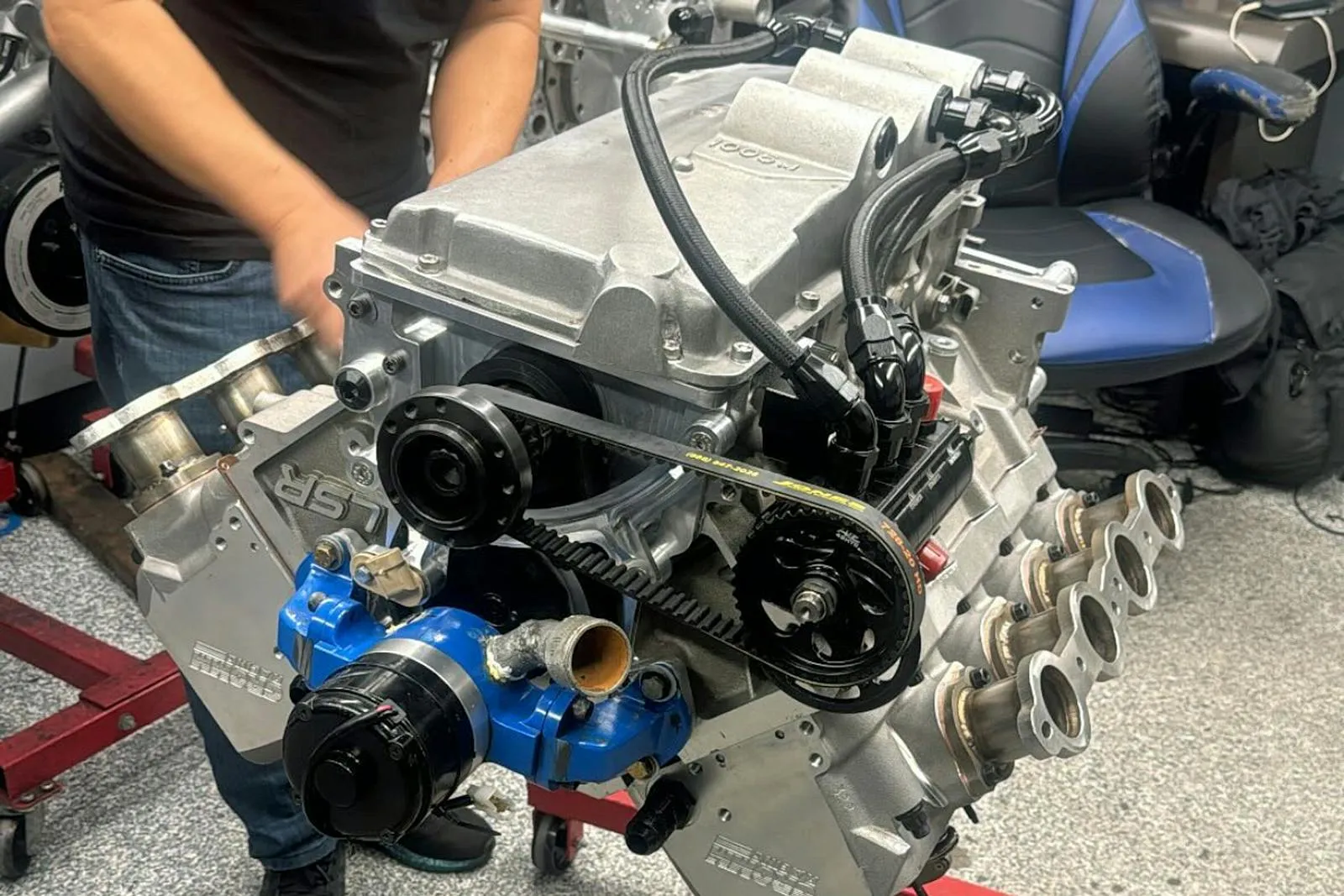
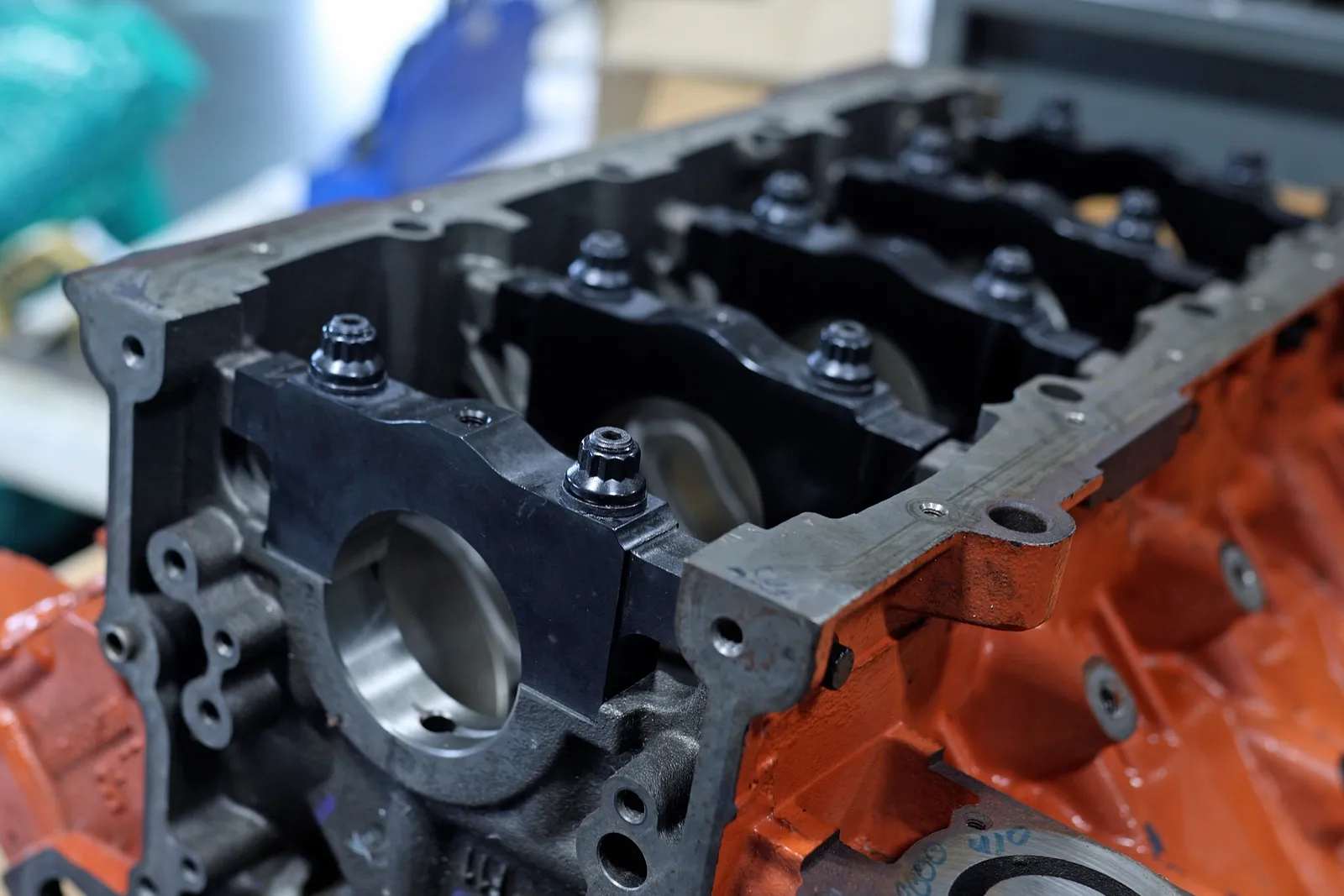
The foundation is an aluminum Concept Performance LSR block with a tall-deck design. Inside is a custom Callies crankshaft with a 4.25-inch stroke, made from the same material Callies uses for sprint car cranks, per EngineLabs. EngineLabs does not list the bore, but 468 cubic inches over a 4.25-inch stroke works out to roughly 4.19 inches by our math.
 View full photo
The pistons are where this engine got interesting. RaceTec designed custom pistons from 3D scans of the cylinder heads. The first design had deep valve pockets. The revised version has shallower pockets, higher ring lands and about 0.100 inch of piston-to-valve clearance, and it holds 16.5:1 compression. That revision did more than add clearance: EngineLabs reports that with the new pistons the engine pulls about 12 inches of crankcase vacuum beyond 9,000 rpm, where the original design ran 3 to 5 inches of positive pressure. Gromm credits the change with more than 100 hp and about 1,000 rpm of extra stable power.
Heads, cam and a 0.020-inch problem
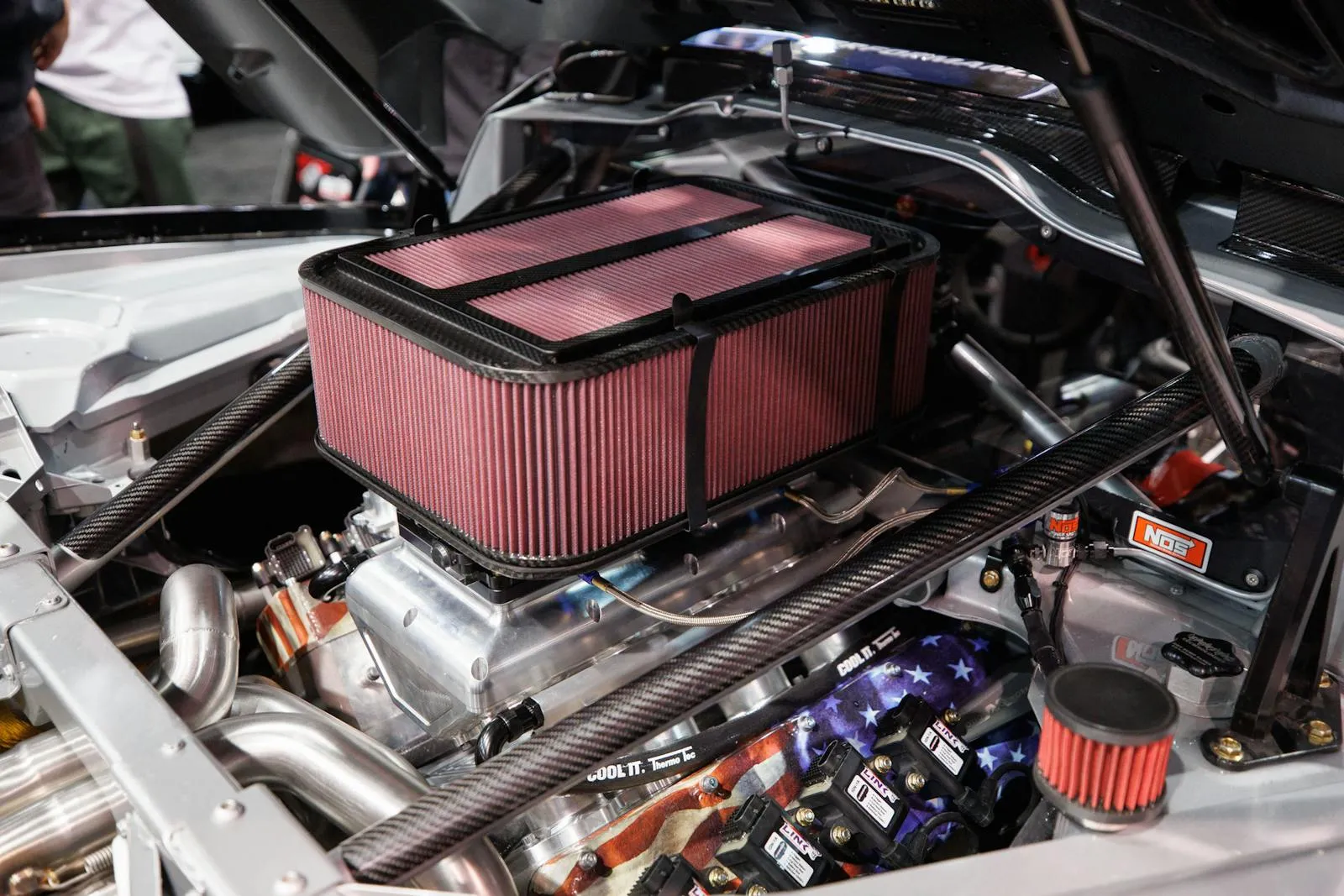
Up top are Competition Induction Design LS-CR heads, ported and machined by Gromm, with Victory1 titanium valves and Jesel Pro Steel Series rockers. Air comes through a Hogan's dual 4500 intake manifold.
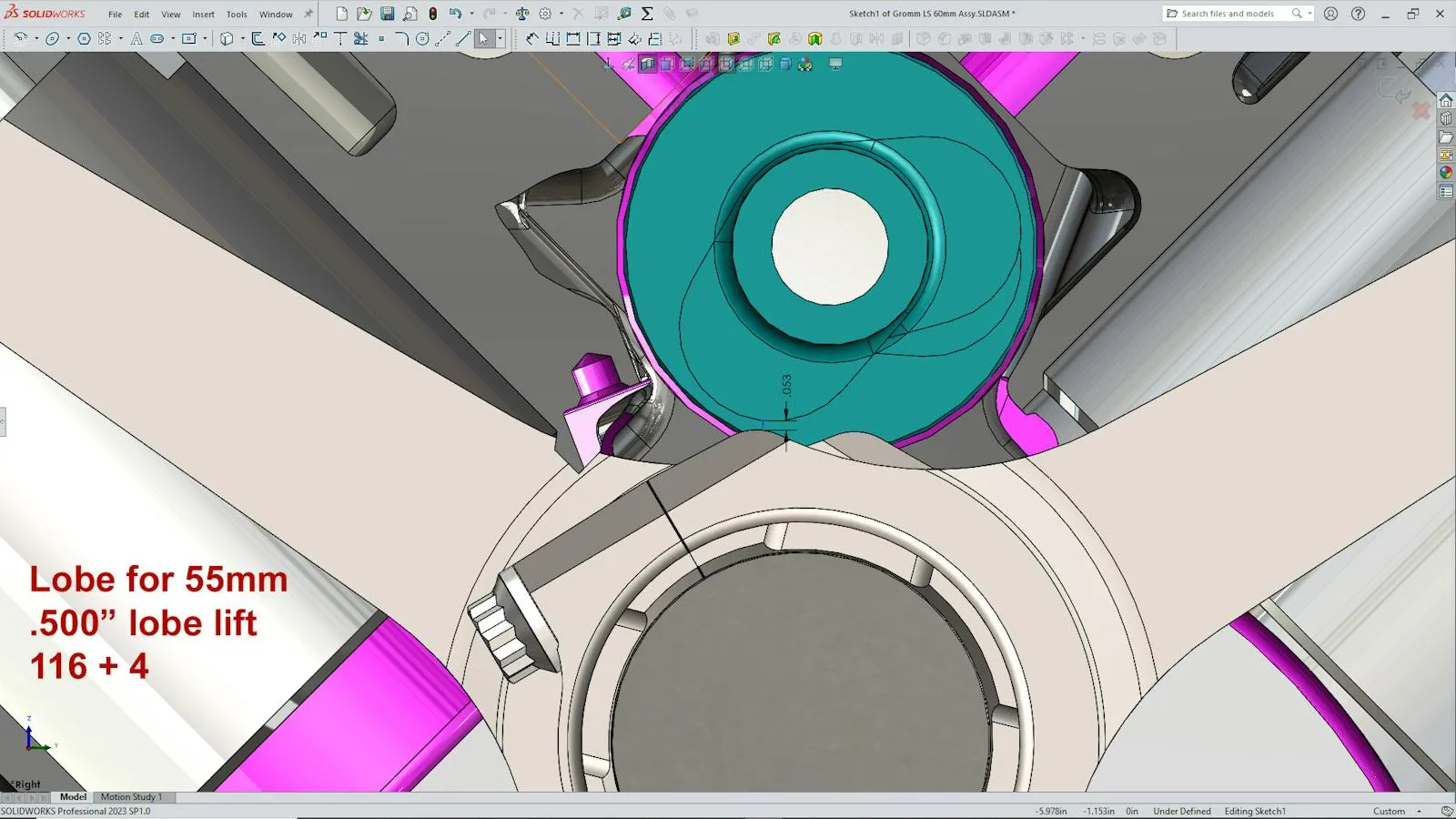
The cam took some thought. A long stroke swings the rod bolts close to the cam lobes, and Metovic told EngineLabs the original cam design left only .020 inch between the rod bolt and the lobe. Gromm's fix was to reduce lobe lift and increase rocker ratio, which keeps valve lift where it needs to be while pulling the lobe away from the rotating assembly. EngineLabs does not publish the cam specs.
 View full photo
Our original cam design only left us with .020 inch between the rod bolt and camshaft lobe.
Oil is the whole game at 9,000 rpm
A drift car spends its life at high rpm under sustained lateral load, which is exactly how you starve a wet-sump engine. "This is a true dry sump engine," Field told EngineLabs. The system is from Armstrong Race Engineering, with four scavenge stages and one pressure stage, a tank behind the passenger seat, a Spintric air and oil separator and an oil cooler. The block uses priority oiling to the crankshaft.
Fluids come from LIQUI MOLY, one of the build's partners: MoS2 Antifriction SAE 20W-50 in the engine and 75W-140 in the transaxle. LIQUI MOLY's Stefan Braun described the engine oil to EngineLabs as designed to provide maximum protection and power output in extreme heat. The crankcase vacuum the revised pistons create matters here too, since positive crankcase pressure was what the first piston design produced at the top of the rev range.
 View full photo
Exhaust and gearing
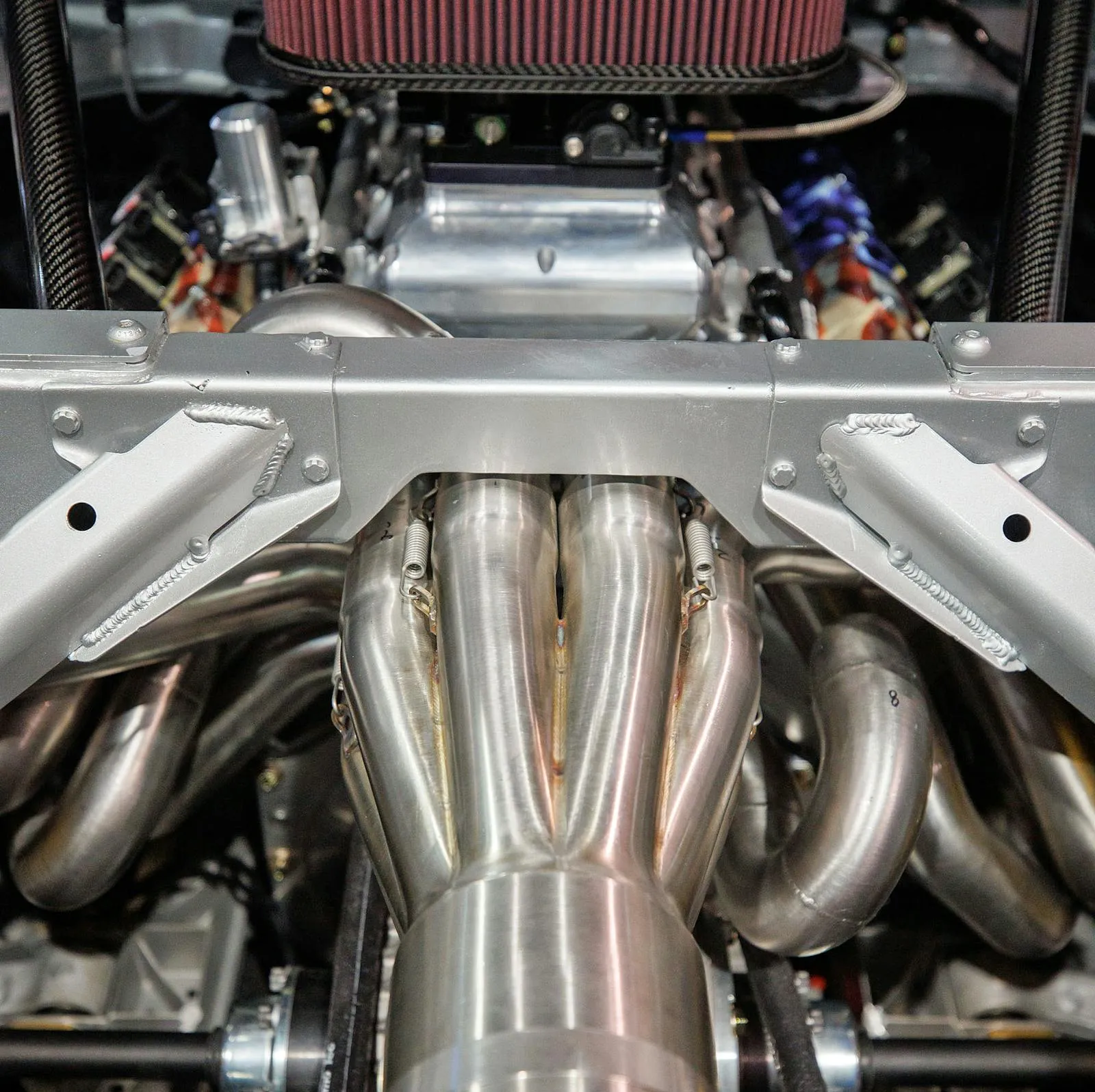
Borla built the exhaust, a sequential-fire 8-into-1 collector with equal-length 2.25-inch runners. Power goes to a Weddle S5 sequential five-speed transaxle, the natural choice in a mid-engine car with no driveshaft.
 View full photo
Field is candid about the one thing he would change. "I think the biggest mistake I made during this build was over-gearing it," he told EngineLabs, adding that he would prefer a close-ratio five-speed. With a powerband that keeps building to 9,000 rpm, tighter ratios would keep the engine in the zone between shifts.
The mid-engine layout shaped the whole package. With the engine behind the driver, the dry sump tank sits behind the passenger seat and the transaxle bolts to the engine with no driveshaft. That keeps the mass between the axles, which is what a car that spends its life rotating wants. It also explains the choice of a C8: the chassis was designed around a big V8 sitting right where this one does.
Why go naturally aspirated?
EngineLabs does not frame this as an argument against boost, and Field does not either. His case is about feel. A big naturally aspirated V8 at 16.5:1 answers the throttle instantly, with no spool to manage at the entry of a corner and no boost to come and go mid-drift. "The engine is incredibly responsive and drives like a big-CC two-stroke dirt bike," Field said.
For LS builders, the takeaways travel well beyond drifting: scan the heads and design the pistons around them, check rod-to-cam clearance on every long-stroke combination, invest in real dry-sump oiling before chasing rpm, and watch crankcase pressure, because in this engine fixing it was worth more than 100 hp.
Sources
This story is compiled from the published sources listed below.

Written by
Devin B.
Founder
Devin founded TORQFOLIO to cover the whole aftermarket scene, from hot rods and LS swaps to donks, drift and Baja. Based in Las Vegas and usually at a show or meet with a camera.
More from Devin B.TORQFOLIO Weekly
The best of the week in cars, builds & culture. Every Sunday.
Keep Reading
Saving the Bottom End: Billet Caps for Gen III Hemis and Oversized Studs for Stripped LS Blocks
Devin B.,
Free Engines, a Box on the Roof and a Tire Chart: The Rules That Built a 2026 Formula DRIFT PRO Car
Devin B.,
The 350 and 400 Are Back: GM's Gen 6 Small-Block Truck V8s, Explained
Devin B.,
The Junkyard LS Swap Guide: Which GM V8s to Pull, How to ID Them, What Else You Need
Devin B.,
Conversation 0 comments
No comments yet. Start the conversation.