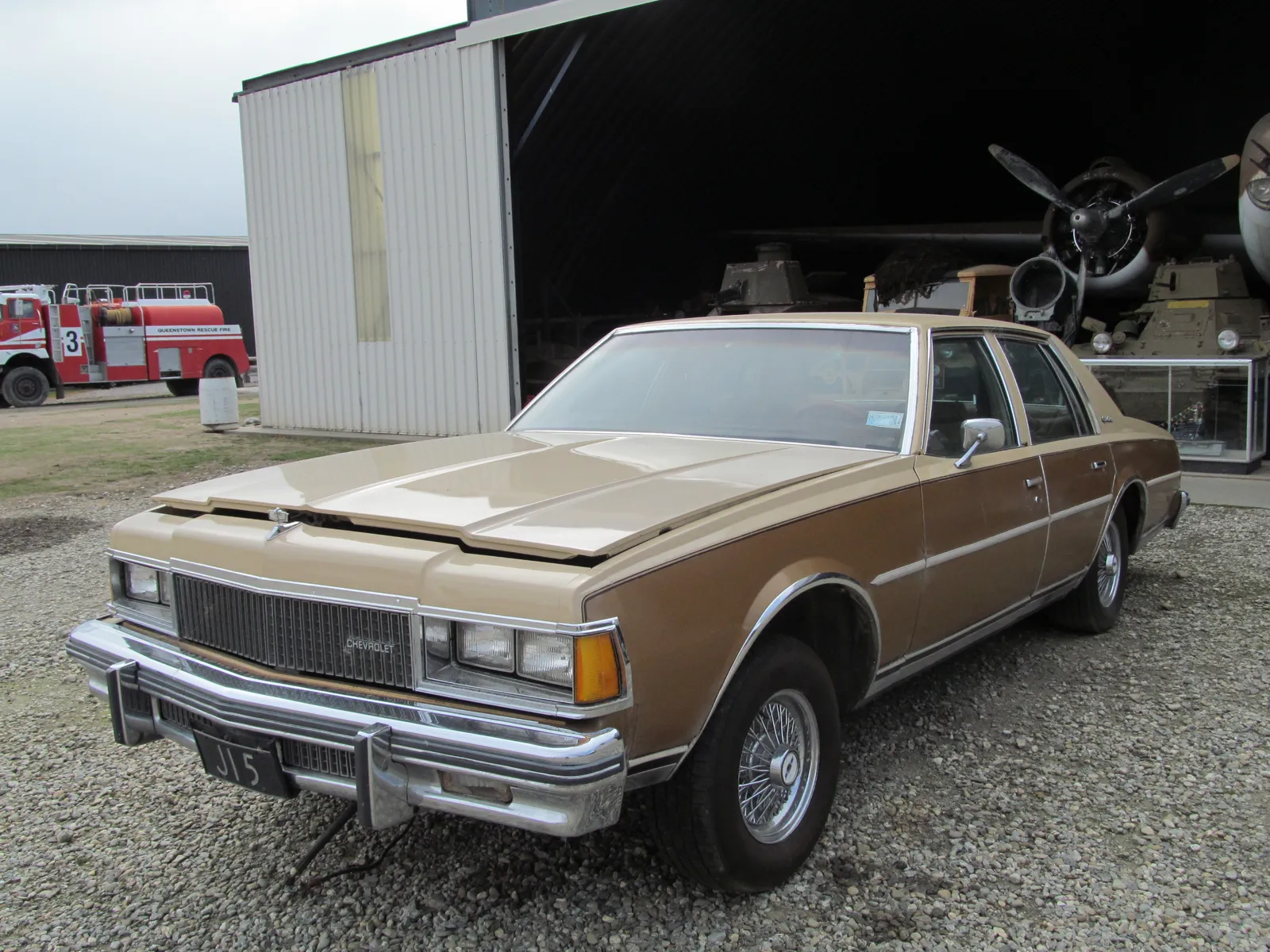
The Box Chevy Turns 50: How GM's Shrunken 1977 Caprice Became Big-Wheel Royalty
Chevrolet introduced the downsized Caprice and Impala in September 1976 to save gas. Half a century later, the same square body is sitting on 26s in every Southern city with a car scene.
In September 1976, Chevrolet did something that sounded like surrender. It made its biggest car smaller. The 1977 Impala and Caprice arrived nearly a foot shorter and about 700 pounds lighter than the cars they replaced, according to Mac's Motor City Garage. Detroit had spent two decades teaching America that bigger meant better. Now its largest division was selling the opposite idea.
It worked. Motor Trend named the Caprice Classic its Car of the Year, and full-size Chevy sales jumped 38 percent over 1976, Mac's reported. And then the car kept going, long after anyone at GM could have imagined, until it found a second life that its designers never pictured: jacked up on 24s and 26s, candy painted, its square fenders cut to clear wheels the size of a manhole cover. Fifty years after it debuted, the 1977 Caprice is better known in a lot of America by a nickname. It is the box.
Detroit's aircraft carrier changes course
To understand why the box exists, you have to go back to the early 1970s. The Autopian's Adrian Clarke, writing about the car's design in 2024, laid out the squeeze GM was in. The 1973 oil crisis sent buyers to small imported cars. New federal bumper rules forced automakers to add length and weight. At the same time, fuel economy and emissions rules pushed the other way. Designers, as Clarke put it, were caught between mandates that contradicted each other.
GM's answer was Project 77. Mac's Motor City Garage reported a figure of $600 million invested in the four-year program to shrink every full-size car in the corporation, including the Buick LeSabre, Oldsmobile 88 and Pontiac Catalina alongside the Chevy. GM president Pete Estes split the job into two stages, Clarke wrote. First came the low-risk 1976 Cadillac Seville, the smallest and most expensive Cadillac of its time. When the Seville sold well, the volume car was next.
Bill Mitchell's sheer look
 View full photo
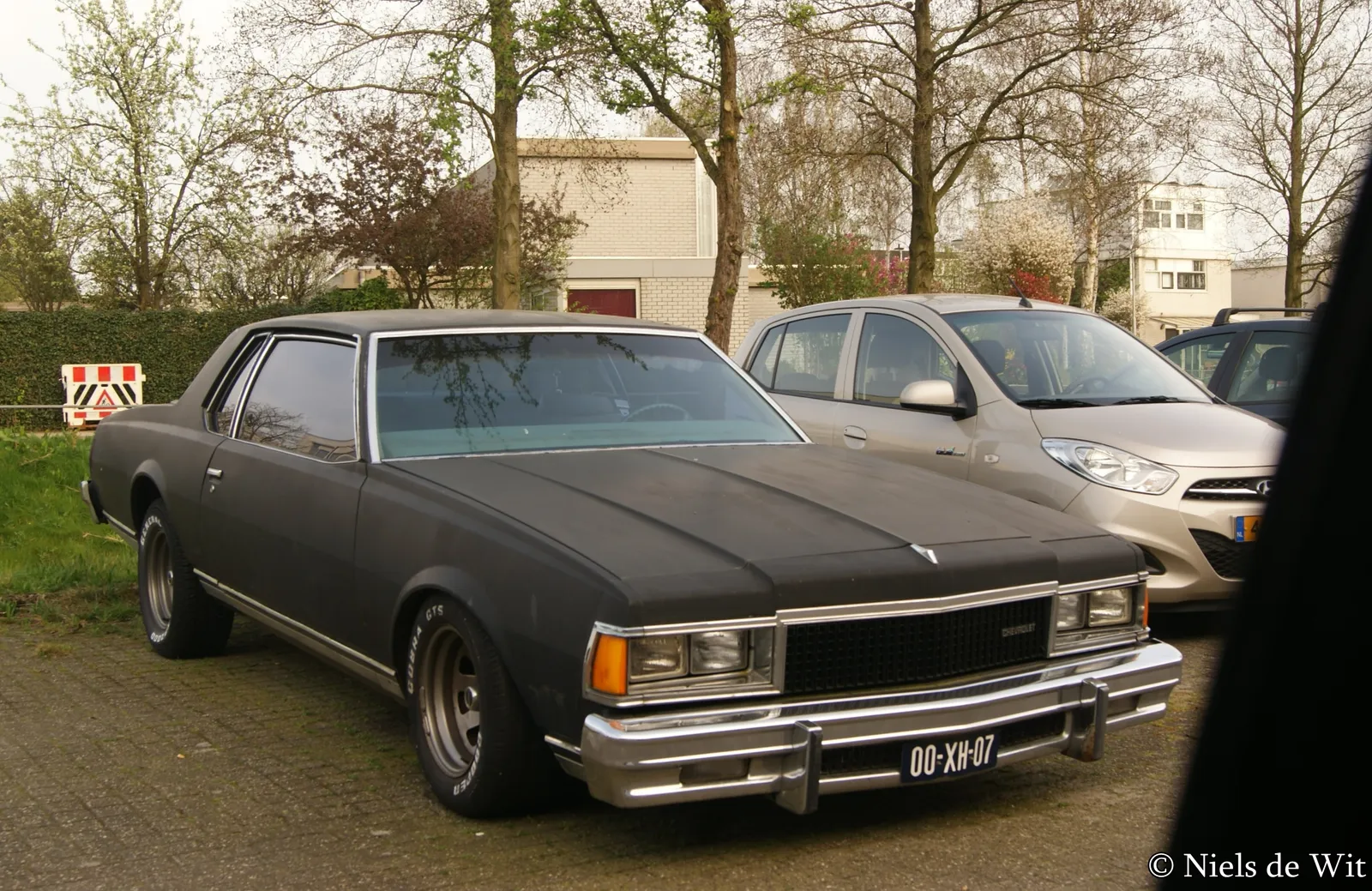
The man in charge of the shape was Bill Mitchell, GM's vice president of design, who had succeeded Harley Earl. On the Seville, Mitchell introduced what he called the sheer look: crisp edges and unbroken surfaces, The Autopian explained. Boxier shapes made more room inside and looked more formal and solid. Mitchell then took that language to the Caprice.
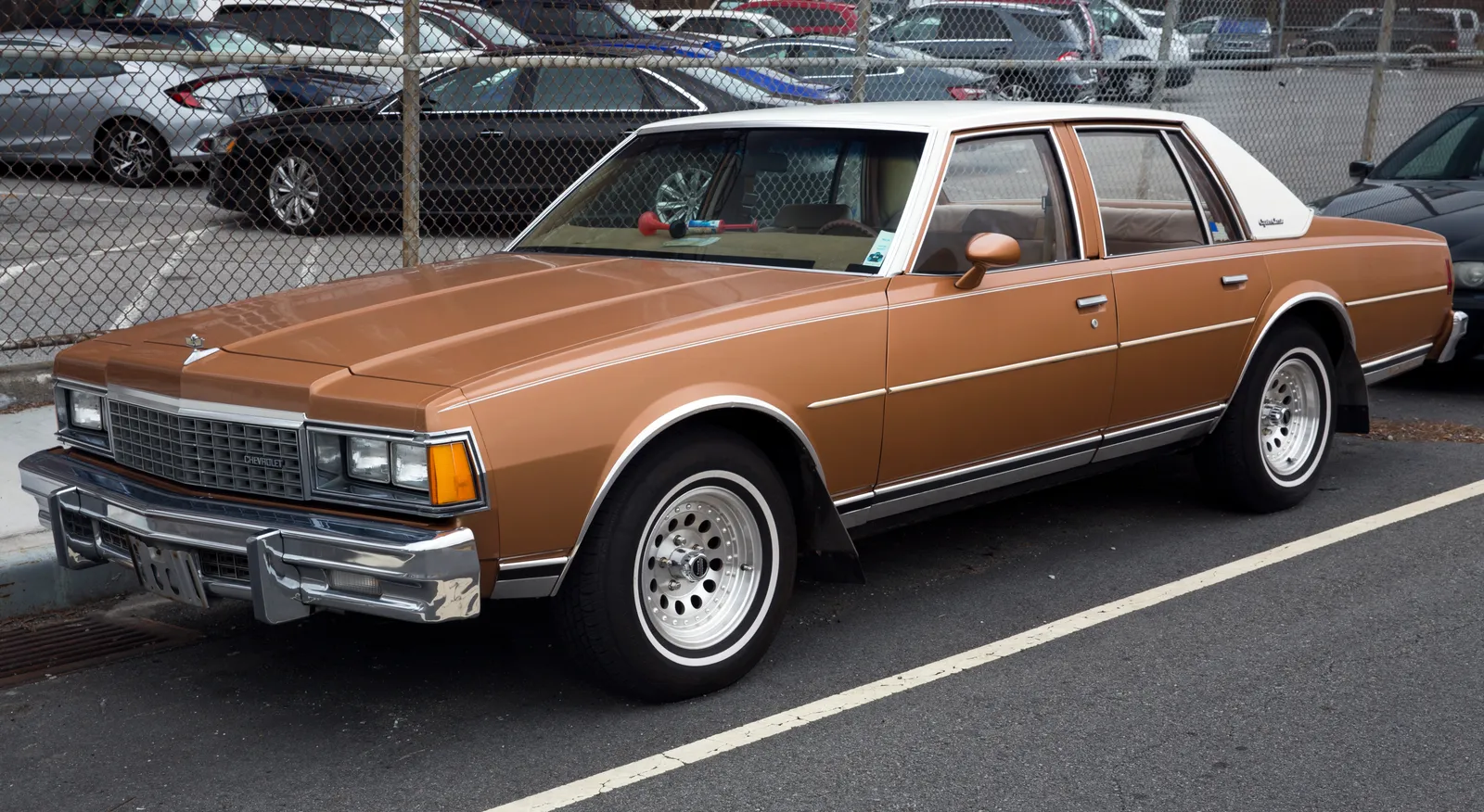
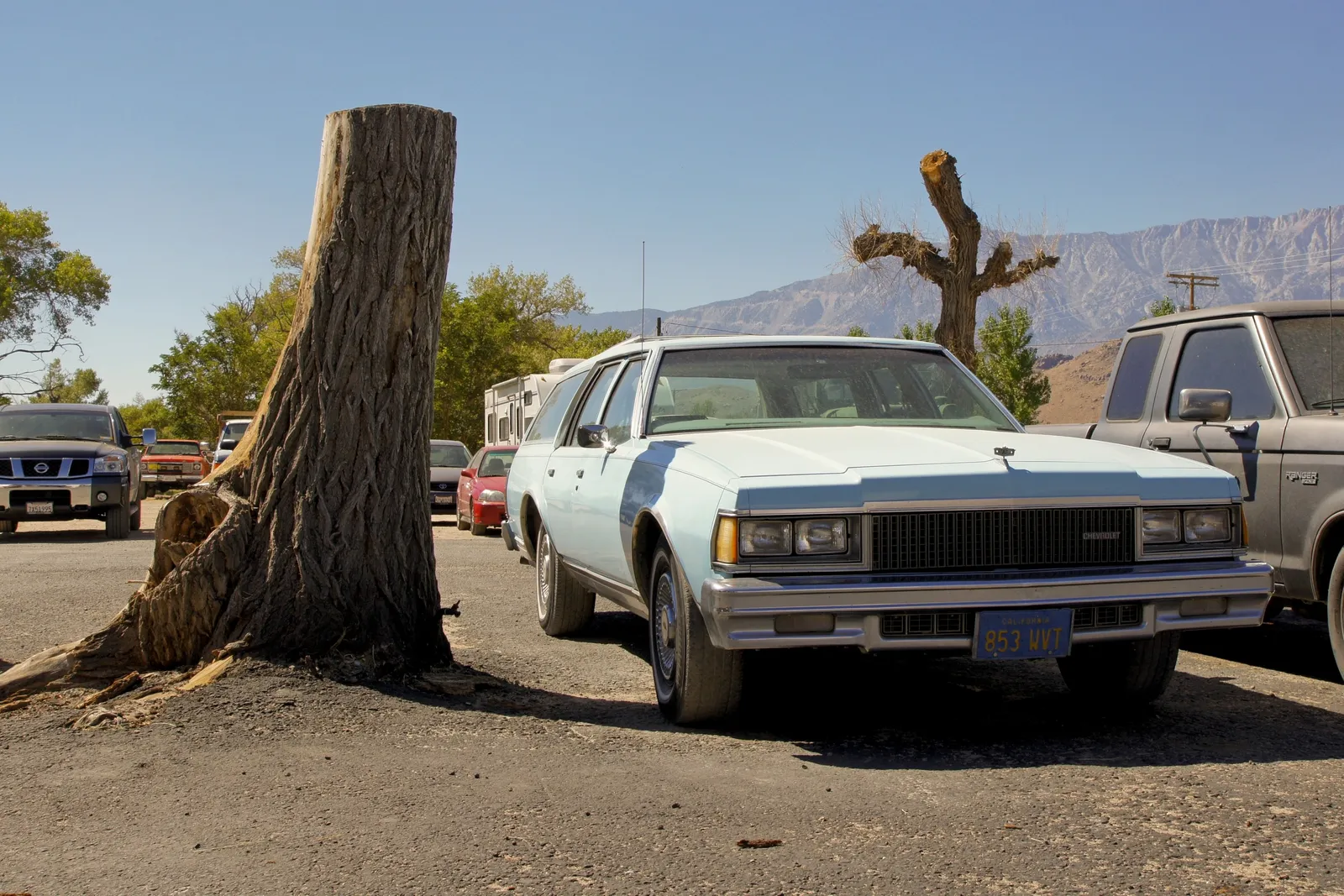
The result was clean in a way big Chevys had not been for years. Mac's noted the design ran a minimum of ornament. The pillarless hardtops were gone. Chevy offered a two-door coupe with a fixed post, a four-door sedan and a wagon, each in Impala or Caprice Classic trim. The coupes got a signature piece of glass: a rear window folded around the corner using PPG's Hot Bent Wire process. Curbside Classic, revisiting Motor Trend's 1977 coverage, called the downsized B-body program a set of excellent forward-looking designs.
Mitchell retired in 1977, so the Caprice was one of the last big programs of his career. The Autopian called it his last GM masterpiece.
Smaller outside, bigger inside
 View full photo
Shrinking a car without making it feel cheap was the hard part, and this is where the Caprice earned its reputation. The new car was slightly taller than before to maximize interior room, Mac's reported. It shared its 116-inch wheelbase with the intermediate Chevelle and was actually a little shorter overall than a Monte Carlo. It kept body-on-frame construction and coil springs all around, but the chassis tuning improved and the critics raved about the ride and handling. Car and Driver singled out the optional F41 handling package, according to Mac's.
Under the hood, Chevy kept it familiar. Sixes and V8s carried over, with a 350 cubic inch small-block making 170 horsepower at the top of the range. Those numbers look sleepy today. In 1977 they moved a lighter car better than the old big-blocks moved the barges they replaced.
 View full photo
Thirteen years, then a bubble
The real secret of the box's later fame is how long GM kept building it. Mac's notes the same basic platform and package carried on through 1990, and then, with new rounded sheet metal, all the way through 1996. That gives the big-wheel scene three distinct generations of full-size Chevy to work with, and a name for each.
The Wikipedia entry on hi-risers, the broad term for these cars, lays out the vocabulary most builders use. A donk, traditionally, is a 1971 to 1976 Impala or Caprice. The name comes from owners calling the Impala's leaping-antelope emblem a donkey, and donk for short. A box, or box Chevy, is the boxy Impala or Caprice that followed. A bubble is the rounded 1990s car. Plenty of people call any of them a donk, which annoys the purists, and many in the community simply say big rim or big wheel car.
How the box got tall
The hi-riser style grew out of the African American Dirty South car scene, starting in Miami, according to the Wikipedia article, before spreading across the country. Builders put on wheels from 20 inches to 30 inches and beyond, with companies like Asanti, Dub, Forgiato and Lexani making large sizes specifically for these cars. To clear them, the suspension gets modifications that borrow from lifted trucks, and the front often sits slightly higher than the rear. Then the personalization starts: custom paint, interiors, headlights and trim, big audio, engine swaps, and steering wheels that match the wheels.
The box makes sense as a platform for the same reasons GM's engineers designed it the way they did. It is body-on-frame, so there is a real frame to build from. It is rear-wheel drive with a V8 bay that has room for modern swaps. It made more than a decade's worth of cars, so parts and project cars have been plentiful. And that sheer-look body, all flat planes and sharp creases, is a giant canvas for paint.
The engineering bill comes due
None of this is free. Raising a big sedan that far raises the center of mass to the point where rolling it becomes a real possibility, the Wikipedia article notes. Huge wheels need brakes upgraded to match, or stopping distances suffer badly. Hard cornering can shift weight in ways the original chassis was never designed for. Done right, the article says, a hi-riser should handle about like a lifted truck or SUV. Done wrong, a wheel can come off at speed.
The serious end of the scene treats that seriously. The National Donk Racing Association runs drag racing for big-wheel cars, and the fastest ones carry the same kind of performance hardware as traditional drag cars, per the same entry. When a box on 26s runs down a dragstrip, it is a long way from the gentle family sedan that Motor Trend praised for its ride.
Fifty years on
It is a little funny, in hindsight. The 1977 Caprice was GM's most rational car in years, a sensible downsizing built to meet fuel economy rules and keep families comfortable. It was never meant to be cool. Fifty years later it is one of the most recognizable shapes in American street culture, precisely because it was so plain, so square and so common that a whole generation of builders could get one cheap and turn it into something loud.
Bill Mitchell's sheer look was supposed to make the Caprice look formal. Put it on 26s with a candy paint job and it still does. It just looks formal in a very different room.
Sources
This story is compiled from the published sources listed below.
- Downsizing the Bow Tie: 1977 Chevrolet Impala and Caprice, Mac's Motor City Garage
- The 1977 Caprice Was Legendary Designer Bill Mitchell's Last GM Masterpiece, The Autopian
- Vintage Reviews: 1977 Chevrolet Caprice, Downsized By Design, Curbside Classic
- Hi-riser, Wikipedia

Written by
Devin B.
Founder
Devin founded TORQFOLIO to cover the whole aftermarket scene, from hot rods and LS swaps to donks, drift and Baja. Based in Las Vegas and usually at a show or meet with a camera.
More from Devin B.TORQFOLIO Weekly
The best of the week in cars, builds & culture. Every Sunday.
Keep Reading

Not Every Car on Big Wheels Is a Donk, and the Builders Who Know the Difference Want It Kept That Way
Devin B.,
Inside Well Connected Customs, the Detroit Shop Turning Grandma's Caprice Into a Hot Rod
Devin B.,
The Crew Motorfest on Switch 2 Is the Console's Best Car Game, Reviewers Say, With One Big Catch
Devin B.,
'Bipolar' Is I95 Motorsports' Gold-Plated 1975 Caprice, and Every Nut and Bolt Is Part of the Show
Devin B.,
Conversation 0 comments
No comments yet. Start the conversation.