Road & Track put it well in 2025: like Kleenex for tissues, donk has become a generic word for any custom car riding high on big wheels. Inside the scene, that is frowned upon. Ask the people who build them and the answer comes back fast and identical.
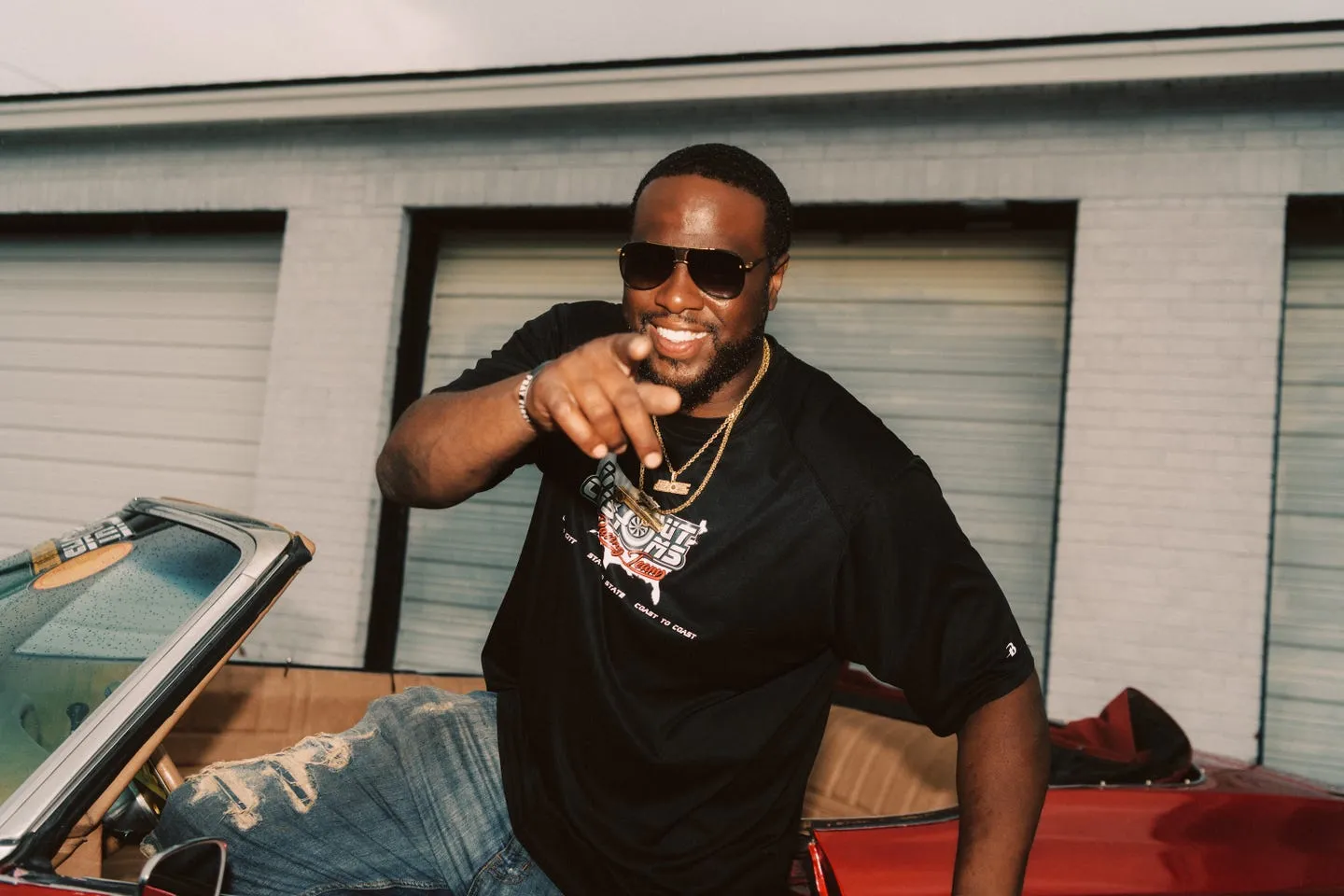
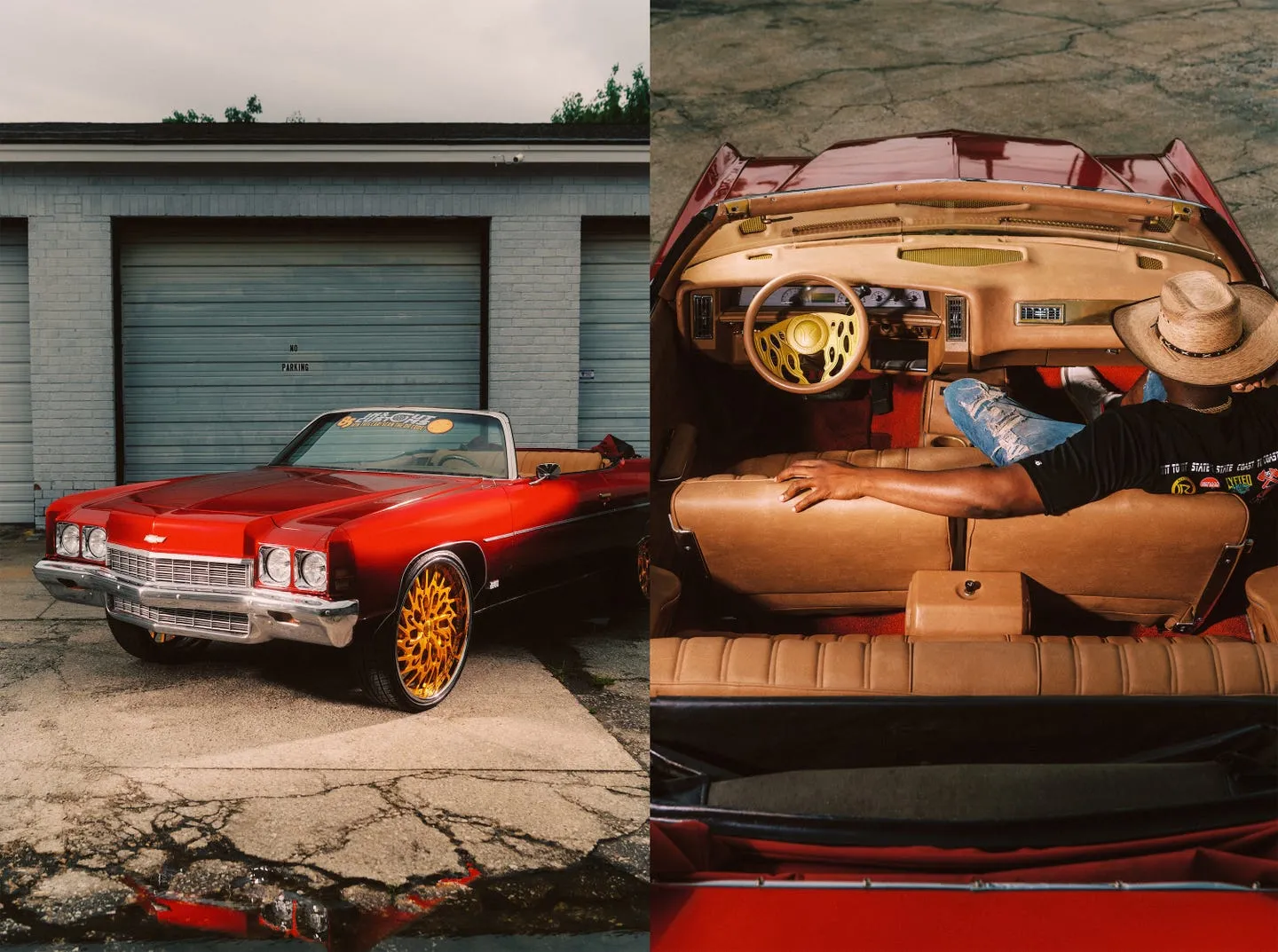
"That's it," Sage Thomas, the South Carolina builder better known as Donkmaster, told Road & Track. "It can be a two-door or convertible, or four-door, or station wagon, but it has to be that year, specific. No other one." That year means 1971 to 1976, and that car means a Chevrolet Caprice or Impala.
The rule, in the builders' words
 View full photo
Thomas runs In & Out Customs in Charleston and founded the National Donk Racing Association, so he has spent years around people who use the word loosely. Kenny Lewis, founder of I-95 Motorsports in Oakland Park, Florida, and one of the pioneers of the big-wheel scene, gave Road & Track the same answer with examples. "Monte Carlos, Cutlasses, the Rivs, they're not Donks," Lewis said. "It's only a specific car that's a Donk."
The rule holds well outside Florida and the Carolinas. In Detroit, Brandon Pypkowski of Well Connected Customs told the Detroit Free Press in April 2026 that donks are specifically customized 1971 to 1976 Caprices and Impalas, and that a lot of the dislike people have for the style comes from misunderstanding exactly that. In Miami, Highsnobiety's 2025 profile of Donk Day founder Ree S. said the same thing: plenty of cars have big wheels and wild paint, but donks are specific.
Part of the reason the definition is so tight is what those cars were. Pypkowski pointed out to the Free Press that 1971 to 1976 Caprices and Impalas were full-size, affordable family cars, and that many people tell him their families had one. Turning the most ordinary big Chevy of the 1970s into a show car is the whole joke and the whole point, and that only works if it is that car.
It is one of the rare points the whole scene agrees on. Road & Track noted there are no arguments about the preferred nomenclature, even if nobody can prove where the word came from.
Box, bubble and everything else
 View full photo
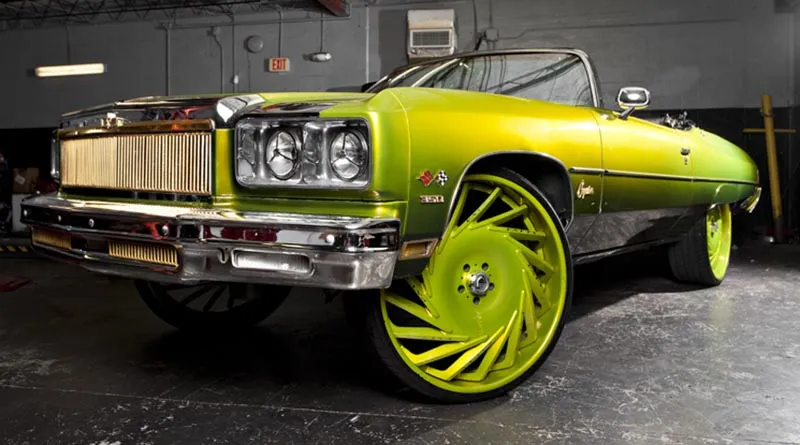
So what do you call everything else? The Engine Block, in a 2018 explainer, laid out the family tree. The umbrella term is hi-riser: a raised car, usually a V8 rear-drive American sedan, on large wheels, often 20 inches and up, sometimes 30 or more. All donks are hi-risers. Not all hi-risers are donks.
Within that family, the Engine Block wrote, 1977 to 1990 Impalas and Caprices are boxes, for their squared-off shape. Bubbles are typically 1991 to 1996 Caprices, named for their rounded body, and the Buick Roadmaster and Cadillac Fleetwood often get grouped in. Road & Track uses bubble for the 1996 Caprice and Impala SS, which it calls the proper non-donk name. Anything else given the treatment, from a G-body Monte Carlo to a Buick Riviera, is simply a hi-riser.
Even the owners who love donks most do not look down on the rest. Ree, who started with a box Chevy before he bought his first four-door donk in 2009, told Highsnobiety that everybody starts somewhere and graduates to the donk. "I feel like the donk is the king of the jungle," he said. His Donk Day show welcomes whatever pulls in.
Why it gets blurred
The confusion is understandable, and the car press has not always helped. Dragzine's 2017 story on donk drag racing defined a donk at its core as a customized 1971 to 1976 GM B-body, then noted that the term had gained wider use for any customized hi-riser with oversized wheels. That wider use is exactly what builders push back on.
There is also no settled story for the word itself. A popular legend says someone mistook the Impala's leaping-animal emblem for a donkey. Road & Track noted that Lewis has only ever heard that secondhand. The Engine Block repeated the legend and added that even it is debated. Where the style started is disputed too. The Engine Block wrote that Atlanta swears it was invented there, Miami and Dade County are sure they put it on the map and St. Louis believes it has done the most for its rise.
Why the word matters
It would be easy to call all of this pedantry. It is not. A naming rule this strict does two things for a scene. It protects the value of the cars at the center of it: as Pypkowski told the Free Press, 1971 to 1976 Chevys that once sold for about a thousand dollars at auction now cost $5,000 to $50,000 as starting points. And it gives the people who built the culture control over its vocabulary, which matters for a style that the Engine Block noted Jalopnik once called the world's most hated car culture.
Calling a lifted Monte Carlo a donk will not hurt anyone. It will just tell the people at the show that you are new. The fix is easy. If it is a 1971 to 1976 Impala or Caprice, it is a donk. If it is a 1977 to 1990, it is a box. If it is a 1990s Caprice, it is a bubble. And if it is something else on 26s, it is a hi-riser, and its owner will be happy to tell you exactly what it is.
Sources
This story is compiled from the published sources listed below.
- Is That Car on Big Rims a '71-'76 Chevy Caprice or Impala? No? Then It's Not a Donk., Road & Track via Yahoo Autos
- All Roads Connect: Hi-Risers... What the Hell Are Donks?, The Engine Block
- Detroit auto shop turns classic Caprices into high-powered donk cars, Detroit Free Press via Yahoo Autos
- Donk Is King: Inside Miami's Loud and Proud Car Culture, Highsnobiety
- "Donk" Drag Racing Really Is A Thing, And The Cars Are Legit!, Dragzine

Written by
Devin B.
Founder
Devin founded TORQFOLIO to cover the whole aftermarket scene, from hot rods and LS swaps to donks, drift and Baja. Based in Las Vegas and usually at a show or meet with a camera.
More from Devin B.TORQFOLIO Weekly
The best of the week in cars, builds & culture. Every Sunday.
Keep Reading
Jeep Axles, Body Lifts and Tucked 26s: How Donk Builders Engineered Their Way Out of the Monster-Truck Era
Devin B.,
Before Instagram There Was 'Miami Swangin': How East Coast Ryders Put South Florida Donks on the Map
Devin B.,
The Crew Motorfest on Switch 2 Is the Console's Best Car Game, Reviewers Say, With One Big Catch
Devin B.,
'Bipolar' Is I95 Motorsports' Gold-Plated 1975 Caprice, and Every Nut and Bolt Is Part of the Show
Devin B.,
Conversation 0 comments
No comments yet. Start the conversation.