Buddy the Off-Road Miata Went to Baja With a Welded Diff and 29s, and Came Home a Class Winner
Emme Hall's lifted, turbocharged Miata became the first Miata to race in Baja at the NORRA 500, survived a broken relay and a tropical storm, and took Vintage Stock Sedan.
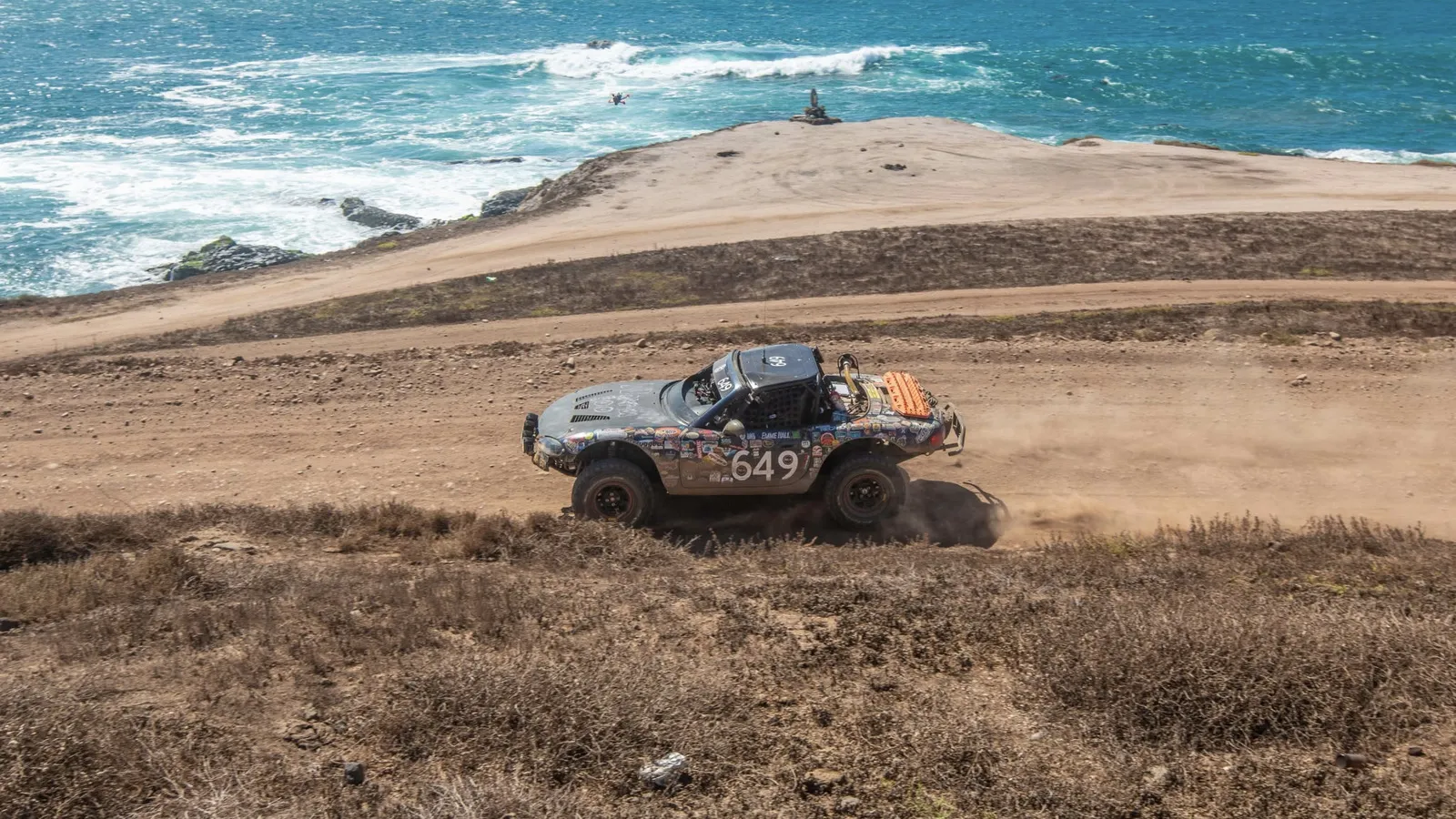
It is dark somewhere in Baja California. A Mazda Miata with no windshield is crawling up yet another rocky hill on 29-inch tires, and the navigator says what everyone in off-road racing has thought at some point. "These hills will never end," Robbob Stewart told his driver, Emme Hall, as she recounted it for Jalopnik. Then, out of the dark, a man appears standing at the edge of a cliff, watching them pass. Hall waved. He did not wave back.
That was the NORRA 500 on Oct. 9 and 10. By the end of it, Buddy the Off Road Miata had become, in Hall's words, the first Miata to race in Baja, and it did more than finish. Buddy took an official first place in Vintage Stock Sedan, averaging 23.55 mph on the dirt with a best stage average of nearly 33 mph, and Hall came home with a class trophy and an award named after a Baja legend.
Who Buddy is
 View full photo
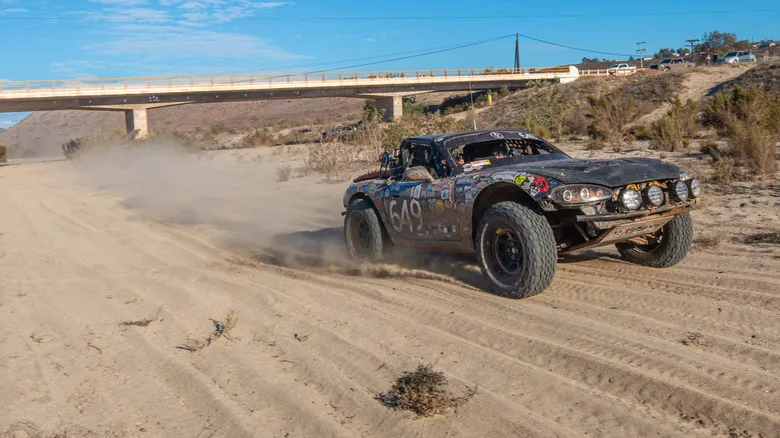
Buddy is not a new car to anyone who reads Jalopnik. Hall, who had raced in Baja before in other classes, has been developing it for years, and she wrote in her October preview that Buddy had already taken first in class at the Mint 400 twice. Baja was the step she had put off. "Racing a Mazda Miata in a Baja desert race is probably the stupidest idea I've come up with in a long time," she wrote. Entry fees alone ran more than $6,000, before hotels, fuel, prep and spares.
The build is a lesson in how far you can push a little roadster without turning it into a tube chassis. Hall's preview laid it out. The engine is an everyday 1.8-liter with stock internals, turbocharged to seven pounds of boost and tuned to 200 horsepower by Advanced Engine Dynamix, complete with a dummy limp mode set up in case it gets too hot. An earlier Jackson Racing supercharger is gone. A big UMP off-road air filter now lives inside the cabin.
A suspension on its fourth try
 View full photo
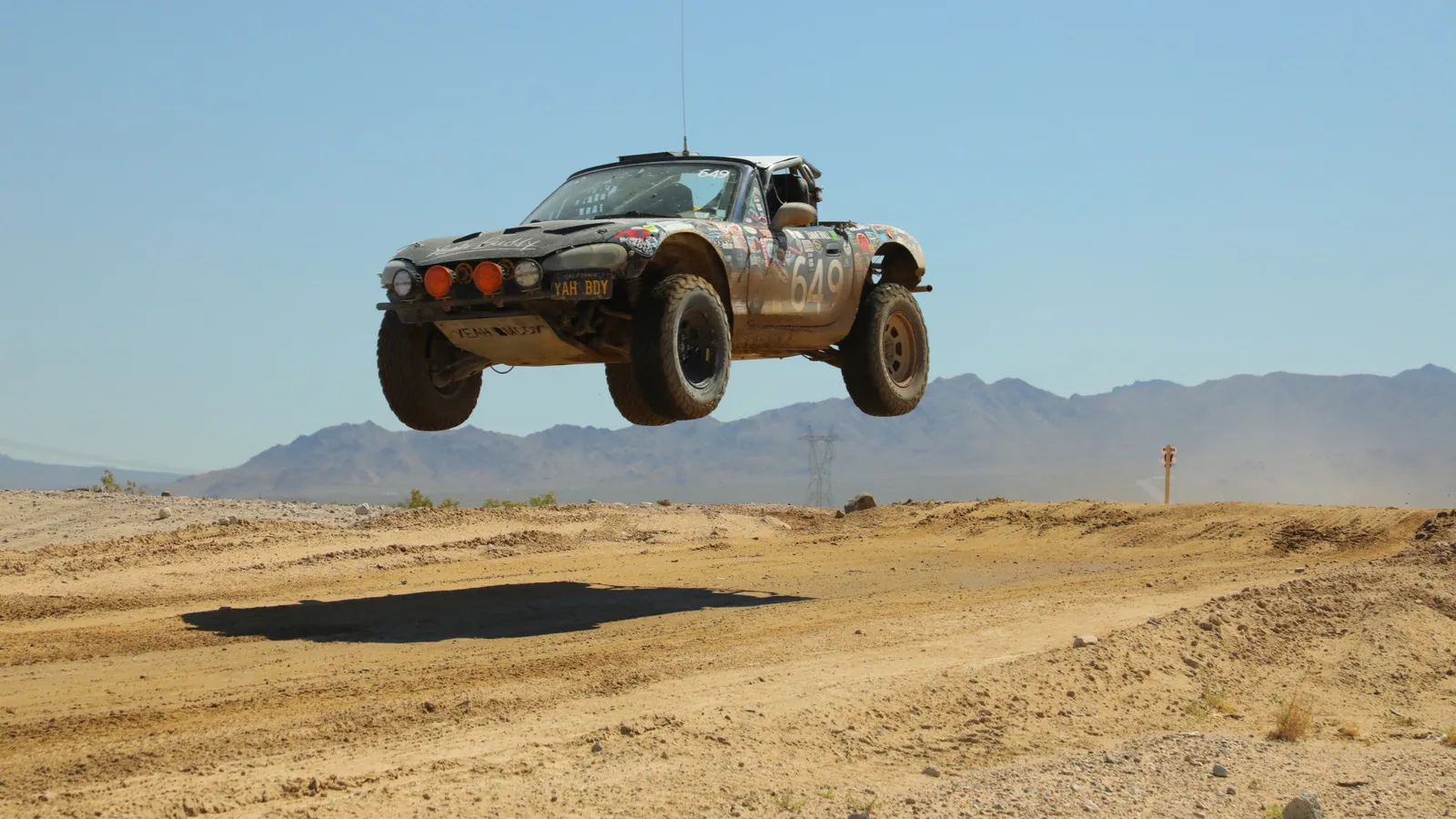
Suspension is where a Miata either becomes a desert car or a pile of parts. Hall wrote that Buddy is on its fourth and, she hopes, final suspension iteration. It still runs Fox 2.0 shocks, now with reservoirs to manage heat and fade, plus dual Hyperco springs at each corner. Perry Parts makes 3D-printed bump stops that let the car use all of its travel without damage. The stock lower arms are still there, boxed and plated for strength. Up front are custom chromoly upper arms with uniballs. In back, adjustable upper arms from Paco Motorsports finally let the rear be aligned, though Hall admitted it took some grinding to fit one side because, as she put it, she never said the car was straight.
In the rear, the differential is now welded and protected by a heavy skid plate. Hall had thought about welding it for years. A locked rear, she figured, would make the deep silt less scary. She packed the old limited-slip in case the welded unit failed. The 5.38 final drive, she wrote in the race report, helped Buddy claw up hills in first gear while the turbo did the work.
How NORRA works
NORRA is not SCORE. There is no pre-running, Hall explained. Instead of getting the course weeks early and mapping preferred lines, teams get a GPS file the night before and a digital roadbook. Stewart's job was to read that roadbook, warn of hazards, watch the gauges and keep an eye on faster cars coming up from behind. The format is more like a rally, with timed special stages in the dirt, transit stages on pavement and strict check-in times. The only outside help allowed on a special stage is fuel.
The race started in Ensenada, ran south to an overnight in San Quintin, and then came back north to finish in Ensenada.
Day one: relays and rocks
 View full photo
Things went sideways early. Hall started near the back of the pack. The first stage ran through Erendira, where she has a house, so she knew the roads, until the course hit a beach of smooth stones from tennis ball to soccer ball size on an uphill, off-camber line. Buddy did not have the momentum. A NORRA sweep vehicle pulled them out.
Then the fuel pump relay snapped off its tabs. The crew of a 1976 International Scout Terra pushed the Miata up the course until they could pass, then towed it to a safe spot. It took time to diagnose, and Hall's local chase crew brought a new relay. That delay meant they could not complete stages 2 and 3, which brought heavy penalties along with ones for early check-ins and a skipped stage finish line. Hall did not dwell on it. The team motto, she wrote, was to just finish.
Day two: a tropical storm on their heels
 View full photo
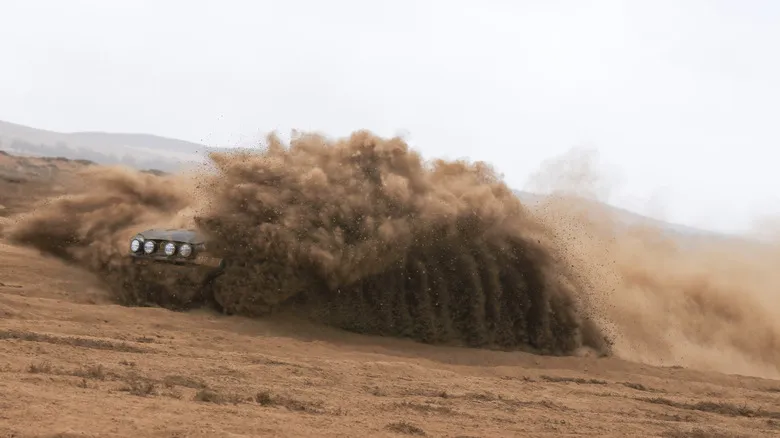
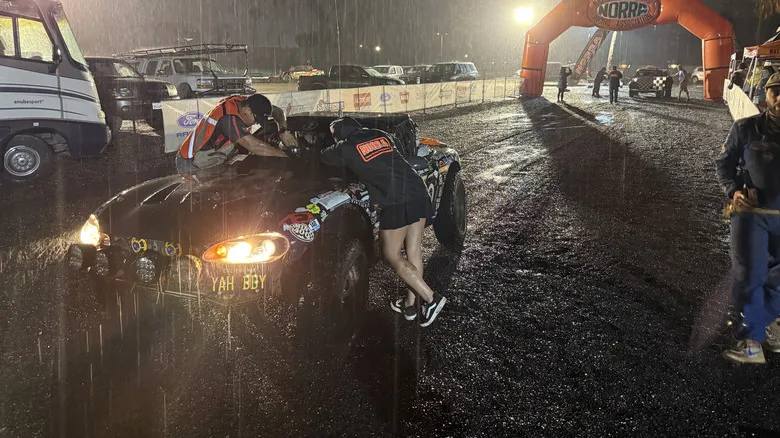
On day two, Tropical Storm Rachel was chasing the field. Some racers sank in the water crossings, Hall reported, while Buddy took penalties going around the worst mud but cleared the rocky Erendira beach this time with no help. Then came silt beds, whoops and smooth farm roads where the little car touched 70 mph. About 30 miles from the finish of the last special stage, the rear adjustable alignment bolts came loose and the car stopped driving straight. They nursed it to the end of the stage just before the rain started.
The worst part was still to come: 21 miles of wet pavement in the dark, with no windshield, in a car that wanted to dive into oncoming traffic or off the road. Hall called it the scariest part of the whole race. They took the checkered flag in Ensenada in the pouring rain.
The veterans in the pits
 View full photo
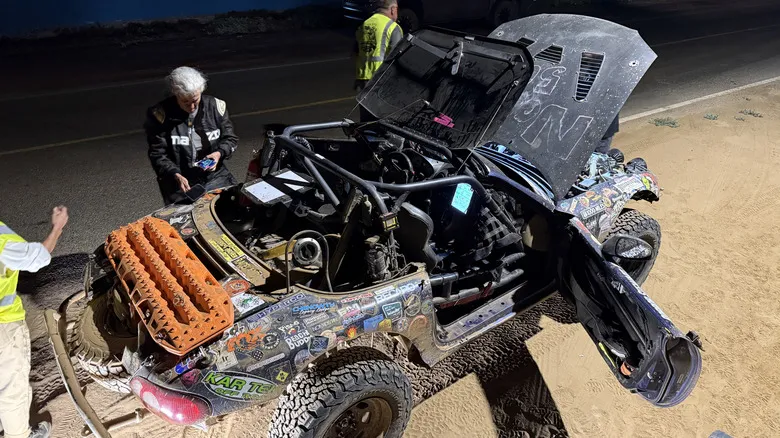
One of the best parts of Hall's report is about the people behind the car. John McMurrin runs VETTS in Motorsports, which provides pit support for military veterans who want to race. Stewart, Hall's navigator, served in the Navy. "There is a lot of therapy in just being out there racing," McMurrin told Hall. "It's like a mission, with a plan and an objective." He also explained that he mentors veterans on the co-driver side, from setting up radios and GPS units to running that side of the car.
Off-road pitting is a different animal from pavement racing, Hall noted. Her own pit kit is a five-gallon dump can, some wrenches and a Harbor Freight jack. McMurrin rolled up in a heavy-duty GMC with a 55-gallon fuel drum, an electric pump and full safety equipment.
The Mary McGee trophy
Beyond the class win, Hall received the Mary McGee trophy, given to the female driver who shows the most grit and determination. McGee, she noted, raced the first Baja 1000 in 1967 in a Datsun 510 and went on to race motorcycles solo in Baja. Hall wrote that she plans to put the trophy front and center on her mantle.
Why Buddy matters
 View full photo
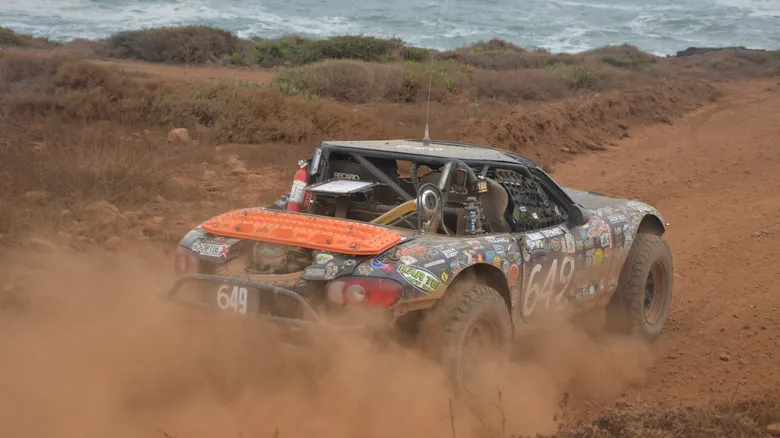
The lifted Miata has become its own small corner of the off-road world, and Hall gave the credit to the parts makers who made it possible, including Paco Motorsports, which she called the place to start if you want to build your own lifted Miata. Buddy is not a trophy truck. It has about five inches of travel, as Hall put it. That is exactly why it is worth paying attention to. A decades-old Japanese roadster with stock engine internals and stock lower arms, just raced the length of a Baja rally and won its class.
Hall said Buddy's next race is in Laughlin, Nevada, in December.
Sources
This story is compiled from the published sources listed below.

Written by
Devin B.
Founder
Devin founded TORQFOLIO to cover the whole aftermarket scene, from hot rods and LS swaps to donks, drift and Baja. Based in Las Vegas and usually at a show or meet with a camera.
More from Devin B.TORQFOLIO Weekly
The best of the week in cars, builds & culture. Every Sunday.
Keep Reading
SEMA 2026 Factory Builds: Jeep Ditches the Solid Axle, Ford Brings a 1,200-Plus-HP Bronco
Devin B.,
SEMA 2026 Opens Tuesday in Las Vegas: Dates, Debuts and What to Watch
Devin B.,
30,000 Tiny Trucks: Japanese TV Came to Pennsylvania to Ask Why Americans Love Kei Trucks
Devin B.,
Toyota Lifted Its Whole Truck Lineup and Put It on Tracks. The Snowhunters Are a Preview of Where Factory Builds Are Going
Devin B.,
Conversation 0 comments
No comments yet. Start the conversation.