Every few months somebody visiting Houston sees a candy-painted Cadillac rolling down the freeway with chrome spokes reaching halfway into the next lane, and asks the obvious question: how is that legal? The honest answer is that the wheels themselves are not the problem. The width is.
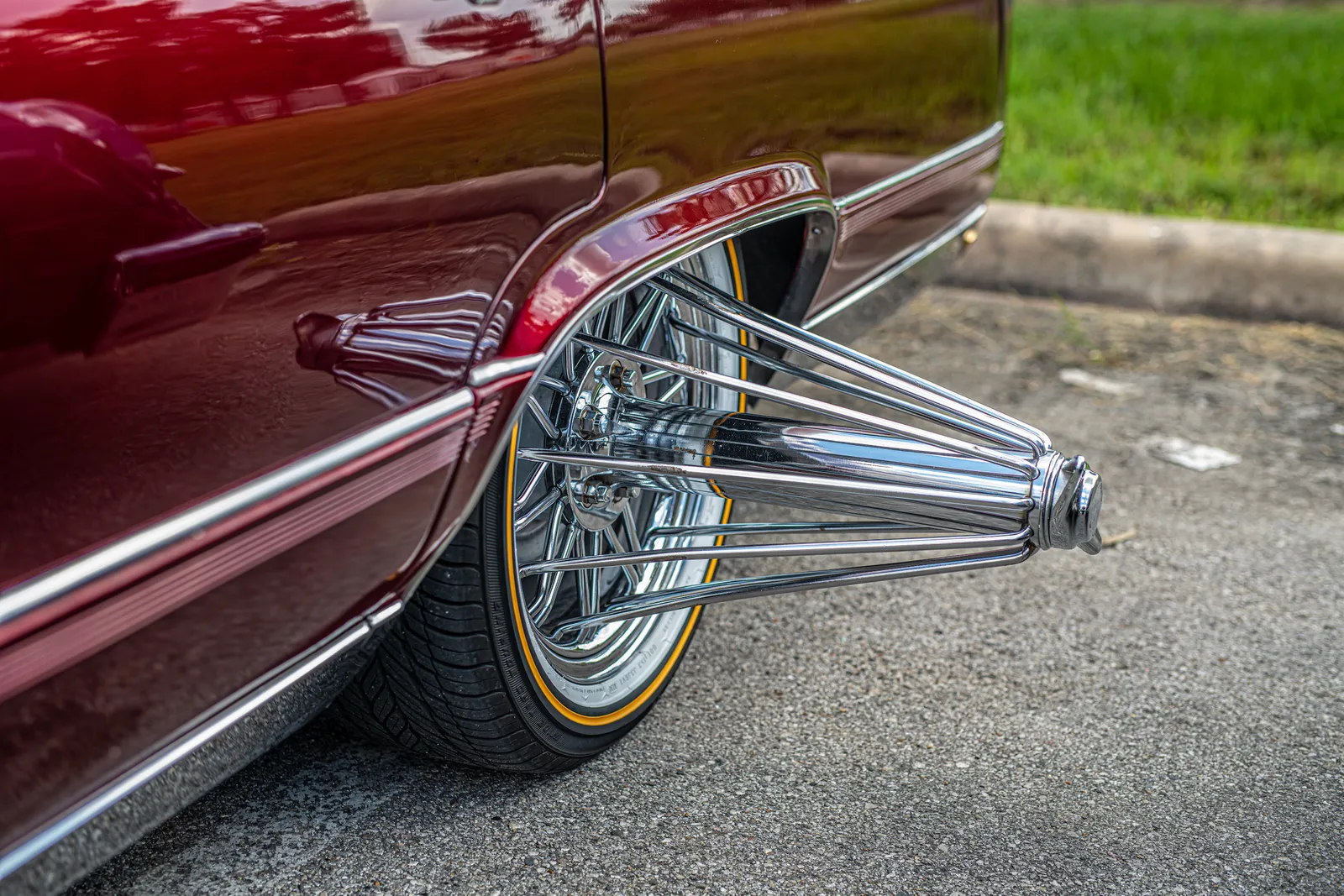
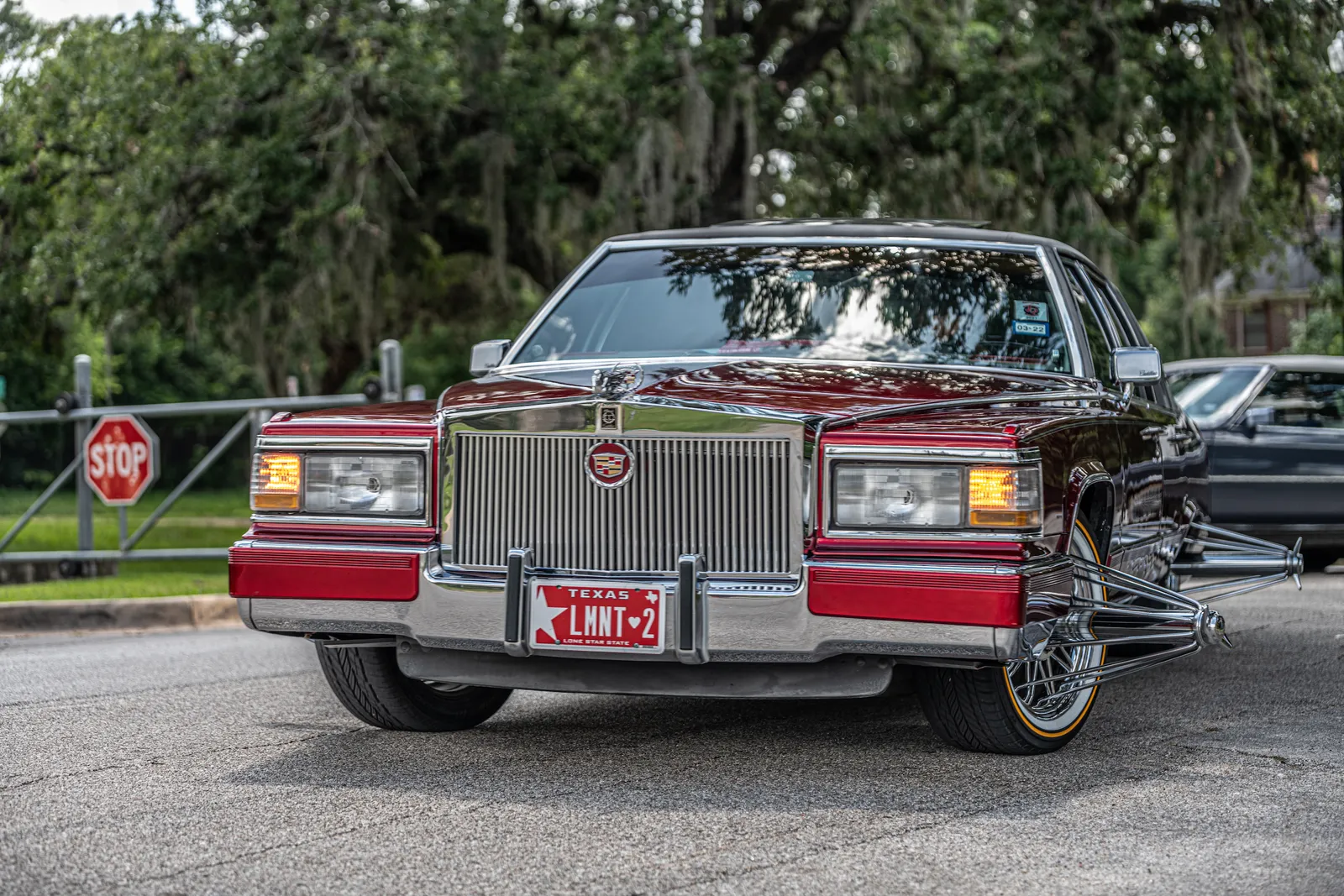
Swangas, also called elbows, are the wire wheels with extended centers that define Houston's slab. The originals were Cragar wires sold for the 1983 and 1984 Cadillac Eldorado, with centers that stood about 4 inches proud of the tire, according to both Texas Highways and Hagerty. Today's versions go much further. That is where the law comes in.
There is no swanga law
Officer Rickey Antoine of the Port Arthur Police Department has answered this exact question twice in his Ask A Cop column for the Port Arthur News, in 2022 and again in July 2025. Both times his answer was the same: there is no provision in the Texas Transportation Code that specifically regulates spokes on wheels. Officers fall back on the law about the maximum width of a vehicle, which he puts at 8 feet.
Antoine described how that plays out on the roadside. If an officer measures from the tip of the spoke on one side to the tip of the spoke on the other, and the result is more than 8 feet, the driver is in violation of the width limit. Under that line, the car is legal, however strange it may look to an out-of-town driver.
Houston's KPRC 2 reached the same place in its Ask 2 series in 2021. Citing the Texas Department of Motor Vehicles and the Texas Department of Public Safety, the station reported that passenger cars cannot be wider than 8 feet, and that the car's width along with any accessory, rims included, cannot exceed it. KPRC offered a simple rule of thumb: if your rims stick out past your side mirrors, you may be breaking the law. Texas Highways said the same thing in 2021, describing swangas as street legal in Texas as long as the car's total width does not exceed 8 feet.
The statute itself is a little more generous than that rule of thumb. Section 621.201 of the Texas Transportation Code caps a vehicle's total width at 102 inches, which is 8 and a half feet. The 8-foot figure comes from Section 621.202, which lets the Texas Transportation Commission set an 8-foot limit on specific highways it designates after a traffic study. Either way, the measurement runs from tip to tip, rims included.
Do the math on a Giraffe
 View full photo
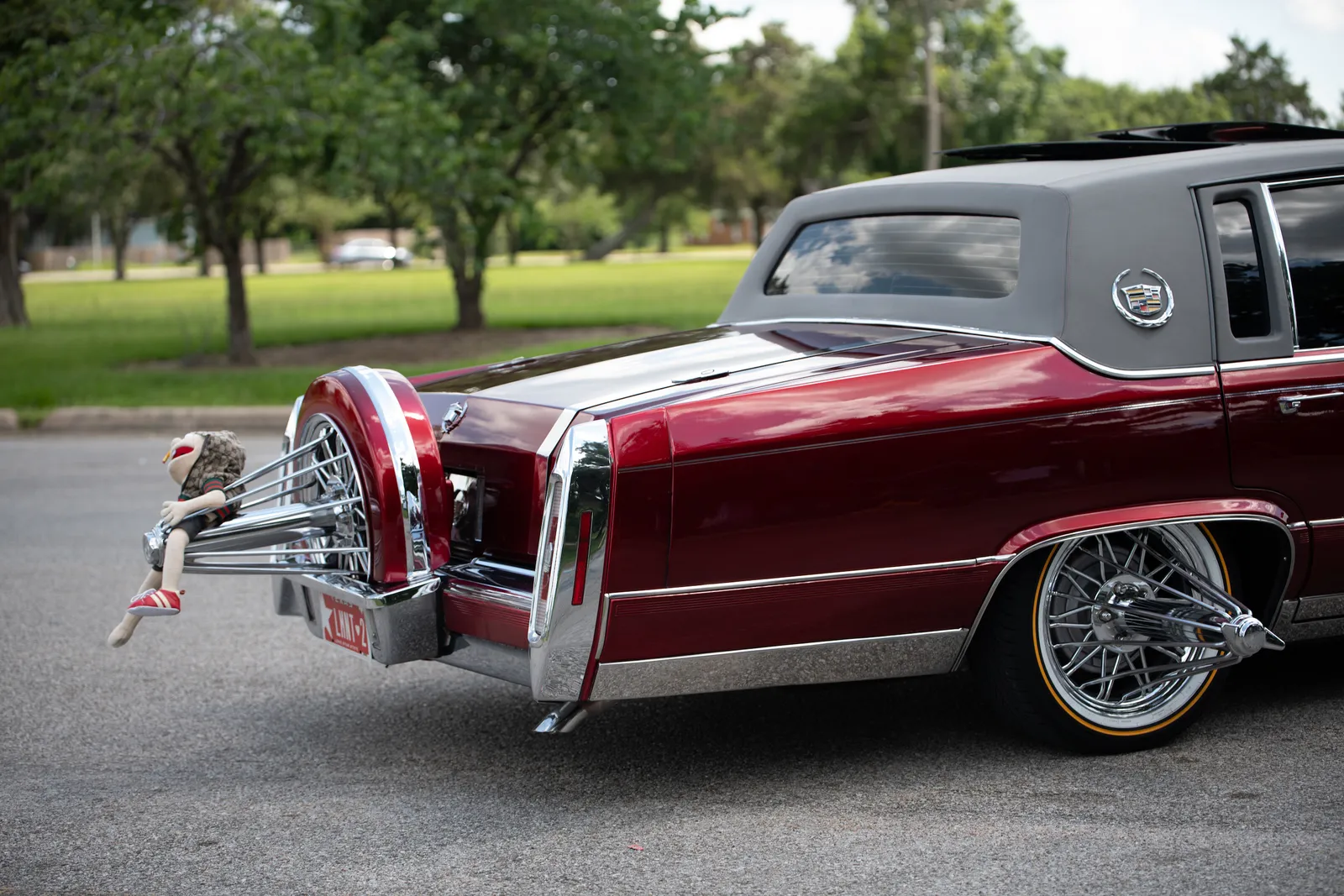
The trouble is that poke has grown a lot since the 84s. Hagerty's 2021 feature on the scene traced the progression through the names builders use: Super, Extreme, Orangatang and finally Giraffe. A Giraffe poke, Hagerty reported, extends a full 24 inches past the wheel rim and adds 4 feet to the already substantial width of a full-size GM sedan.
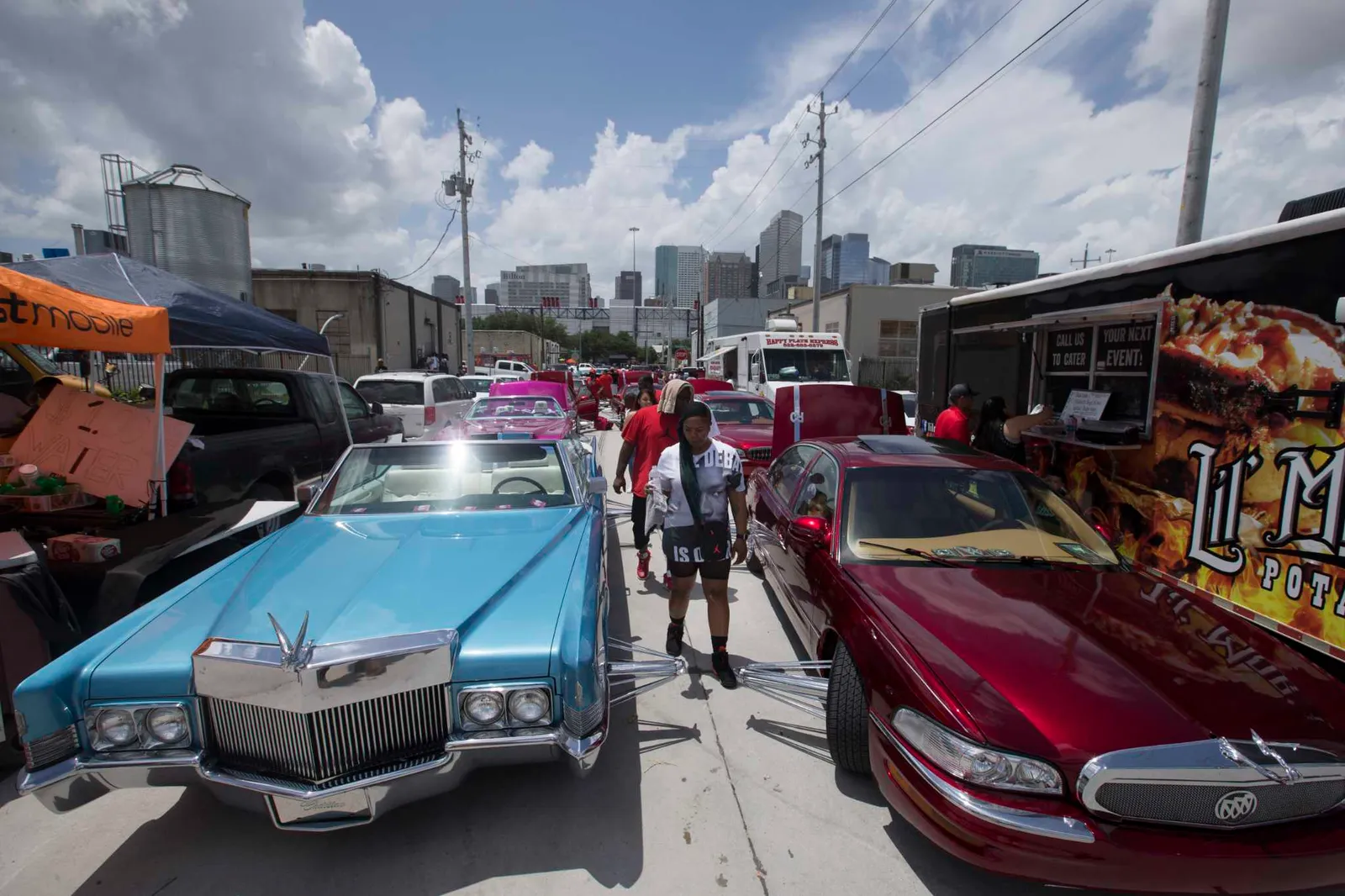
Now run the numbers. Hagerty described the classic boxy slab bodies as covering roughly 221 by 76 inches of concrete. A car about 76 inches wide is already a little over 6 feet across. Add the 4 feet Hagerty attributes to a set of Giraffe pokes and you are past 10 feet, far past the 102-inch statewide limit, and further still past 8 feet. Even far shorter pokes eat into the margin quickly, because the measurement runs from tip to tip across both sides of the car.
None of this is a secret inside the culture. Eddie Kennedy, who runs 3rd Coast Customs in Houston and has been customizing cars for three decades, told Hagerty he does not care for the biggest pokes. "The wheels wrap around each other in traffic, ruin the cars," Kennedy said. "But the younger generation wants the longest poke, at the highest price. Ten thousand dollars for Giraffe poke."
Where it actually bites
In practice the width limit is less about a tape measure at every traffic stop and more about the pressure that builds when the longest wheels become common. Hagerty reported in 2021 that the growing number of Giraffe pokes on Houston freeways was extremely unpopular with the 9-to-5 crowd and was leading to more police pressure. Cops were writing tickets and confiscating cars, the magazine said.
Impound is where it gets expensive. Houston hip-hop veteran D-one Tha Chosen explained the problem to Hagerty: a lot of slabs change hands without paperwork, so the name on the title might belong to someone who owned the car decades ago. "Is he gonna get it out of impound for you?" he asked. For an owner with an old Cadillac and a messy title, a width stop can mean losing the car, not just paying a ticket.
There is also the street risk that has followed swangas since the beginning. Hagerty reported that in summer 2021 not a single Houston shop had a set of the most extreme wheels in stock, and that riding alone on them was considered risky. Scarcity has always made these wheels a target, which is part of why slab owners ride in groups.
What a careful owner does
 View full photo
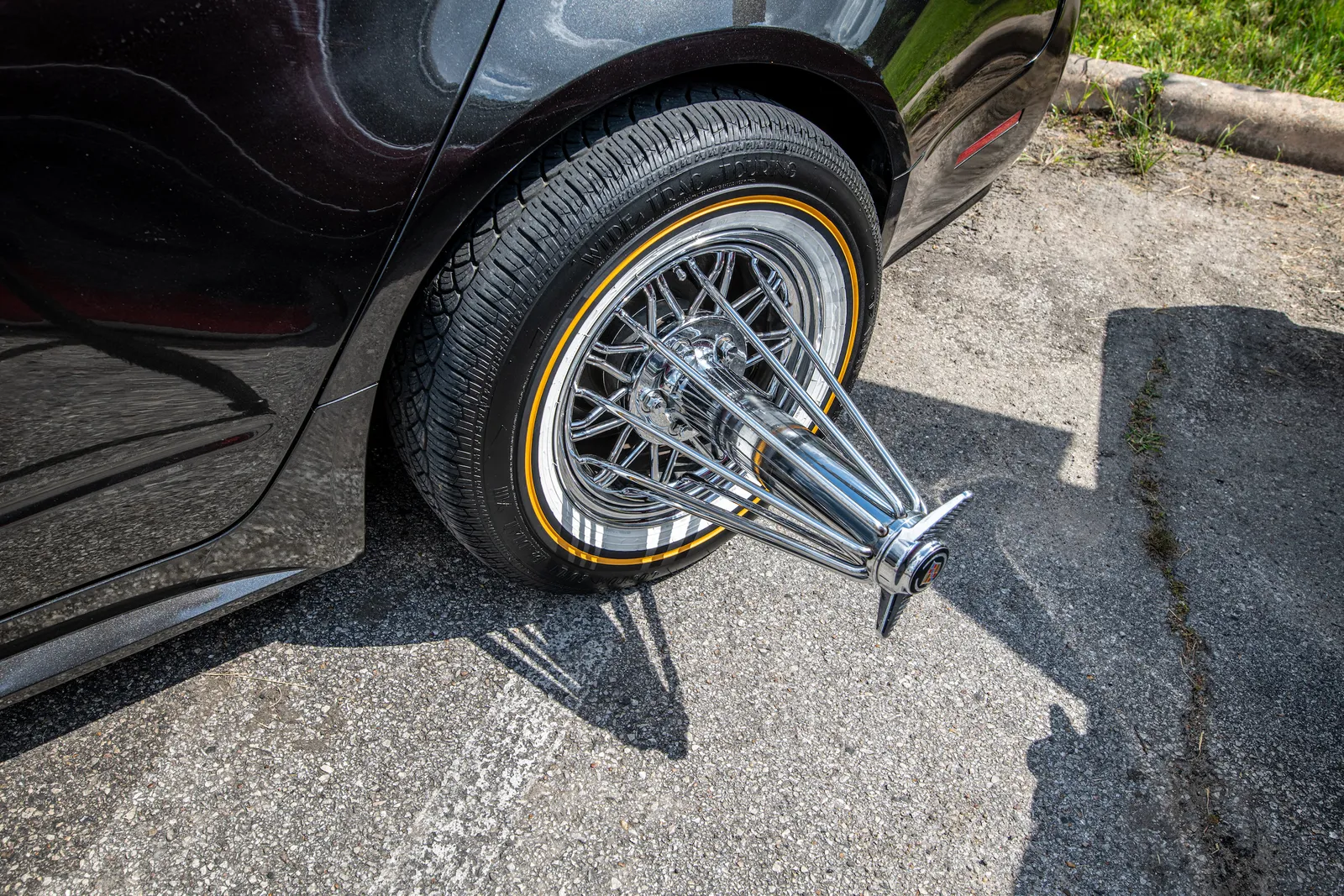
If you are building or buying a slab in Texas, the practical advice from all of this is simple. Measure your car with the wheels on, tip to tip, before a police officer does. Know which poke you are buying and what it does to that number. Keep your title in your own name. And remember that the culture has room for more than one size: Hagerty noted that some builders, like the Houstonian known as Kiwi, have gone to smaller 15-inch swangers on newer Cadillacs to stand out without the extreme width.
The bigger point is that swangas are not illegal in Texas. They have been part of Houston's streets since the 1980s, and the original 84s were a Cadillac dealer option. What the state regulates is how much road a car takes up. The slab's whole attitude is about owning the lane. The law just says the car has to fit in 102 inches.
Sources
This story is compiled from the published sources listed below.
- Ask A Cop: Are 'swangas' on cars legal?, Port Arthur News
- ASK A COP: How far is too far for spokes sticking out from the rim, Port Arthur News
- Ask 2: Are 'swangas' rims with the spikes poking out illegal?, KPRC 2 Click2Houston
- Elbows Out: Houston birthed the slabs, a car culture of its own, Hagerty
- Slab Is Houston's Distinctive Contribution to American Car Culture, Texas Highways
- Texas Transportation Code Sec. 621.201 and 621.202, vehicle width, Texas Legislature (via Public.Law)

Written by
Devin B.
Founder
Devin founded TORQFOLIO to cover the whole aftermarket scene, from hot rods and LS swaps to donks, drift and Baja. Based in Las Vegas and usually at a show or meet with a camera.
More from Devin B.TORQFOLIO Weekly
The best of the week in cars, builds & culture. Every Sunday.
Keep Reading
Purple Slabs, Rain and Z-Ro: Houston Threw 713 Day a Day Early in the East End
Devin B.,
Dead Man's Wheels: How Two Years of Cadillac Wire Wheels Built Houston's Slab Scene
Devin B.,
Houston SLAB Holiday Went From a Brewery Day Party to a City-Honored Tradition
Devin B.,
Car Mosley's 1984 Eldorado Took Three Years and $40,000, and It Carries His Sister's Name
Devin B.,
Conversation 0 comments
No comments yet. Start the conversation.