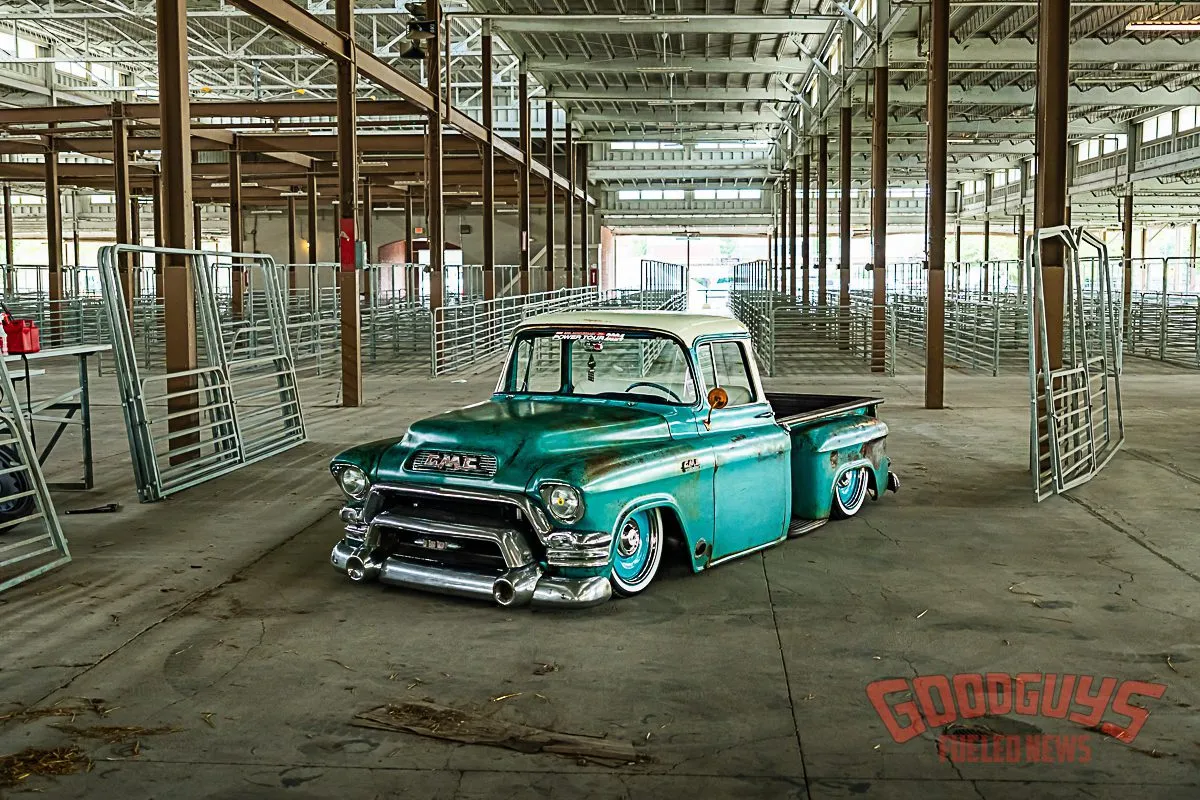
Some builders spend weeks and real money faking 70 years of weather on a fresh paint job. Jeremy Meredith did not have to. His 1955 GMC spent more than 20 years in an open-faced barn in Kentucky, and by the time he got it, the paint had already done all the aging on its own. What he added is the part nobody would guess from 50 feet away: a twin-turbo LS V8.
Fuel Curve's Dave Cruikshank featured the truck on Sept. 25, after it drew a crowd at the Goodguys Summit Racing Nationals in Columbus. It is a good example of where the patina scene has landed: honest old sheet metal on the outside, a modern chassis and serious boost underneath.
Why patina, not paint
Cruikshank opens his story with the case for leaving a truck alone. An unrestored vehicle is honest, he writes: worn paint and scars show exactly what you are getting, with nothing hidden under filler or primer. Some enthusiasts go further and argue that restoring a vehicle erases part of its history, because the original paint and the factory workers' fingerprints can never be recovered once they are gone.
Patina has gained so much acceptance over the past couple of decades, Fuel Curve notes, that some builders now spend real time and money recreating age on purpose. Meredith skipped that step. Mother Nature, as Cruikshank puts it, applied the weathering for free.
A friend's barn, a family shop
 View full photo
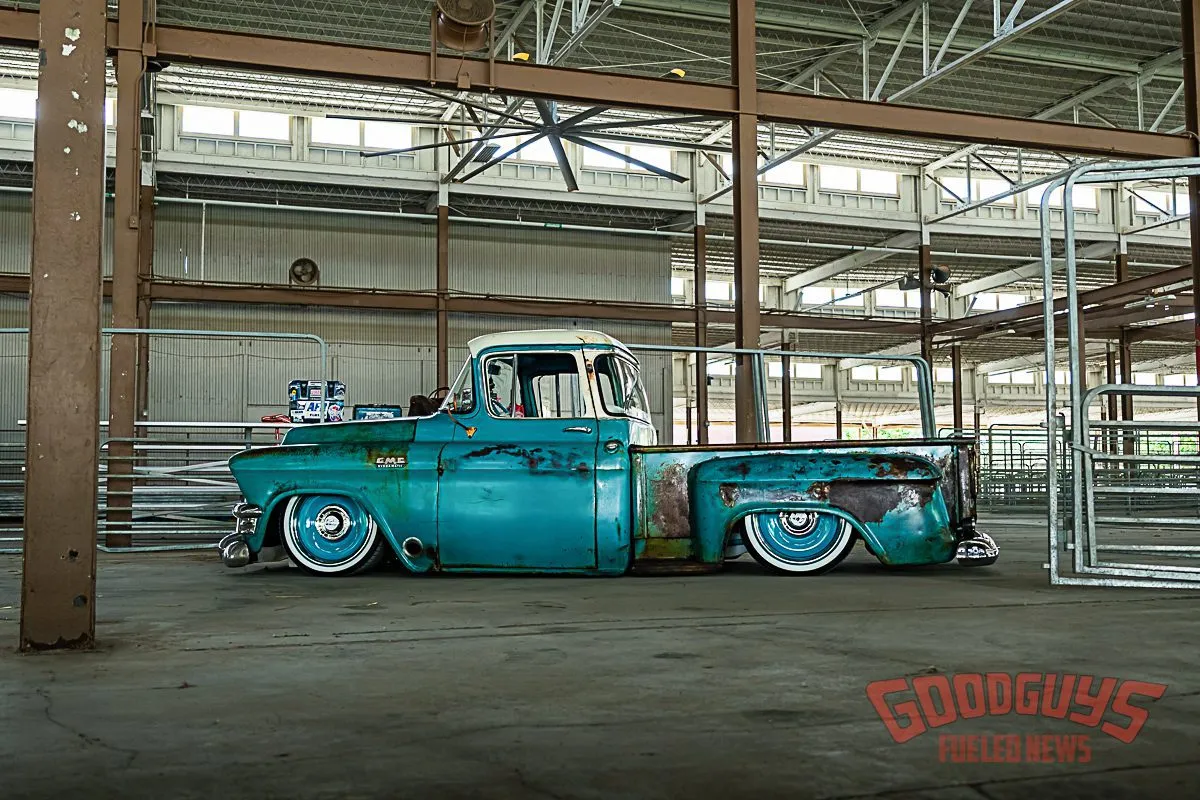
Meredith told Fuel Curve a friend had the truck stashed in that Kentucky barn for over 20 years. He and his brother run a small shop that builds old Chevy and GMC trucks, so the truck was on their radar. What sold him, he said, was the killer patina, the original color, the big back window and the huge chrome GMC grille and front end.
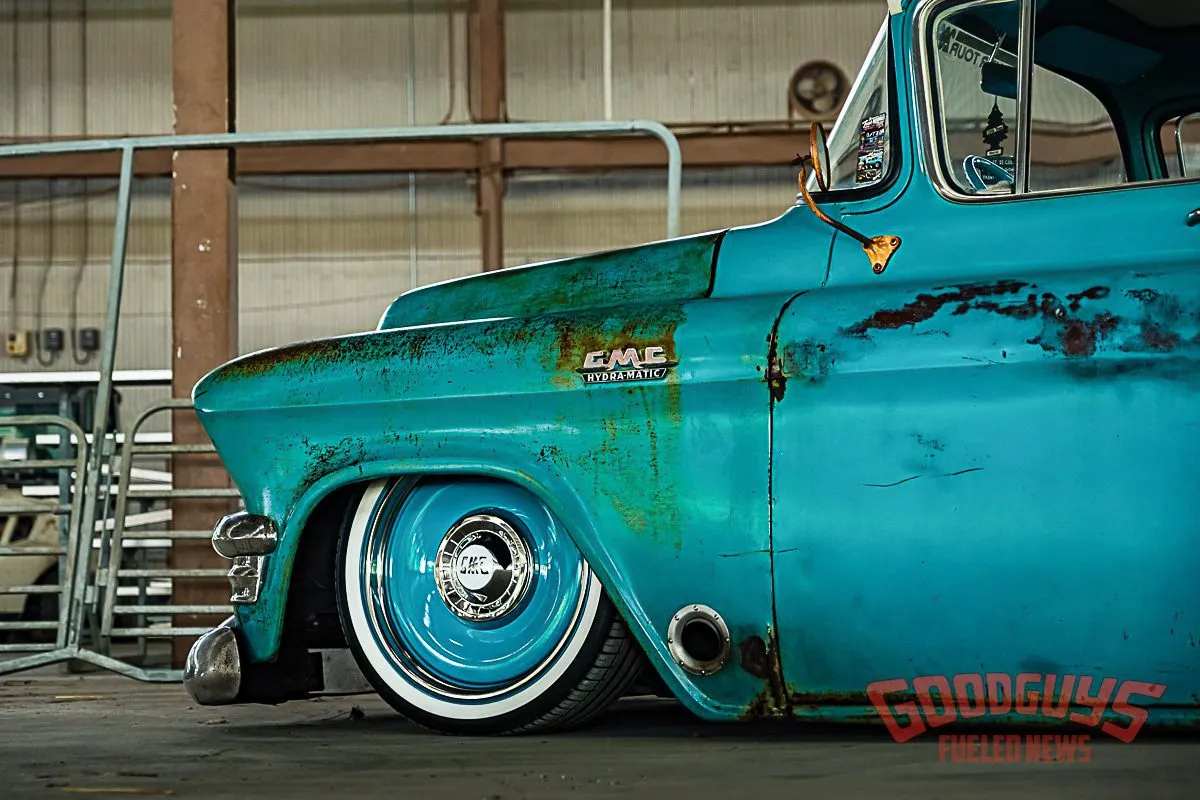
He and his brother, Hunter, finished the build in just under two years. The sheet metal needed little help, which is the upside of building around patina. Nick Cripps modified the cab supports and sealed the old paint with a matte wipe-on clear from Poppy's Patina, which keeps the surface from getting worse without giving it a shine.
The chassis under the rust
 View full photo
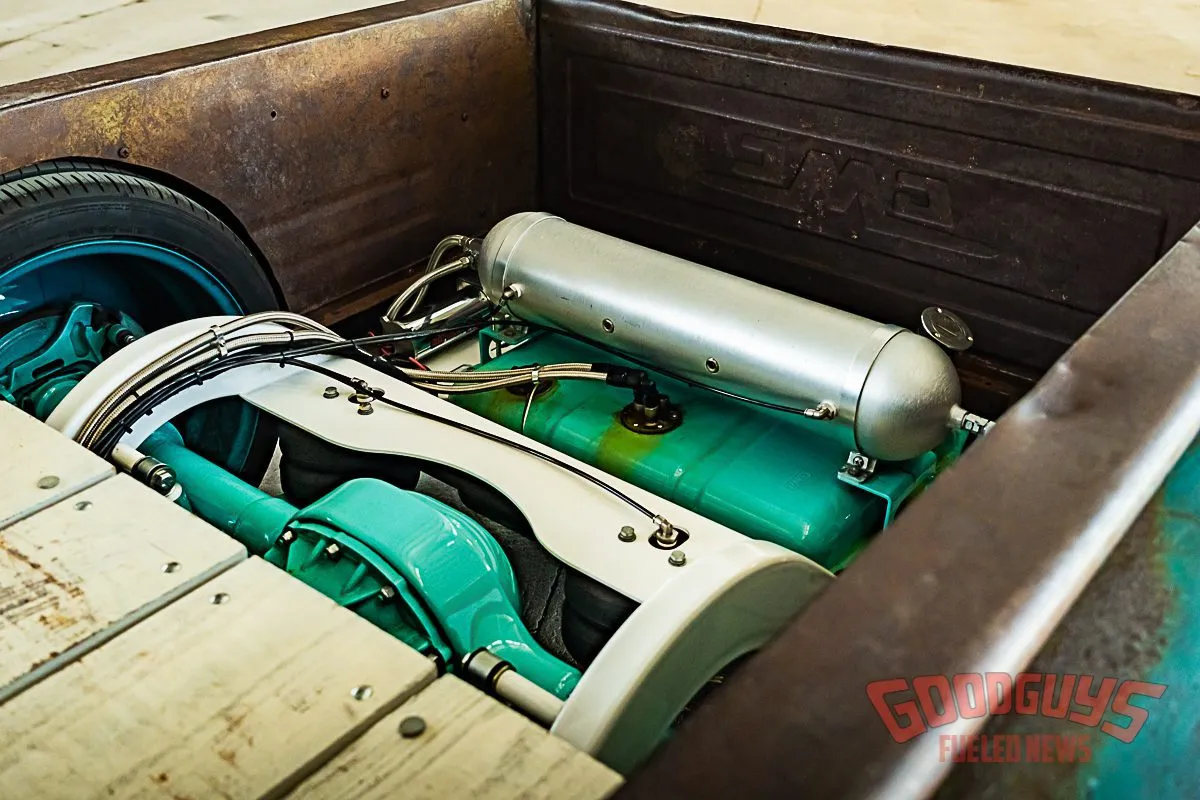
Nothing underneath is original. Steve Thompson of Thompson's Garage built a custom frame, finished by Viking Custom Powder Coating. Up front are tubular control arms, QA1 ball joints and a Mustang II style power rack. The rear uses a parallel four-link, and Firestone air springs at all four corners let the truck lay its frame down when parked.
A Ford 9-inch with 3.20 gears carries the rear, with Wilwood discs in front and GM discs out back. The wheels are Detroit Steel D-Town steelies, 20x8 in front and 20x10 in the rear, on Diamond Back tires. Steel wheels on a patina truck are the right call; billet would fight the paint.
Twin turbos on a junkyard favorite
 View full photo
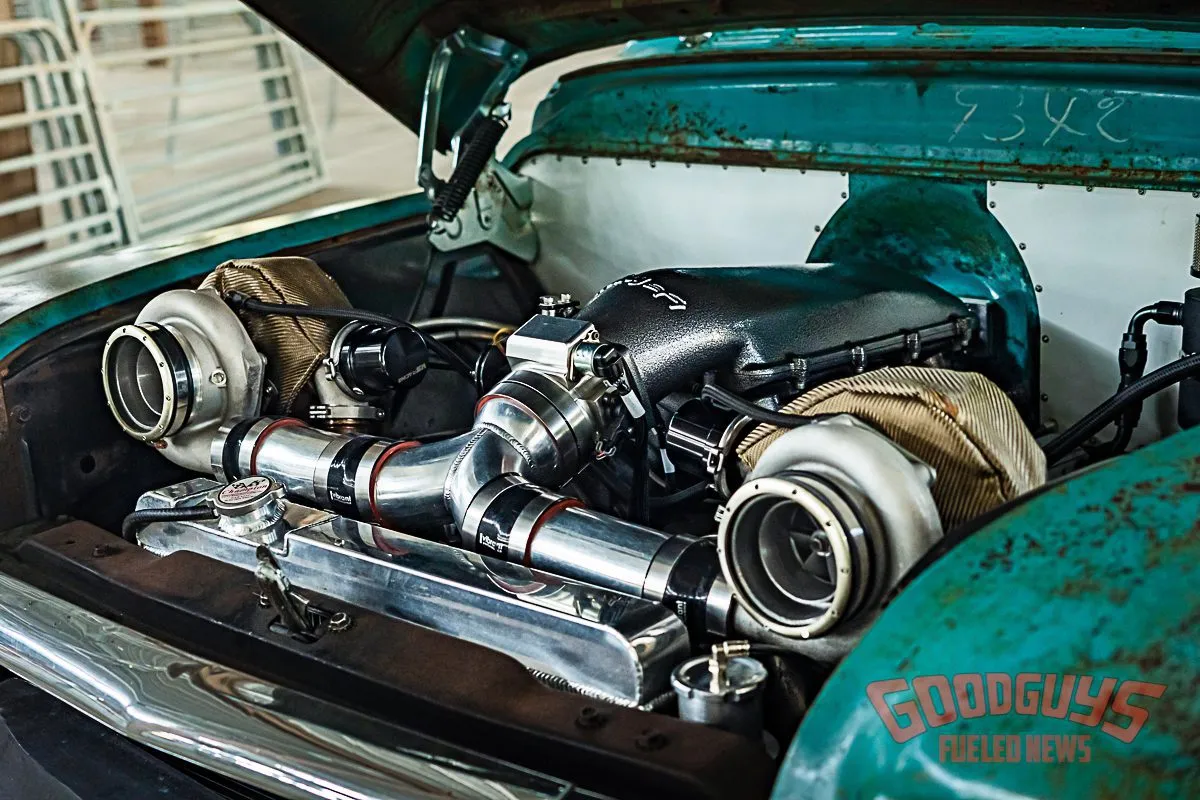
The engine is a 5.3-liter GM LC9, a truck small-block, built by Cripps with aluminum heads, a Holley Hi-Ram intake and 100-pound injectors. Two Mirror Image 67mm VS Racing turbochargers supply the boost, and the exhaust exits through fender dumps. Meredith has never put it on a dyno, but he told Fuel Curve he estimates it makes somewhere north of 500 hp.
That is a big number from a modest engine, and it shows why the 5.3 keeps showing up in builds like this. The parts are everywhere, the bottom end takes boost, and the Hi-Ram gives it a look under the hood that says this was not a casual swap.
A modified 4L80E automatic with a lockup converter handles the power, and a 22-gallon TANKS, Inc. tank lets Meredith put roughly 2,000 miles a year on the truck, according to Fuel Curve. That is the important number. Plenty of patina trucks are photo props. This one gets driven.
Inside, mostly 1955
 View full photo
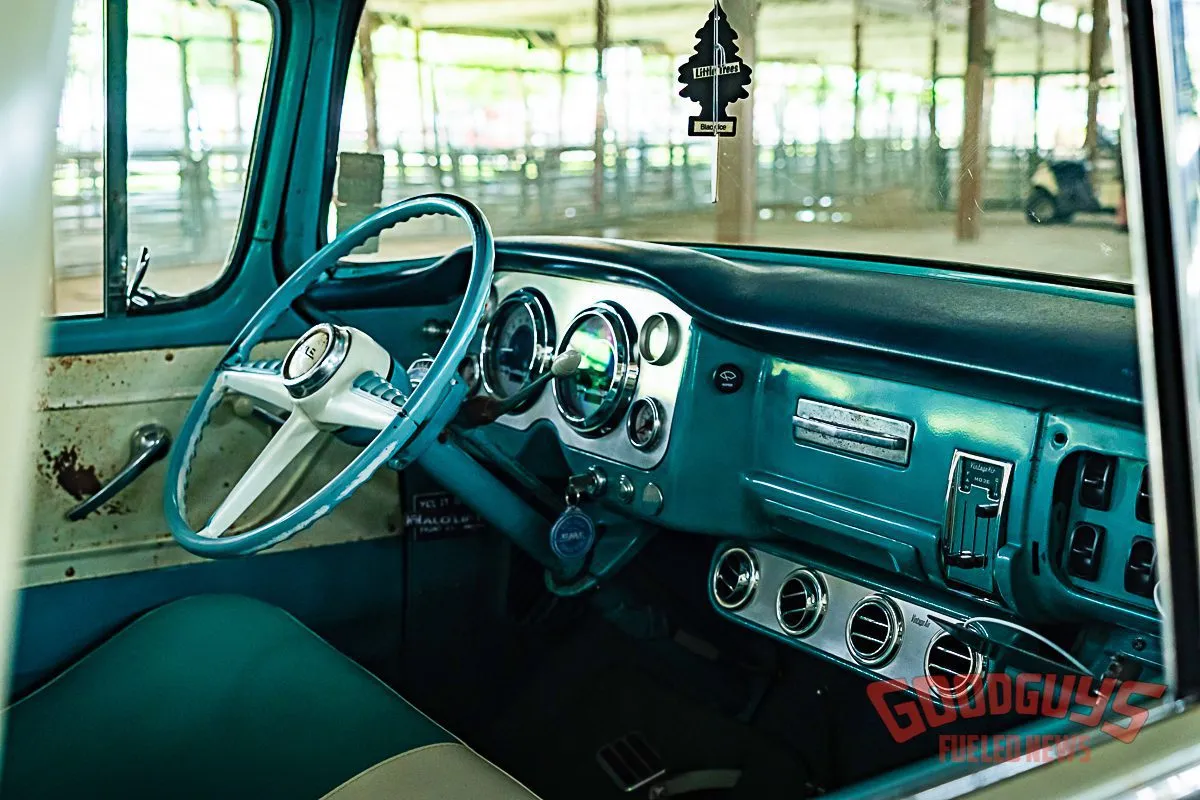
The cab stays close to stock. The original dash and steering wheel remain, and the original bench was modified and reupholstered in a vintage-style pattern by Mars Customs. Dakota Digital gauges watch the new drivetrain, Vintage Air cools the cab, a Rebel Wire harness runs the electrical system and a Bluetooth stereo handles the tunes.
Meredith did warn anybody planning something similar that GMC trucks are not just Chevrolets with a different badge. Fitment for the Vintage Air, the core support, the dash and other parts was different on the GMC, he told Fuel Curve, and a lot of pieces had to be modified to work.
Why it works
 View full photo
The best patina builds keep the history readable. You can still see where the paint wore through and where decades of farm life left marks, but the truck sits on air, stops on modern discs and makes an estimated 500-plus horsepower through a pair of turbos. It is a farm find with a second life, and it earns attention at a show like Columbus because the story is right there on the paint.
Sources
This story is compiled from the published sources listed below.

Written by
Devin B.
Founder
Devin founded TORQFOLIO to cover the whole aftermarket scene, from hot rods and LS swaps to donks, drift and Baja. Based in Las Vegas and usually at a show or meet with a camera.
More from Devin B.TORQFOLIO Weekly
The best of the week in cars, builds & culture. Every Sunday.
Keep Reading
A Wrecked Murcielago, a Type R Prelude and a '55 Saved From the Eaton Fire: SEMA 2026's Day-One Reveals
Devin B.,

SEMA 2026 Opens Tuesday in Las Vegas: Dates, Debuts and What to Watch
Devin B.,
Four Street Rods That Lost to a Kansas Roadster, and Why Any of Them Could Have Won
Devin B.,
Slammed in Japan, $60,000 Frames in Illinois: The OBS Chevy Has Become the Street Truck Scene's Main Platform
Devin B.,
Conversation 0 comments
No comments yet. Start the conversation.